Outsource the execution of healthcare IT services: help desk, infrastructure, security monitoring and software builds.

Keep the accountability in-house: your HIPAA security officer, PHI access approvals, risk decisions, vendor oversight and ownership of your data and code.
TL;DR
Vendors can run most day-to-day healthcare IT work well. They can't own your HIPAA obligations.
A business associate agreement (BAA) shares duties with a vendor. It doesn't move yours.
Co-managed IT suits most multi-site groups better than handing over everything.
AI tools for booking and reporting are low-risk to outsource. Diagnosis and image analysis need a regulatory check first.
Vet healthcare IT providers on proof you can open: BAA terms, audit logs, test-data policy and an exit plan.
Have you ever read a managed IT contract with a clause saying the vendor takes over your HIPAA liability?
Me neither. No such clause can exist.
We build healthcare software at Mind Stack Labs. We don't run help desks.
Our team has delivered 250+ projects since 2019. In my experience, healthcare scoping calls slow down at the same point every time: who answers for patient data once a vendor is inside the system.
Quick answer: outsource, keep or co-manage
Function | Outsource | Keep in-house | Co-manage |
|---|---|---|---|
Help desk and end-user support | ✅ | ||
Network and device management | ✅ | ||
Backup and disaster recovery | ✅ | ||
24/7 security monitoring | ✅ | ||
Custom software and integrations | ✅ | ||
HIPAA security and privacy officer | ✅ | ||
PHI access approvals | ✅ | ||
Risk assessment sign-off | ✅ | ||
EHR administration | ✅ | ||
Vendor management and exit plan | ✅ |
What Are Healthcare IT Services?
Healthcare IT services are the technology work that keeps clinical and administrative systems running, secure and compliant.
The term covers everything from password resets to EHR integrations.

The six categories organizations buy
Knowing which category you need narrows your vendor list fast.
Category | What it covers | Typical buyer |
|---|---|---|
Support | Help desk, device setup, user onboarding | Clinics, small practices |
Infrastructure | Networks, servers, cloud hosting | Multi-site groups |
Security | Monitoring, incident response, ransomware protection | Everyone handling ePHI |
Compliance | Risk assessments, policies, audit prep | Practices facing audits |
Software | Patient apps, portals, telehealth, booking | Startups, growing providers |
Data | Integrations, reporting, interoperability | Hospitals, health systems |
How healthcare IT differs from general IT
Healthcare IT carries three pressures that general IT doesn't:
PHI: every system that touches patient data falls under HIPAA.
Uptime during care: an outage stops patient care, not only paperwork.
EHR dependence: one platform sits at the center of most clinical workflows.
A generalist MSP can fix your Wi-Fi. Fewer can explain how their remote access tool affects your audit trail.
Healthcare IT providers vs healthcare software development companies
Healthcare IT providers keep existing systems running. Development companies build new ones.
Systems are slow, insecure or unsupported: hire a healthcare IT provider (MSP or MSSP).
You need a new patient app, portal or integration: hire a healthcare app development partner.
You need both: hire two vendors with clearly split responsibilities.
Before You Outsource: What a BAA Shares and What Stays Yours

A BAA makes a vendor legally responsible for protecting the PHI it handles.
It doesn't make the vendor responsible for your compliance program.
What a business associate agreement covers
A BAA sets the rules for how a vendor uses, protects and reports on PHI. The HHS guidance on business associates describes what these contracts must include.
In practice, a solid BAA covers:
Permitted uses of PHI
Required safeguards
Breach reporting duties and timelines
Rules for subcontractors
Return or destruction of data at the end of the contract
Responsibilities that stay with you after you sign
You still own your compliance program.
The HIPAA Security Rule requires every covered entity to name a security official (45 CFR 164.308). That person works for you, not for your MSP.
You also keep:
Your own risk analysis and the decisions that follow from it
Workforce training and sanctions
Oversight of every vendor you hire
Why a "HIPAA compliant vendor" doesn't make you compliant
HIPAA has no official government certification. A vendor calling itself "HIPAA certified" is using marketing language.
A compliant vendor only covers its own slice. Your organization is compliant when your whole program holds up.
The rules are also moving:
HHS proposed major Security Rule changes in January 2025.
In July 2026, OCR's regulatory agenda pushed the final rule to July 2027, according to Alston & Bird's analysis.
Plan for stricter requirements now, not when the final rule lands.
What good PHI handling looks like in practice
Ask every vendor to show you this list. Here is how we handle it at Mind Stack Labs, as published on our healthcare page:
Practice | What we do |
|---|---|
Test data | No real patient records in development or QA. We use synthetic or anonymised data |
BAA | We sign one where the project requires it |
Access | Role-based access, MFA and least-privilege permissions |
Logging | Full audit trails |
Encryption | At rest and in transit |
If a vendor can't produce a similar table in one meeting, treat that as a warning sign.
Which Healthcare IT Services Are Safe to Outsource?

Outsource work that is repeatable, measurable and backed by an SLA. These five functions pass that test.
1. Help desk and end-user support
Help desk is the easiest win. Tickets are measurable and response times fit neatly into contracts.
Check that the provider's technicians follow your access policy, not theirs.
2. Network, device and infrastructure management
Specialists patch, monitor and replace hardware faster than a stretched internal team.
Keep the asset inventory visible to your own staff. You should know what you own without asking the vendor.
3. Backup, disaster recovery and cloud hosting
Recovery is a specialist job, and most practices only test it when something breaks.
Pro tip: ask the provider to run a restore test in front of you before you sign.
4. Security monitoring and incident response
Round-the-clock monitoring is expensive to staff internally. An MSSP spreads that cost across clients.
Agree in writing on who calls whom, and in what order, when an alert fires at 3 a.m.
5. Custom healthcare software and integrations
Software is safe to outsource when the partner works under clear PHI rules.
Patient apps, booking systems, telehealth, portals and remote monitoring all fit here.
For EHR work, ask about HL7 and FHIR experience directly. Then ask to see the integration plan, not only the logo slide.
Our conversational appointment booking assistant, CareBot AI, matches symptoms to departments and checks slot availability in real time to prevent double-booking.
What You Should Never Hand Over
Five responsibilities should stay inside your organization, whatever the contract says.
1. HIPAA security and privacy officer accountability
Vendors can advise your security officer. They can't be your security officer.
2. PHI access governance
Your team decides who gets access, for how long and why. Vendors carry out those decisions.
We built CareVault, a reference build on our portfolio, around this model:
Time-limited consent per provider
Instant revocation
A full access log
Its own page notes it isn't certified for real PHI. The access design still shows what to ask a vendor for.
3. Risk ownership
Vendors can run your security risk assessment. Signing off on the risks you accept stays with your leadership.
4. Vendor management and the exit plan
Know how you would leave every vendor before you sign with them.
5. Ownership of your data, code and credentials
Admin credentials, source code repositories and data exports should sit in accounts you control.
Vendor holds the only admin login: that's vendor lock-in.
You hold the root account and grant vendor access: that's a healthy setup.
The Grey Zone: When Co-Managed IT Makes Sense
Co-managed IT splits the work.
Your internal team keeps strategy and EHR ownership. A provider adds depth and after-hours coverage.
Co-managed vs fully managed vs in-house
Model | Who runs daily IT | Best for | Watch out for |
|---|---|---|---|
In-house | Your staff | Large systems with budget for specialists | Coverage gaps at night and on weekends |
Co-managed | Shared | Multi-site groups with a small IT team | Blurry ownership without a RACI chart |
Fully managed | Provider | Small practices with no IT staff | Losing internal knowledge of your own systems |
Three signs you're ready for co-managed IT
Your IT lead spends more time on tickets than on projects.
Nobody covers security alerts outside business hours.
You opened a second or third location and support quality dropped.
Wait, you might be thinking: "Isn't co-managed just paying twice?"
No. You pay for the depth you lack and keep the knowledge you already have.
Without it, you tend to pay later in rework and slow incident response.
AI in Healthcare IT: What to Outsource and What Needs a Regulatory Check
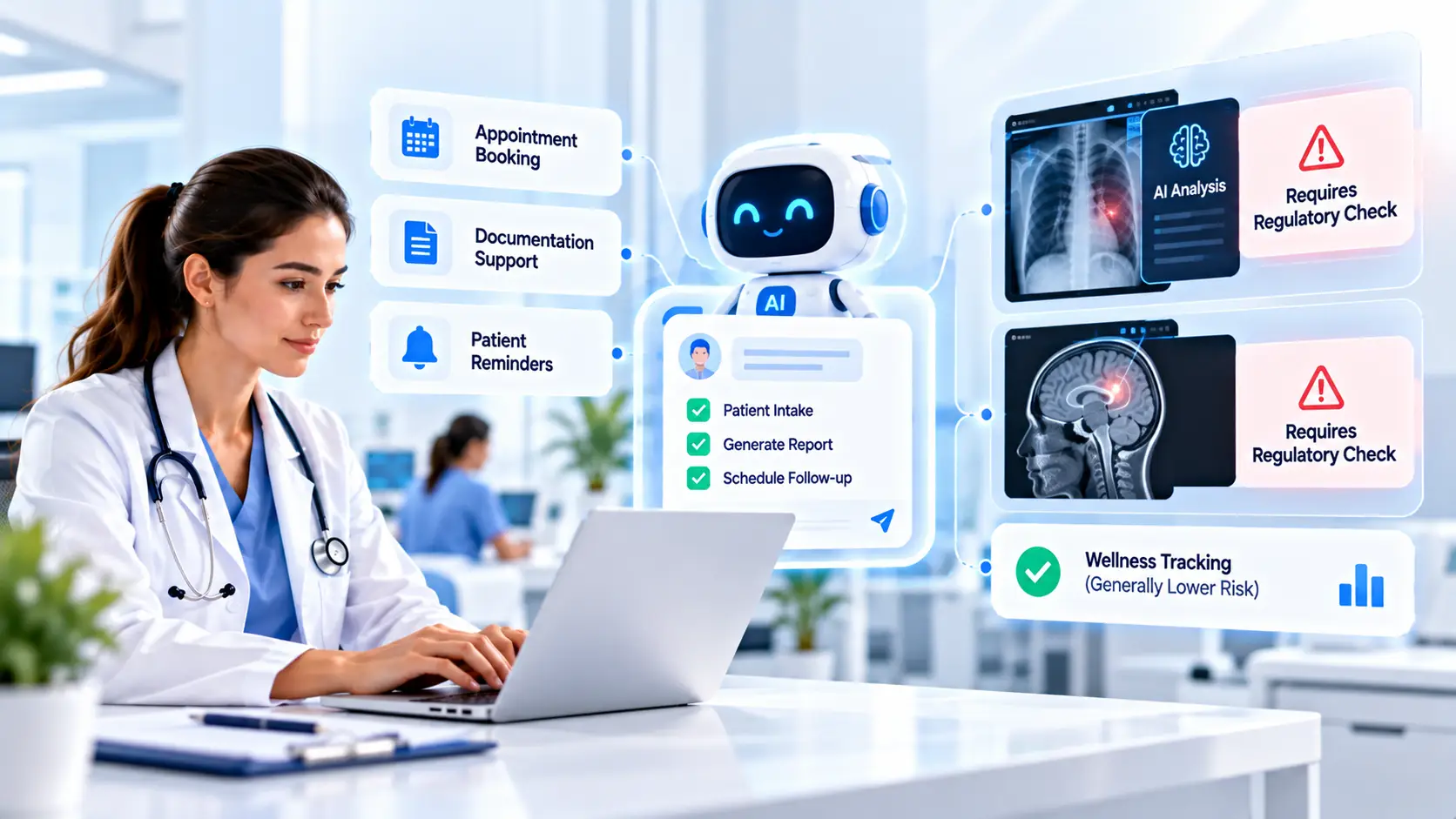
AI for administrative and workflow tasks is generally low-risk to outsource.
AI that diagnoses, recommends treatment or analyzes medical images needs a regulatory assessment before anyone writes code.
Where AI is low-risk to outsource
These use cases automate admin work and keep clinicians in control:
Appointment booking and patient intake
Report generation and documentation support
Patient engagement and reminders
We built AmbutechPro, an AI handover reporting app for ambulance teams:
It structures patient records into SBAR handover reports.
It flags abnormal vital signs.
Clinicians still review and act on everything it produces.
If you're scoping a patient-facing assistant, our guide to AI chatbot development services covers guardrails and human handoff design.
Where AI needs a regulatory check first
FDA revised its Clinical Decision Support software guidance on January 6, 2026.
Under the FDA CDS guidance, software that analyzes medical images or signals, or supports time-critical decisions, generally stays in device territory.
Booking, engagement or wellness tracking: usually outside device regulation.
Diagnosis, treatment recommendations or image analysis: regulatory assessment before the build.
What to demand from an AI vendor
Human review: a clinician approves output before it reaches the patient record.
Data handling: clear rules on where prompts and outputs are stored.
Fallbacks: the workflow still runs when the model fails.
Our TrueGlow AI skin analysis app stores photos and scan data encrypted. It's a wellness product, not a medical device. Expect any vendor to name that kind of boundary upfront.
Which Type of Healthcare IT Provider Fits Which Need?
Match the provider type to the job. Most mistakes happen when one vendor type gets hired for another type's work.
Provider type | Core scope | Best for | Verify before signing |
|---|---|---|---|
MSP | Help desk, devices, networks, cloud | Clinics and groups without IT staff | Healthcare references, BAA, SLA terms |
MSSP | Security monitoring, incident response | Anyone with ePHI and no 24/7 security team | Response times, escalation path |
Software development partner | Apps, portals, integrations, AI tools | Startups and providers building products | Test-data policy, code ownership, case studies |
IT consultant | Strategy, audits, vendor selection | Leaders planning a change | Independence from vendors they recommend |
Mind Stack Labs sits in the software development partner row.
We don't provide managed help desk, network management or 24/7 infrastructure support. Pair us with an MSP for those.
For a broader shortlist, see our comparison of medical software development companies.
When you need more than one provider
Two vendors work well together when one document splits their duties:
Write a RACI chart covering incidents, access changes and releases.
Name one internal owner who settles disputes.
Put both vendors on the same incident call list.
How Managed Healthcare IT Services Are Priced
Managed healthcare IT services usually follow one of four pricing models. The model matters more than the headline rate.
The four common pricing models
Model | How it works | Works best when |
|---|---|---|
Per user | Fixed fee per staff member | Headcount is stable |
Per device | Fixed fee per endpoint | Many shared workstations |
Flat fee | One monthly price for a defined scope | You want predictable budgets |
Project | Fixed or time-based price for one deliverable | Software builds and migrations |
Hidden costs to ask about
Most budget surprises come from what sits outside the base fee:
Onboarding and documentation fees
After-hours and emergency rates
Compliance reporting and audit support
Third-party licenses billed separately
Exit fees and data handover charges
Pro tip: ask every provider to price the exit before they price the start.
How long healthcare IT projects take
Timelines depend on scope. On our healthcare page, we publish these ranges for software builds:
Build type | Timeline |
|---|---|
Healthcare MVP | 6 to 10 weeks |
Full patient platform with AI triage or EHR integration | 12 to 16 weeks |
MSP onboarding follows a different shape:
Discovery
Documentation
Tool rollout
Handover of support
Ask each provider for a dated plan per phase.
How to Choose a Healthcare IT Services Partner: A 10-Point Vetting Checklist
Choose the partner who can show proof in the first meeting, not the one with the best slides.
# | Check | What good looks like |
|---|---|---|
1 | BAA | Signed before any PHI access |
2 | Risk assessment process | A documented method, not a template |
3 | Audit logs | You can view logs without filing a ticket |
4 | Test-data policy | No real PHI in development or testing |
5 | Access model | MFA, least privilege, named accounts |
6 | SLAs | Response and resolution times in writing |
7 | Escalation path | Named people, not a generic inbox |
8 | Healthcare experience | Case studies you can open and read |
9 | Integration depth | HL7 and FHIR experience for EHR work |
10 | Exit plan | Data return, credential handover, timeline |
For software partners, add authentication to the list. Our breakdown of authentication vs authorization and our API security checklist for startups show what to ask about.
Red flags that should end the conversation
"We're HIPAA certified": a marketing claim, since no official certification exists.
No BAA until after kickoff: PHI exposure from day one.
Real patient data in testing: avoidable breach risk.
No exit clause: lock-in by design.
Where to Start: A Decision Path by Organization Size
If you run a solo or small practice, start with a fully managed MSP that has healthcare references and signs a BAA upfront.
If you run a multi-site group or small hospital, go with co-managed IT and keep EHR ownership internal.
If security alerts go unanswered after hours, add an MSSP before anything else.
If you're building a patient-facing product, hire a healthcare software development partner and keep infrastructure with your MSP.
If you're unsure where the gaps are, pay an independent consultant for a two-week assessment first.
How Mind Stack Labs Fits Into Your Healthcare IT Stack

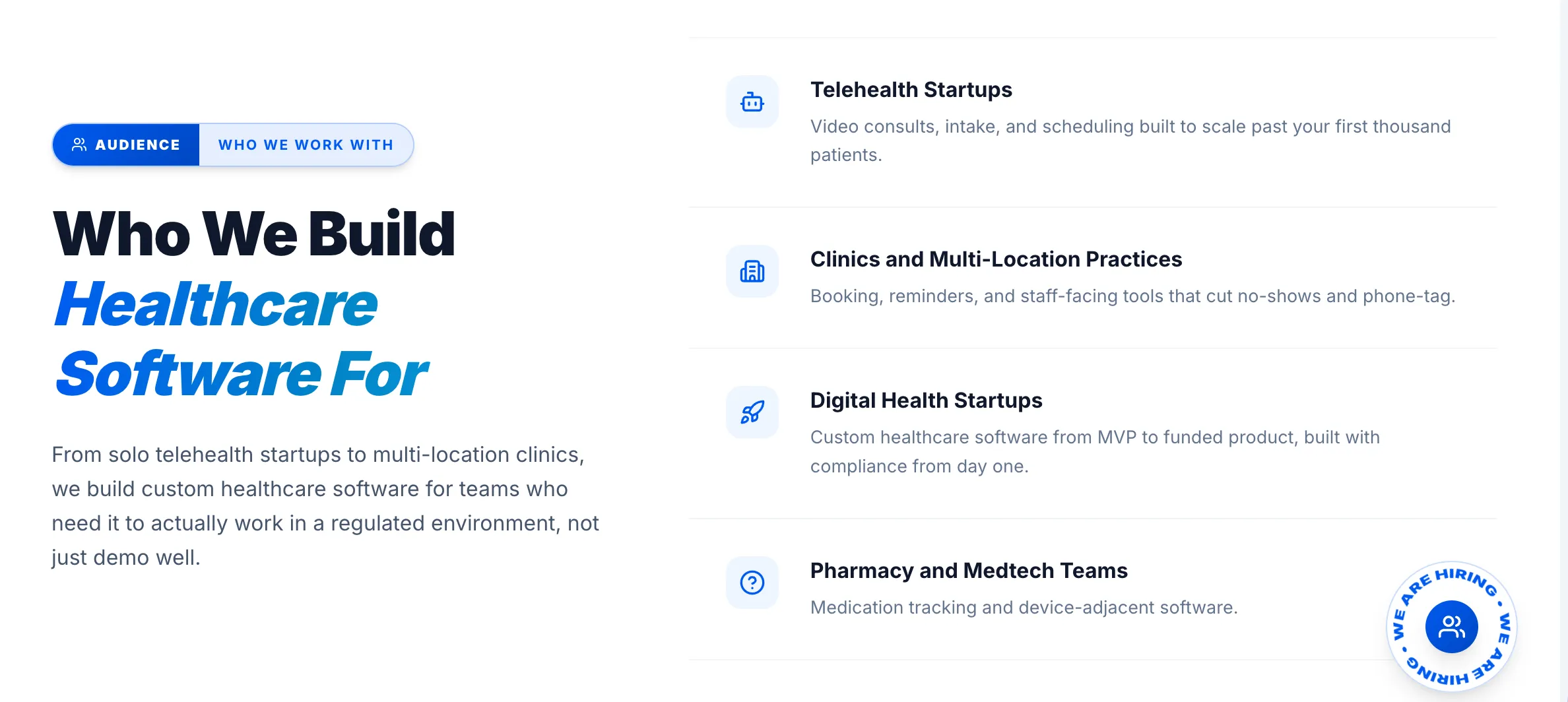
We build healthcare software. We don't run help desks or manage networks.
What we do:
Telemedicine and video consultation apps
Appointment booking systems
Patient management and EHR integration
AI symptom triage and intake automation
Wearables and remote patient monitoring
BAA-ready engagements, built to HIPAA technical safeguards
What we don't do:
Managed help desk
Network and device management
24/7 infrastructure support
Healthcare builds on our portfolio
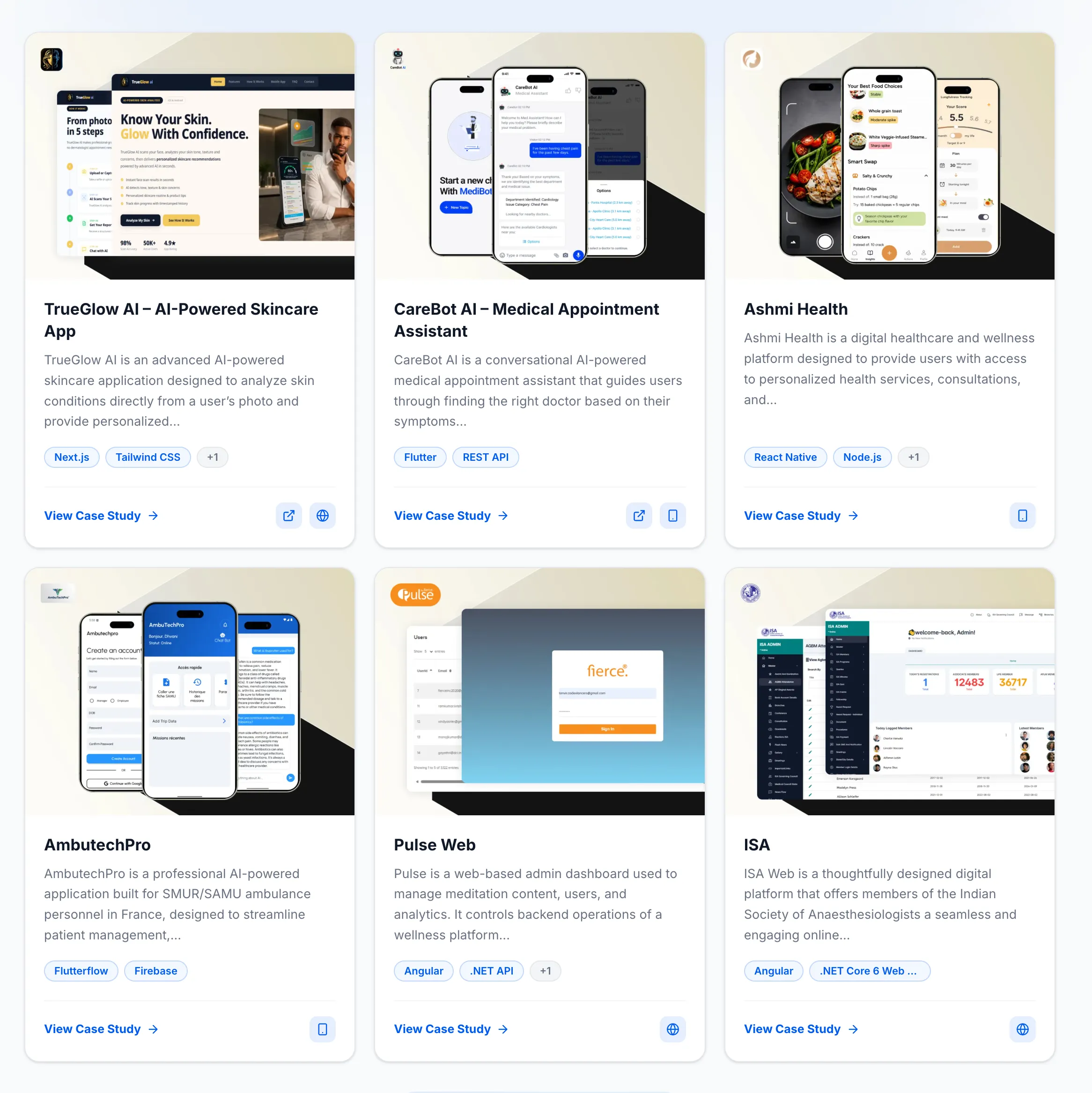
Build | What it shows |
|---|---|
Conversational booking with real-time slot checks | |
AI handover reports and vital-sign alerts for EMS teams | |
Remote consultations, health tracking and encrypted health data | |
Apple Health and Health Connect data in one dashboard, read on-device | |
Reference build for patient consent, revocation and audit history |
My Recommendation
Start with a one-page responsibility map before you sign anything.
Outsource help desk and monitoring to a healthcare-focused MSP.
Bring in a development partner only when you're building patient-facing software.
Keep the security officer role and access approvals in-house, whatever any contract offers.
FAQs About Healthcare IT Services
1. What do healthcare IT services include?
Healthcare IT services cover support, infrastructure, security, compliance, software and data work.
Most providers specialize in one or two of these areas, so match the provider to the category you need.
2. Managed vs co-managed healthcare IT: which is better?
Fully managed suits small practices with no IT staff.
Co-managed suits groups with an internal IT lead who needs depth and after-hours coverage, while keeping strategy and EHR ownership in-house.
3. Is it safe to outsource healthcare IT under HIPAA?
Yes, with a signed BAA, clear access rules and audit logs you can review.
You still keep your security officer, risk decisions and vendor oversight in-house.
4. Can a software development company sign a BAA?
Yes. A development partner that handles PHI acts as a business associate and should sign a BAA.
Better partners also keep real PHI out of development and testing entirely.
5. Does an AI healthcare app need FDA clearance?
It depends on what the app does. Booking, engagement and wellness tracking usually fall outside device rules.
Diagnosis, treatment recommendations and image analysis need a regulatory assessment before the build starts.