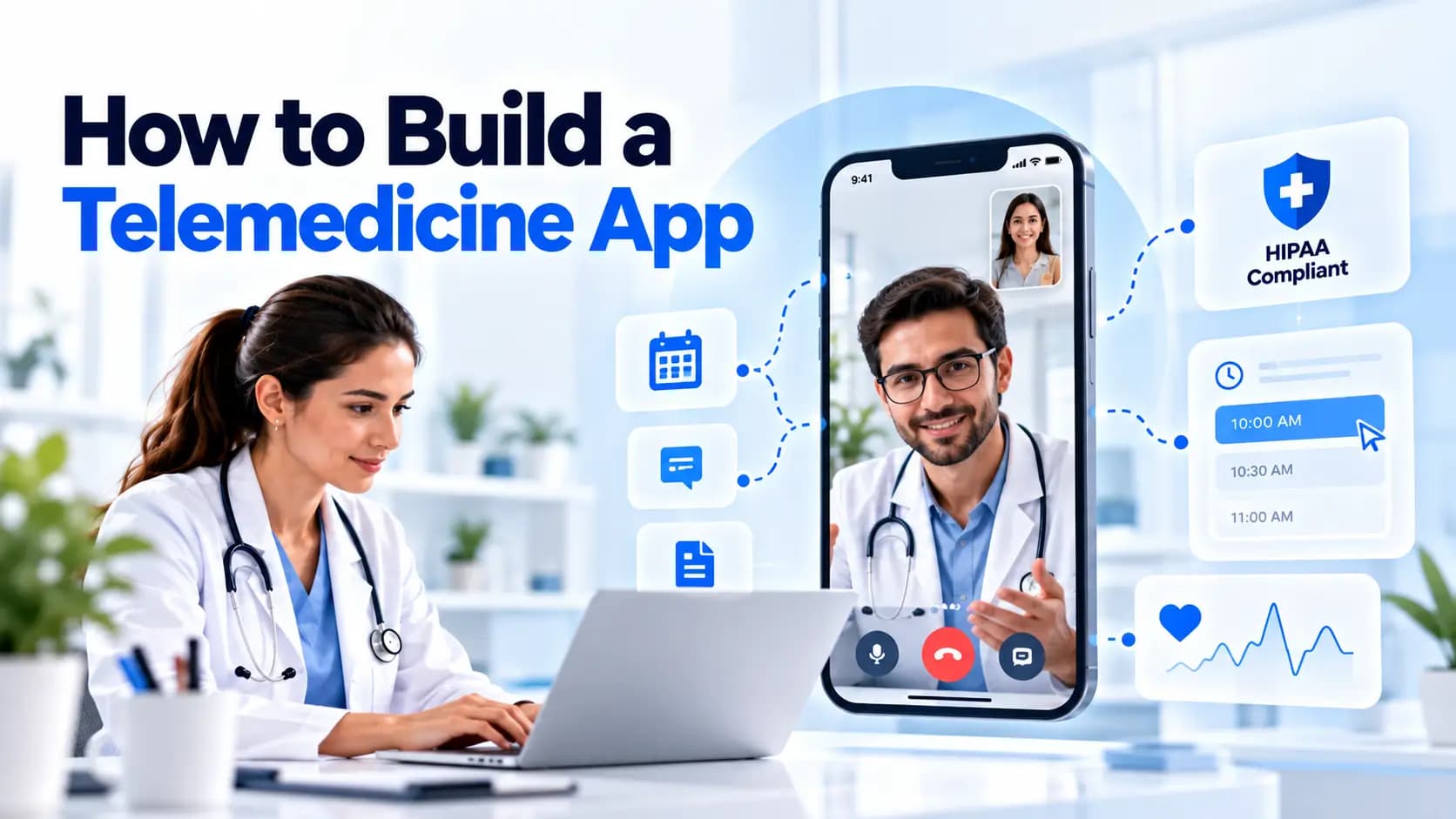
Choose a HIPAA compliant app development company that signs a BAA before it sees any PHI, can show (not describe) its encryption, access control and audit logging, has shipped healthcare integrations, and puts hosting in cloud accounts you own.
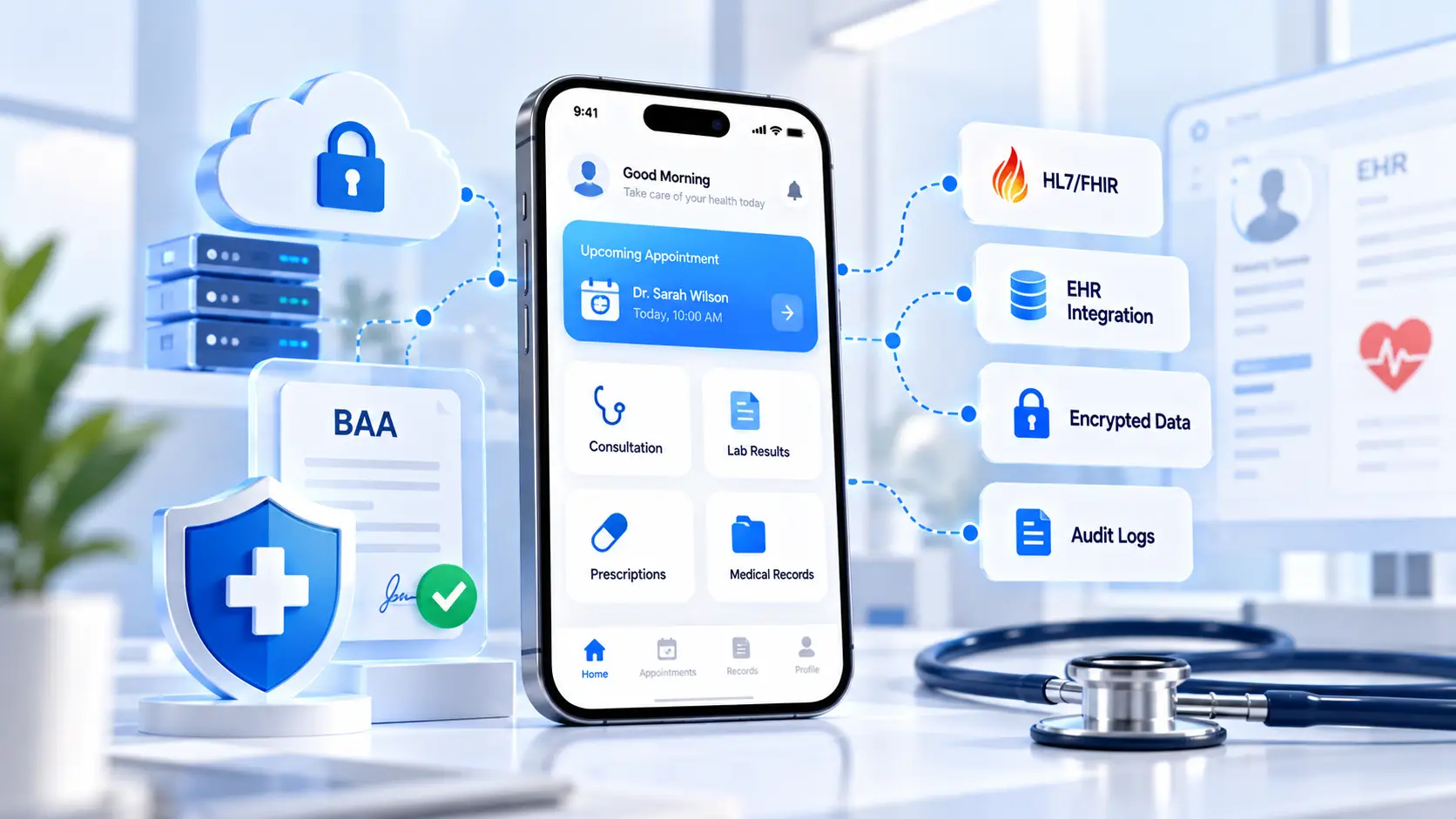
No government body certifies a vendor as "HIPAA compliant," so you verify the evidence yourself.
TL;DR
→ BAA first, PHI second. No signed BAA means no patient data, ever.
→ Ask for proof documents, not a compliance badge. HHS does not certify vendors or products.
→ Integration history (HL7, FHIR, EHR) predicts delivery better than team size.
→ Developer location is a contract and risk question, not a HIPAA ban.
→ Budget HIPAA engineering as a share of every module, not a final line item.
Can you name every company that will touch your patients' data once your app goes live?
Me neither. Here is why.
Our team has shipped six healthcare builds, per our healthcare app development page.
On one of them, I underestimated FHIR mapping badly enough that we spent three weeks re-modelling patient resources. Since then, the first thing I check is the data trail, not the feature list.
What Does a HIPAA Compliant App Development Company Actually Take Responsibility For?
Your development company becomes a business associate the moment it creates, receives, stores or transmits PHI for you. That status makes it directly liable under HIPAA, alongside you.
HHS business associate guidance names a health app developer contracting with a covered entity as a standard business associate example.
What the company owns vs what stays yours
Compliance is shared, and the split must be written down before kickoff.
Area | Development company | You (covered entity or startup) |
|---|---|---|
Encryption, access control, audit logs in code | ✅ Builds and documents | Reviews and accepts |
Security risk analysis | Supports with technical input | ✅ Owns your organisation's analysis |
Cloud hosting accounts | Configures | ✅ Owns, holds the cloud BAA |
Staff training, privacy policies | ❌ | ✅ |
Breach notification to patients | Reports incidents to you | ✅ Notifies patients and HHS |
Subcontractor BAAs (SMS, video, analytics) | ✅ Signs downstream | Confirms the chain exists |
Does your app even need HIPAA?
If your app handles health data for a covered entity, or for a business associate of one, HIPAA applies.
→ Clinic portal, telehealth, EHR sync = HIPAA applies
→ Consumer step counter with no provider link = usually outside HIPAA
→ Wellness app that shares data with a clinic = back inside HIPAA
When the answer is unclear, ask counsel before you scope. Scoping twice costs more than one legal call.
What Should a HIPAA Compliant App Developer Show You Before You Sign?
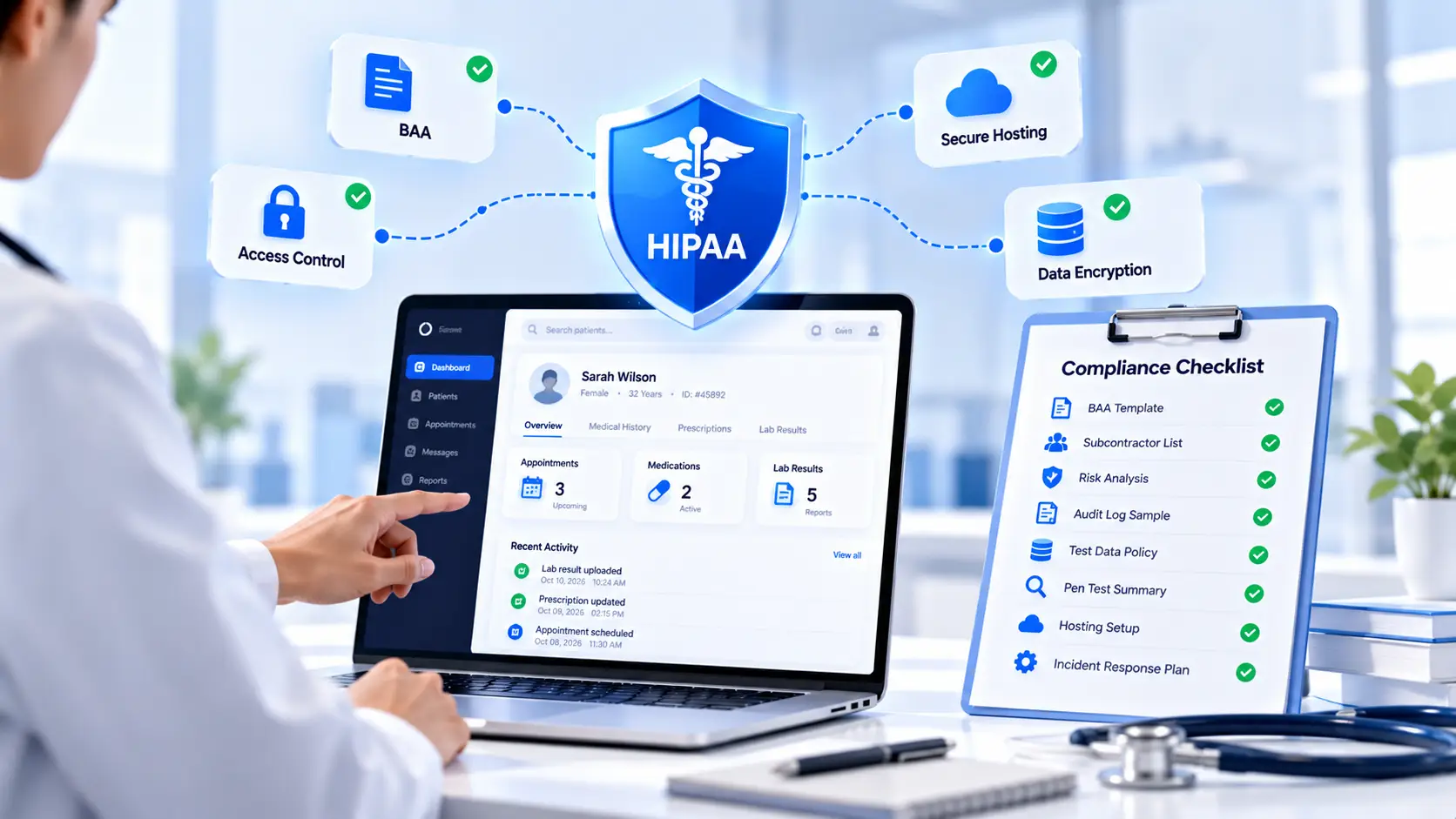
Ask for eight proof items. A credible HIPAA compliant app developer produces most of them within a week. Treat this table as your proof pack.
Proof to request | Good looks like | Red flag |
|---|---|---|
BAA template | Sent before the first technical call | "We'll sign one later" |
Subcontractor list | Every vendor touching PHI, each with a BAA | "We use standard tools" |
Redacted risk analysis | Threats, owners, mitigations from a past build | A generic policy PDF |
Audit log sample | Who viewed which record and when, reads included | Error logs only |
Test data policy | Synthetic or de-identified data in dev and QA | Real records "masked by hand" |
Pen test summary | Third-party report plus a fix record | "Our team tested it" |
Hosting setup | HIPAA-eligible cloud, accounts in your name | Their account, their keys |
Incident response plan | Written steps, named owner, reporting timeline | "That won't happen" |
Most vendors pass the first row. Few pass the last four.
That gap is your shortlist.
Access control you can see, not just hear about
Role-based access must be enforced on the server, on every API call. Hiding a button in the UI is decoration.
If your team mixes up the two concepts, our explainer on authentication vs authorization is a quick primer before vendor calls.
Third-party services are where PHI leaks
Every SMS, video, email, analytics or AI API that receives PHI needs its own BAA. A push notification that says "Your HIV test result is ready" exposes PHI on a lock screen.
Our API security checklist for startups covers the integration seams I review first.
Pro tip: Ask each vendor for a data-flow diagram of a past healthcare build. Anyone who has done this work draws one in minutes.
HIPAA Compliant App Development Companies Compared: A 2026 Shortlist
This is a shortlist in alphabetical order, not a ranking. Each company fits a different buyer, and the right pick depends on your app type and risk profile.
What I am evaluating on
Healthcare focus, not a healthcare tab on a general services site
Integration depth: HL7, FHIR, EHR and device data
Compliance described as engineering practice, with BAAs offered
Delivery fit for startups, clinics or enterprises
Transparency about scope, timelines and ownership
Facts come from each company's own site or a named third-party source, linked in each entry. Certifications are vendor-stated, so confirm them on your call.
At-a-glance comparison
Company | Founded | HQ | Healthcare focus | Signature numbers | Best for |
|---|---|---|---|---|---|
Arkenea | 2011 | USA | Healthcare-only | 14+ years in healthcare | First-time health tech founders |
Glorium Technologies | 2010 | New Jersey | Healthcare plus MedTech | 150+ products, ISO 13485 | Device-adjacent builds |
Itransition | 1998 | Denver, CO | One vertical of many | 3,000+ employees | Hospital modernisation |
KMS Healthcare | 2022 | Atlanta, GA | Healthcare arm of KMS | 75+ pre-tested FHIR APIs | Integration and QA depth |
Mind Stack Labs | 2019 | Surat, India | Core vertical | 6 healthcare builds, MVP in 6 to 10 weeks | Patient-facing MVPs |
Mindbowser | 2012 | USA | Healthcare-led | Integrates Epic, Cerner, athenahealth | Provider and startup builds |
ScienceSoft | 1989 | McKinney, TX | Deep enterprise healthcare | 35+ years in IT | Enterprise EHR and imaging |
Sidebench | 2012 | Santa Monica, CA | Healthcare product studio | 50+ healthcare apps | Polished clinical UX |
Topflight Apps | 2016 | USA | Healthcare core market | 10+ years, hundreds of HIPAA projects | AI and telehealth tools |
1. Arkenea
A US healthcare-only development firm building HIPAA compliant web and mobile apps since 2011.
Key capabilities:
Custom EHR and EMR development
Telehealth and remote patient monitoring
Practice, pharmacy and patient management software
Standards listed: HIPAA, HITRUST, HL7, IEC 62304, DICOM, ICD-10, FDA 21 CFR Part 820
Numbers:
Founded 2011, 14+ years in healthcare
Built ORLink, a HIPAA compliant surgical workflow platform that raised over $1M, per Arkenea's Kansas City page
Team of 50 to 100, per its own roundup
Pricing on request
Best for: Founders launching a first compliant patient-facing or EHR product
Source: arkenea.com
2. Glorium Technologies

A healthcare software company that pairs app development with medical device quality processes.
Key capabilities:
EMR/EHR platforms and patient portals
Telemedicine and remote patient monitoring with IoMT devices
E-prescription and pharmacy management systems
ML-powered diagnostic imaging
Numbers:
Established 2010, 150+ products delivered
States ISO 13485 and ISO 27001 certification
200+ specialists across the US, Poland, Ukraine and Cyprus
AWS Select Tier Partner, per Programming Insider
Pricing on request
Best for: MedTech teams that need device-grade documentation
Source: gloriumtech.com/healthcare
3. Itransition

A large software firm with a mature healthcare practice built for long modernisation programs.
Key capabilities:
Legacy hospital system modernisation and re-platforming
Interoperability layers between EHR instances
Healthcare analytics dashboards
Dedicated QA and compliance testing teams
Numbers:
Founded 1998, US HQ in Denver
3,000+ employees, offices across Europe, per Programming Insider
Pricing on request
Best for: Health systems replacing platforms that cannot go offline
Source: itransition.com
4. KMS Healthcare
The healthcare arm of KMS Technology, focused on interoperability, testing and HIPAA-ready architecture.
Key capabilities:
HL7 and FHIR integration, SMART on FHIR apps
QA and automated testing across the full lifecycle
Provider, payer and behavioral health EHR modernisation
HIPAA compliant, secure-by-default architecture design
Numbers:
Founded 2022, Atlanta HQ, per CB Insights
CONNECT platform ships 75+ pre-tested FHIR APIs and an HL7-to-FHIR engine, per Hospital Management
Pricing on request
Best for: Health plans and healthtech teams that need integration plus testing capacity
5. Mind Stack Labs
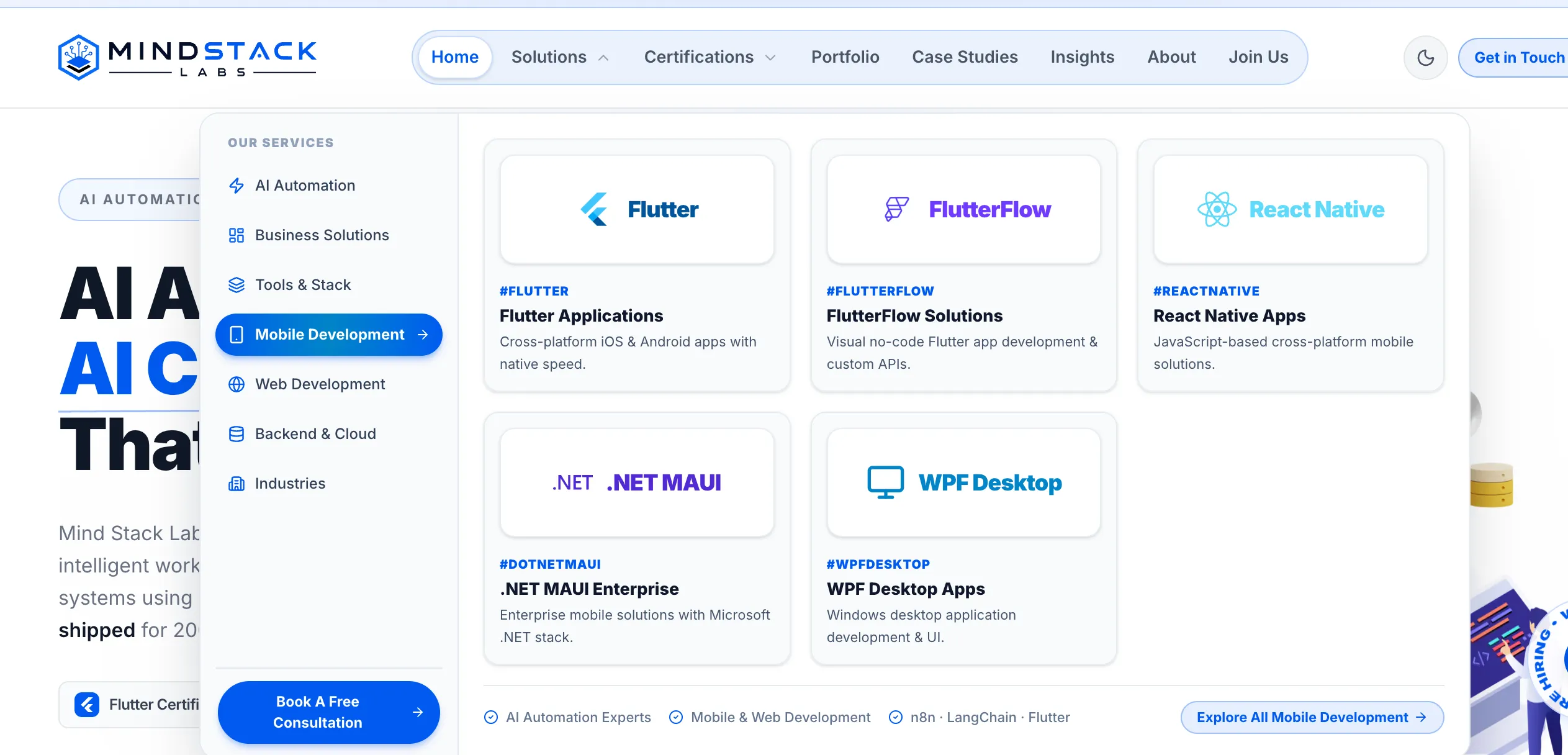
Our own team: a full-cycle product studio that builds HIPAA-ready healthcare apps, listed here under the same criteria as everyone else.
Key capabilities:
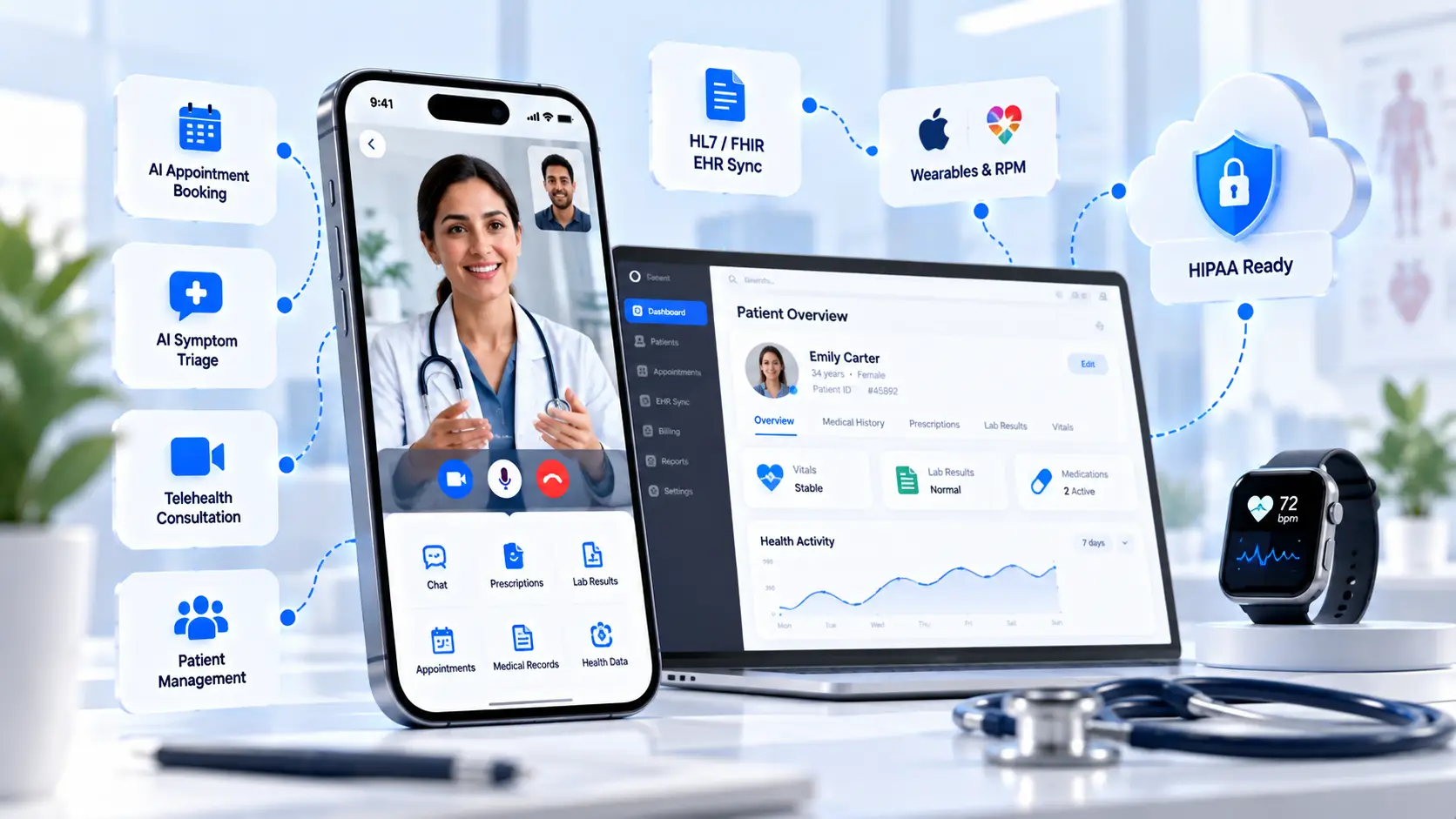
Telehealth and video consultation apps
AI-driven doctor appointment booking
Patient management with HL7/FHIR-aware EHR sync
AI symptom triage with human oversight
Wearables and RPM (Apple Health, Google Fit, Bluetooth devices)
BAA-ready engagements and synthetic test data in every non-production environment
Numbers:
Founded 2019
6 healthcare builds, 50+ engineers, 250+ projects delivered, 5.0 Clutch rating
Healthcare MVP in 6 to 10 weeks, full platform in 12 to 16 weeks
30-day post-launch support included
All per our healthcare page
Case studies:
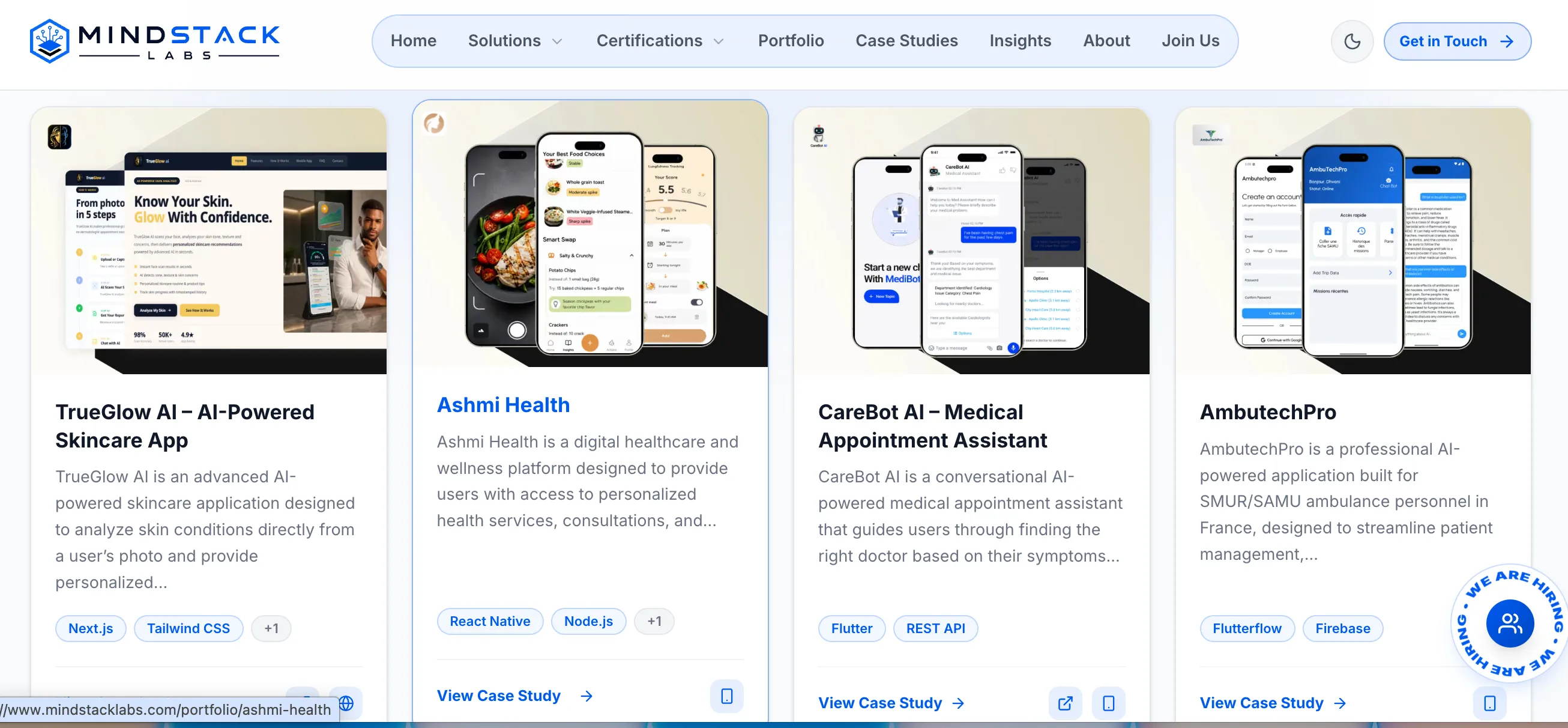
Project | What it does | Stack | HIPAA relevance |
|---|---|---|---|
Maps described symptoms to the right specialist and books the slot in one chat | Flutter, REST API | Patient intake and scheduling workflow | |
Digital health platform for consultations and wellness tracking | React Native, Node.js | Consultations and health records | |
AI app for SMUR/SAMU ambulance crews in France to manage patient data in the field | FlutterFlow, Firebase | Clinical field workflow (EU, not HIPAA) | |
Admin dashboard for a meditation platform with role-based access and analytics | Angular, .NET API, SQL Server | Role-based access pattern | |
Analyses skin conditions from a photo and suggests routines | Next.js, Tailwind CSS | Consumer health imaging, outside HIPAA |
Watch for: A smaller review base than 1,000-person firms, and no on-site US delivery team.
Best for: Startups and clinics that need a compliant patient-facing product live within a quarter
6. Mindbowser
A healthcare-led engineering company with ready-made accelerators for PHI protection and EHR connectivity.
Key capabilities:
HIPAA compliant software and mHealth app development
Telemedicine, e-prescription and NEMT apps
FHIR, HL7 and custom healthcare API development
PHISecure, its own PHI-protection accelerator
Numbers:
Founded 2012, US-based with distributed delivery
Integrates with Epic, Oracle Cerner, athenahealth, eClinicalWorks and NextGen, per its NEMT page
Biweekly demos with HIPAA and SOC 2 checklists applied
Pricing on request
Best for: Provider groups that want EHR connectivity and compliance accelerators
7. ScienceSoft
A long-running IT consultancy with one of the deepest enterprise healthcare practices in the US.
Key capabilities:
Custom EHR/EMR builds and modules
Telemedicine and patient portals
Medical imaging, DICOM and PACS work
HL7, FHIR and X12 EDI integration
Numbers:
Founded 1989, McKinney, Texas
States ISO 13485 and ISO 27001, per the Chop Dawg roundup
Pricing on request
Best for: Hospitals and enterprises with heavy EHR or imaging scope
Source: scnsoft.com/healthcare
8. Sidebench

A healthcare digital transformation studio known for UX-led clinical products.
Key capabilities:
HIPAA compliant engineering and product strategy
Patient portals and chronic disease management apps
React Native, web and backend development
Salesforce and healthcare system integrations
Numbers:
Founded 2012, Santa Monica, CA
50+ healthcare apps, per the Chop Dawg roundup
Team of 50 to 99 and $100 to $149/hr, per an Arkenea comparison
Verified reviews on Clutch
Best for: Health systems and funded ventures where clinician adoption hinges on design
9. Topflight Apps
A US healthcare-focused studio that builds telehealth, RPM and AI products on HIPAA-compliant cloud services.
Key capabilities:
Telehealth platforms, patient portals and digital intake
EHR integrations, including Epic FHIR/HL7
Conversational AI on clinical data
Reusable telehealth components on AWS services under BAA
Numbers:
Founded 2016
10+ years in healthcare with "hundreds of HIPAA-bounded projects," per its telehealth page
Built a health monitoring app for Medable
Pricing on request
Best for: Founders building AI-augmented or telehealth products
Source: topflightapps.com
Which HIPAA Compliant App Development Company Fits Your Situation?
Match the company to your top constraint, then run the proof pack.
If you need a patient-facing MVP within a quarter, go with Mind Stack Labs or Arkenea.
If your build lives inside Epic or a hospital EHR, go with ScienceSoft, KMS Healthcare or Mindbowser.
If your product sits near medical device territory, go with Glorium Technologies.
If you are replacing a legacy hospital system, go with Itransition.
If you want AI or telehealth on proven components, go with Topflight Apps.
If clinician adoption is your biggest risk, go with Sidebench.
Does a HIPAA Compliant App Developer Need to Be in the US?
HIPAA has no rule about where your developers sit. It cares about who can access PHI, under which BAA, and with which safeguards.
HHS cloud computing guidance allows ePHI storage outside the US under a BAA, while noting that risk varies by location. That risk belongs in your risk analysis.
Where location does matter
→ Hospital contracts = may require US-only PHI access
→ State privacy laws = can be stricter than HIPAA
→ Time zone overlap = affects incident response speed
Wait, you might be thinking: isn't an offshore team riskier by default?
The risk comes from PHI access, not from passports. A team that never touches production PHI, works on synthetic data, and deploys into your US-hosted accounts carries less exposure than a local team with admin keys to everything.
Our own delivery team works from Surat, India. That is exactly why we keep real patient records out of dev and QA, and why hosting stays in accounts the client owns.
Ask any offshore or hybrid vendor these questions
Who on your team can access production PHI, and from where?
Where are backups stored?
What are your overlap hours for incident response?
Will you sign a BAA that names your subcontractors?
What Does HIPAA Compliant Mobile App Development Cost, and How Long Does It Take?
In the builds we have priced, a lean patient-facing app lands between $45,000 and $90,000. HIPAA engineering tends to add 10 to 20 percent on top of feature work.
Those are observed ranges from our module-by-module healthcare cost breakdown, not industry averages.
Build type | Observed range | What drives it |
|---|---|---|
Lean patient app | $45k to $90k | One or two core flows, consent, audit logging |
Clinic operations platform | $110k to $220k | Multi-role access, scheduling, EHR sync |
Enterprise or multi-site system | $250k to $600k+ | Integration depth, billing, audit scope |
What moves the price
→ More user roles = more permission logic and testing
→ EHR integration = the most volatile line in any quote
→ Wearables and device sync = background sync and battery work
→ AI features = evaluation and human review loops
→ Formal regulatory assessment = legal plus documentation time
Mobile-specific HIPAA work
HIPAA compliant mobile app development adds device-level work that web apps skip.
Encrypted local storage, or no PHI cached on the device at all
Biometric login and automatic session timeout
Push notifications with zero clinical detail
Remote logout when a phone goes missing
Cross-platform builds with Flutter keep one codebase for these controls, which cuts testing effort across iOS and Android.
In-House Team, Specialist Company or No-Code Builder?
Pick a specialist company for your first regulated build. Pick in-house once the roadmap is stable. No-code fits narrow internal tools, rarely a patient-facing product.
Option | Fits when | Watch for |
|---|---|---|
In-house team | Long roadmap, funded hiring plan | 2 to 4 months to hire, HIPAA learning curve |
Specialist company | First compliant product, fixed deadline | Code and account ownership terms |
HIPAA compliant no-code app builder | Internal forms, simple intake | Platform BAA limits, export lock-in |
The no-code trap
A no-code platform's BAA covers the platform, not your configuration of it. You still own access rules, audit settings and every third-party connector you add.
Developing HIPAA compliant software on a no-code builder works for intake forms. It struggles with EHR sync and custom audit trails.
What Changes When Your HIPAA App Includes AI Features?
Any AI vendor that processes PHI for you becomes a business associate and needs a BAA. HHS guidance (last reviewed July 2026) lists a third-party AI chatbot on a patient portal as a business associate example.
→ AI model API sees PHI = BAA with the model provider required
→ Triage suggests a specialist = log every output and the human approval
→ AI drafts clinical notes = store which model wrote what
Our team scopes AI as one narrow, auditable task first. We cover that approach in our guide to AI chatbot development services.
Regulatory dates to plan around
Security Rule overhaul. HHS published the proposal on January 6, 2025. Its July 2026 regulatory agenda moved final action to July 2027, as HIPAA Journal reported. The current rule stays fully enforceable.
What the proposal would require. Encryption, MFA, yearly pen tests and vulnerability scans every six months, per the HHS fact sheet. Building to it now avoids a rebuild later.
42 CFR Part 2. Behavioral health apps faced a February 2026 compliance deadline for updated rules on substance use disorder records, per HHS Part 2 guidance.
Pro tip: Ask vendors whether they already build to the proposed Security Rule controls. Their answer shows whether they track regulation or just quote it.
Five Red Flags in a HIPAA Compliant Development Pitch
Any one of these should pause the deal.
"We are HIPAA certified." No such federal certification exists.
Real patient data in test environments.
Hosting in the vendor's own cloud account.
No named technical lead in the proposal.
"EHR integration" quoted as one line with no standard named.
Our medical software development companies guide adds an eight-question vetting call you can run in 45 minutes.
FAQs
1. How do I make sure a medical app developer understands HIPAA?
Ask them to walk you through a past audit log, BAA chain and risk analysis. Specific answers backed by documents mean real experience. General answers about "security best practices" mean they are learning on your project.
2. What is the average cost to develop a HIPAA compliant mobile app?
In the builds we have priced, lean patient apps run $45,000 to $90,000, and clinic platforms run $110,000 to $220,000. HIPAA engineering tends to add 10 to 20 percent on top of feature work.
3. Onshore vs offshore HIPAA app developer: which is safer?
Neither is safer by default. Safety depends on who can access production PHI, the BAA chain, and where hosting sits. An offshore team on synthetic data with client-owned hosting can carry less risk than a local team with full admin access.
4. Can I use a HIPAA compliant no-code app builder?
Yes, for simple intake or internal workflows. The platform's BAA does not cover your configuration, connectors or access rules, so you still own those risks.
5. Where can I compare top HIPAA compliant app development companies in the US?
Start with the nine-company shortlist above. Then see our medical software development companies guide for rate bands and engagement models.
My Recommendation
Start with the proof pack. Shortlist only the companies that send a BAA template and an audit log sample within a week.
If your build lives inside a hospital EHR, use an enterprise firm like ScienceSoft.
If you need a patient-facing MVP live this quarter, use a focused studio like ours.
You can see how we approach this on our healthcare app development page, or talk to our team about your scope.