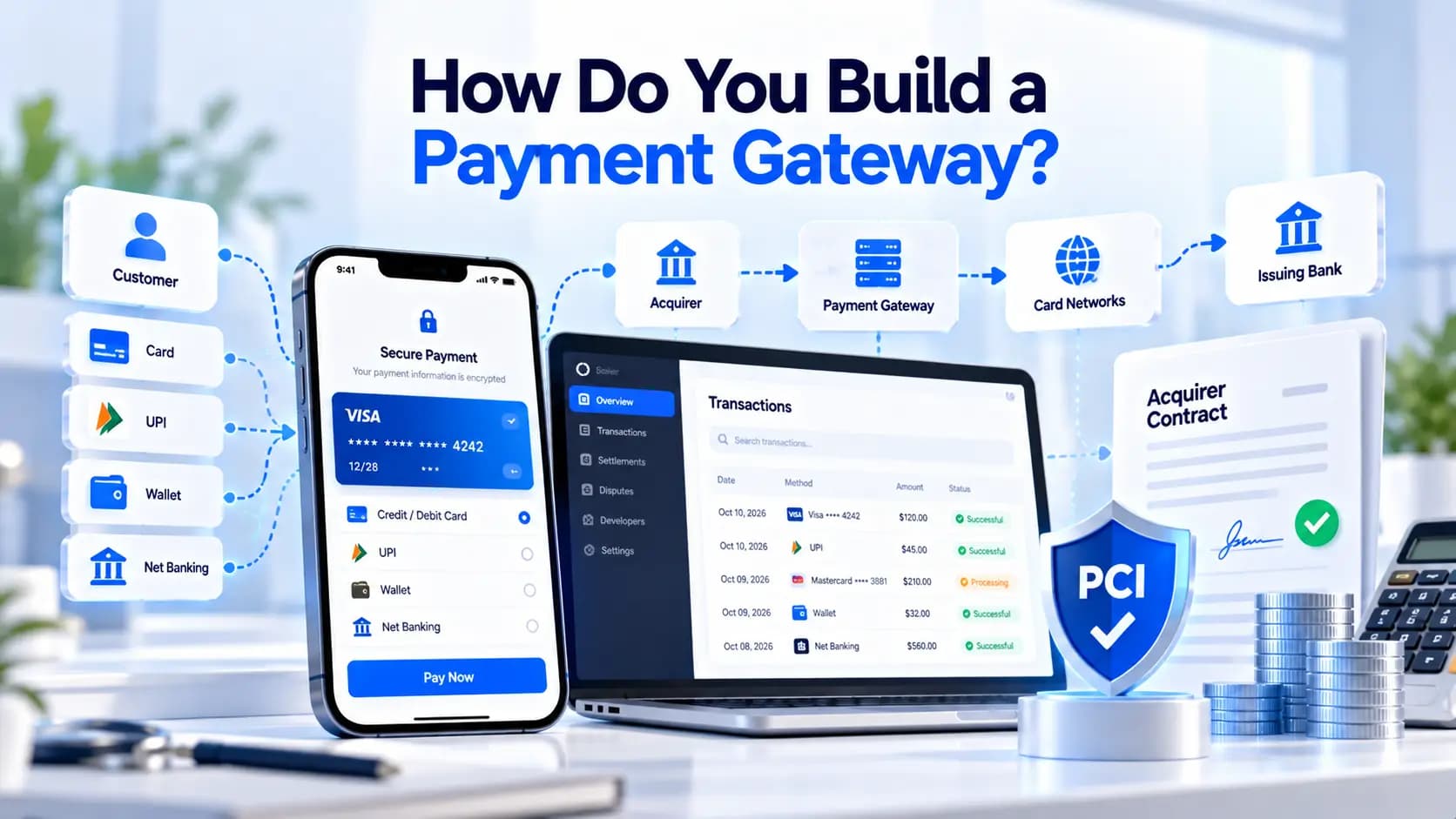
Choose a fintech app development company by scoring it on four checkable things:
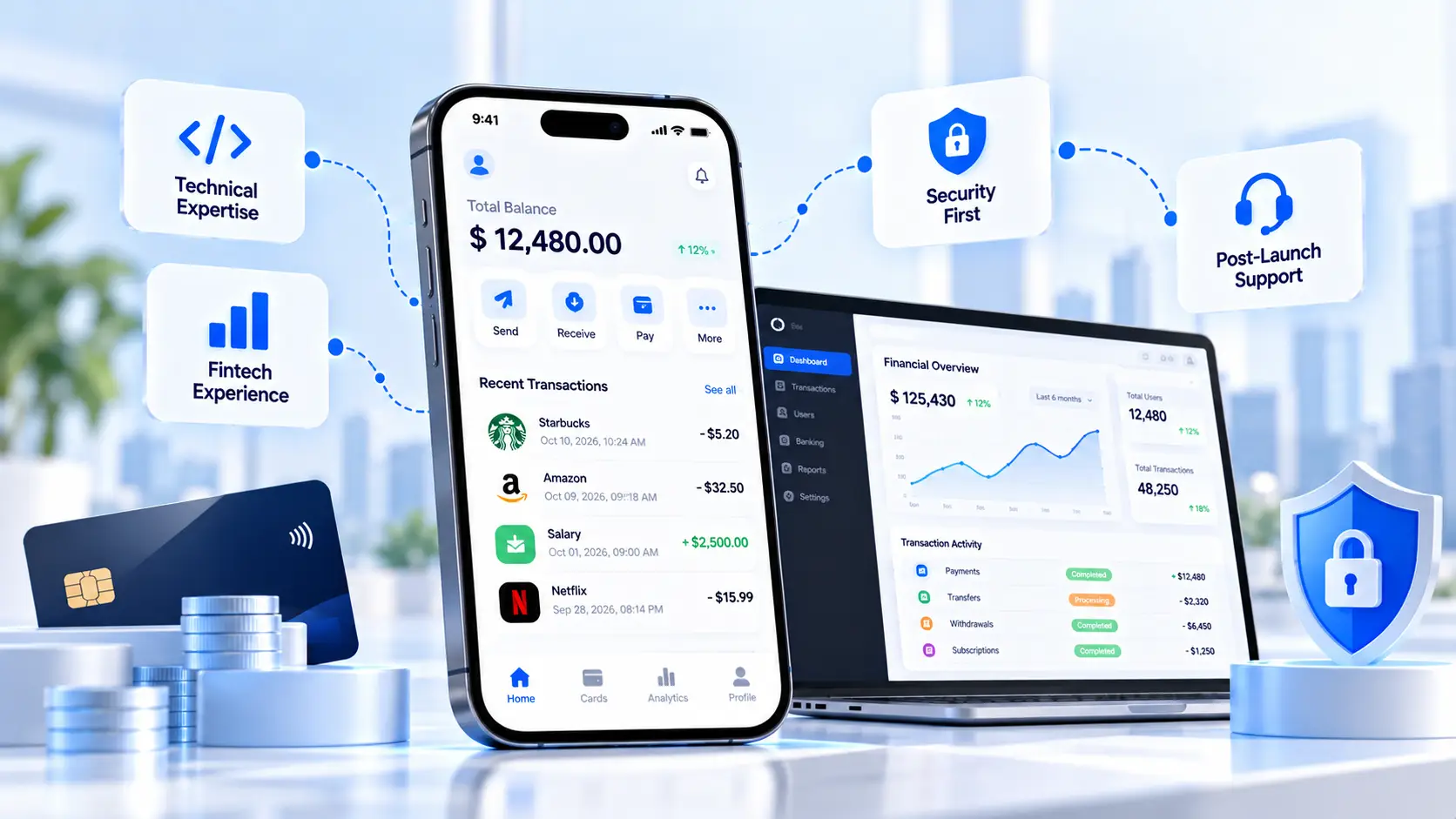
Verifiable technical credentials
Shipped financial-product work
Security handled as engineering practice, not a marketing badge
A written post-launch support commitment
Everything else on a vendor website is positioning.
I have scoped fintech and finance-adjacent builds more than a dozen times since 2019.
I have also picked wrong once. That vendor demoed beautifully, but they had never handled a reconciliation edge case.
TL;DR
Credentials you can click beat claims you cannot verify
Ask for a financial-data build, not a "similar app" in another industry
For most dev shops, compliance is about engineering practice, not certification
In my experience, fintech MVPs take 6 to 12 weeks and full platforms take 12 to 20 weeks
If nobody will put post-launch support in writing, you have your answer
Why Fintech App Development Is Accelerating in 2026
Mobile is now the default way people handle money. That makes vendor selection more important than it was five years ago.
Users now expect:
Instant transactions with no visible delay
Real-time balances and notifications
Frictionless onboarding
Multi-currency and cross-border support
Consistent uptime and security at scale
Regulators and platforms are tightening the rules at the same time.
A vendor that can't meet both sets of expectations will slow you down, whatever your feature list says.
Top 10 Fintech App Development Companies to Shortlist
Research each of these against the criteria used throughout this guide:
Verifiable credentials
Financial-domain evidence
Security handled as engineering practice
Delivery transparency
A written post-launch commitment
1. Mind Stack Labs
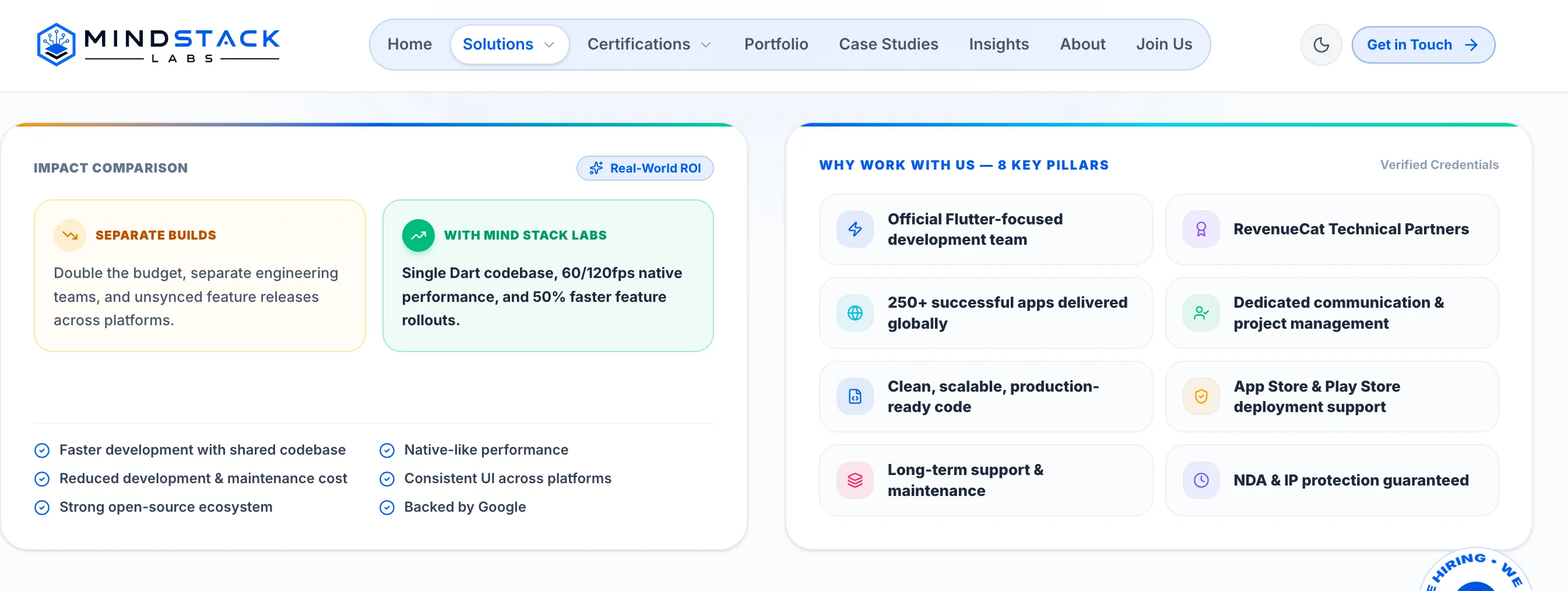
Mind Stack Labs is a Surat-based product engineering studio. It has delivered cross-platform apps, web platforms, and AI automation since 2019, and its credentials are public, so you can check them yourself.
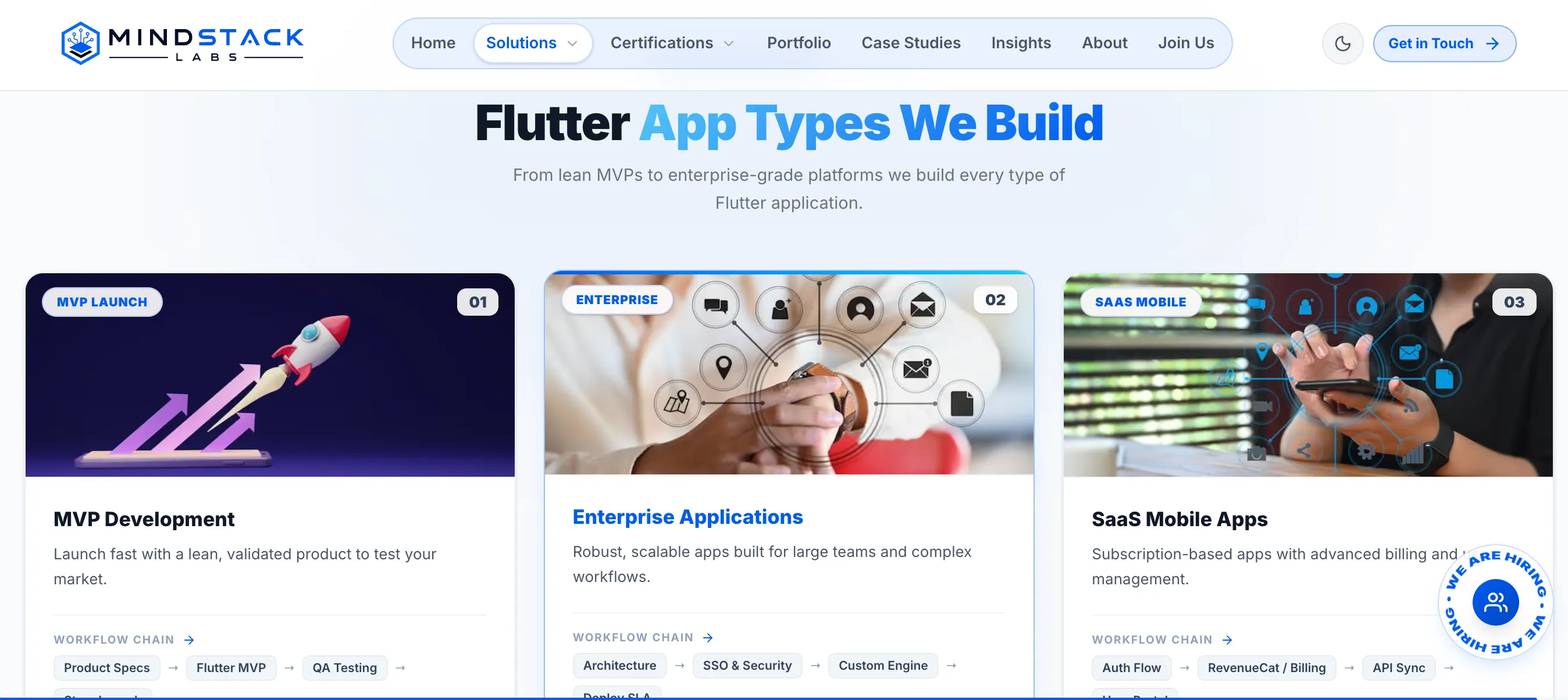
Key capabilities: Flutter, FlutterFlow, React Native, native iOS and Android, Node.js, .NET, Laravel, Python, Angular, Next.js, Firebase and Supabase, plus AI tooling including OpenAI, LangChain, and n8n
Verifiable credentials: Google-certified Flutter technology consultant, RevenueCat official technology partner, Upwork Top Rated Plus, and 5.0 ratings on Google, Clutch, and Trustpilot (the review sample is small)
Public numbers: operating since 2019, 250+ projects delivered, 200+ clients, 50+ IT professionals
Fintech evidence: the TEPS Tabadul project, listed in our case studies, is a secure digital financial services platform
Security posture: handled as engineering practice:
Encryption in transit and at rest
Role-based access control
Audit logging
Mind Stack Labs does not claim PCI, SOC 2, or regulatory certification
Best for: founders who want checkable credentials and cross-platform speed on a fintech MVP or v1 platform
2. DashDevs
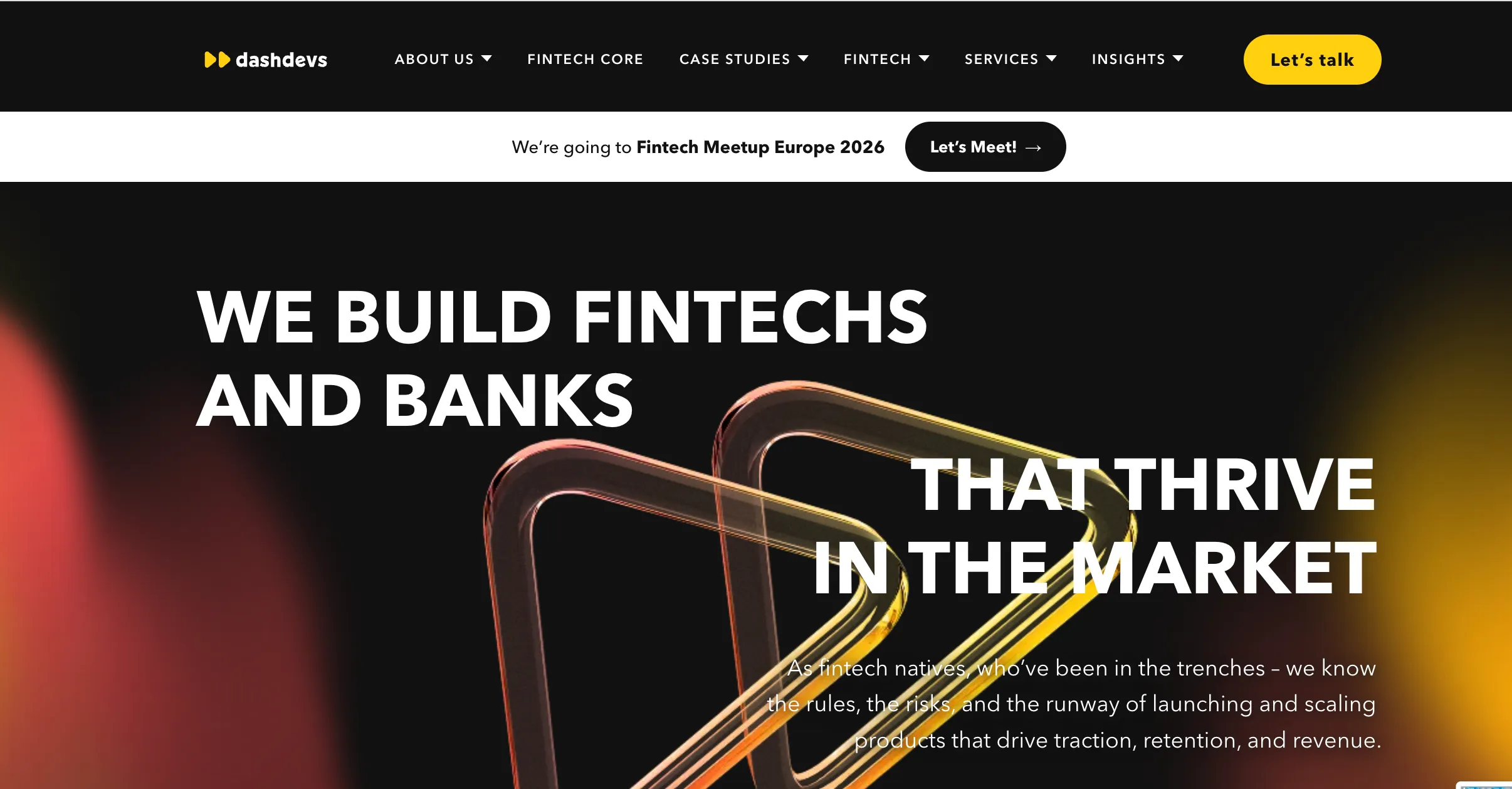
DashDevs is a fintech specialist. It positions itself around banking, payments, lending, and embedded finance.
Key capabilities: digital banking platforms, core banking integration, white-label fintech products, lending systems, card issuing, insurance software
Verifiable credentials:
Dedicated fintech services page
Clutch profile with public reviews
GoodFirms, Inc5000, AWS, and ISO badges on its site, which are self-reported and worth confirming
Public numbers: HQ listed as Poland in its site footer. Founding year and team size are not disclosed on the pages reviewed.
Fintech evidence:
Markets a white-label Fintech Core platform with a stated 8 to 12 week launch window
Says it works with leading banks but does not name them
Security posture: not detailed on the pages reviewed, so ask directly
Best for: teams that want a white-label banking-core platform rather than a from-scratch build
3. Itexus
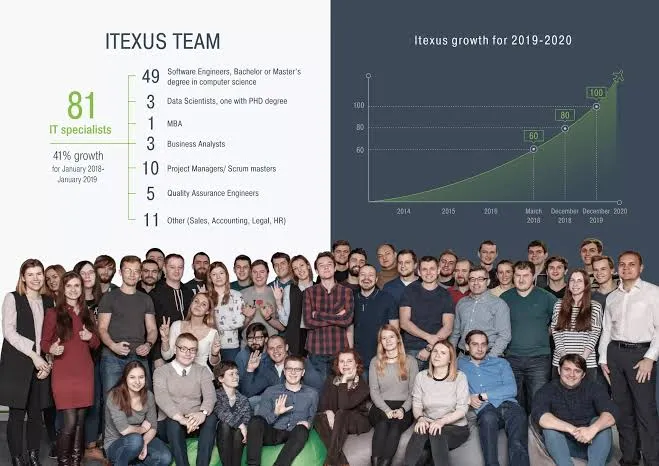
Itexus is a custom software firm founded in 2013. A large share of its stated work is in finance and insurance.
Key capabilities: fintech development and consulting, project audit and rescue, mobile banking, trading and lending software, AI features
Verifiable credentials:
Founded in 2013, with CEO George Epshtain, per a third-party listing
Its homepage shows a public review counter. Check which platform it refers to.
Public numbers: states 200+ delivered projects (company-stated, not audited)
Fintech evidence:
A dedicated fintech service line covering onboarding, real-time data, and payment or trading flows
No named client case study surfaced in this review
Security posture: not detailed on the pages reviewed, so confirm directly
Best for: investment, wealth, or insurance products that need domain-aware UX
4. Softjourn
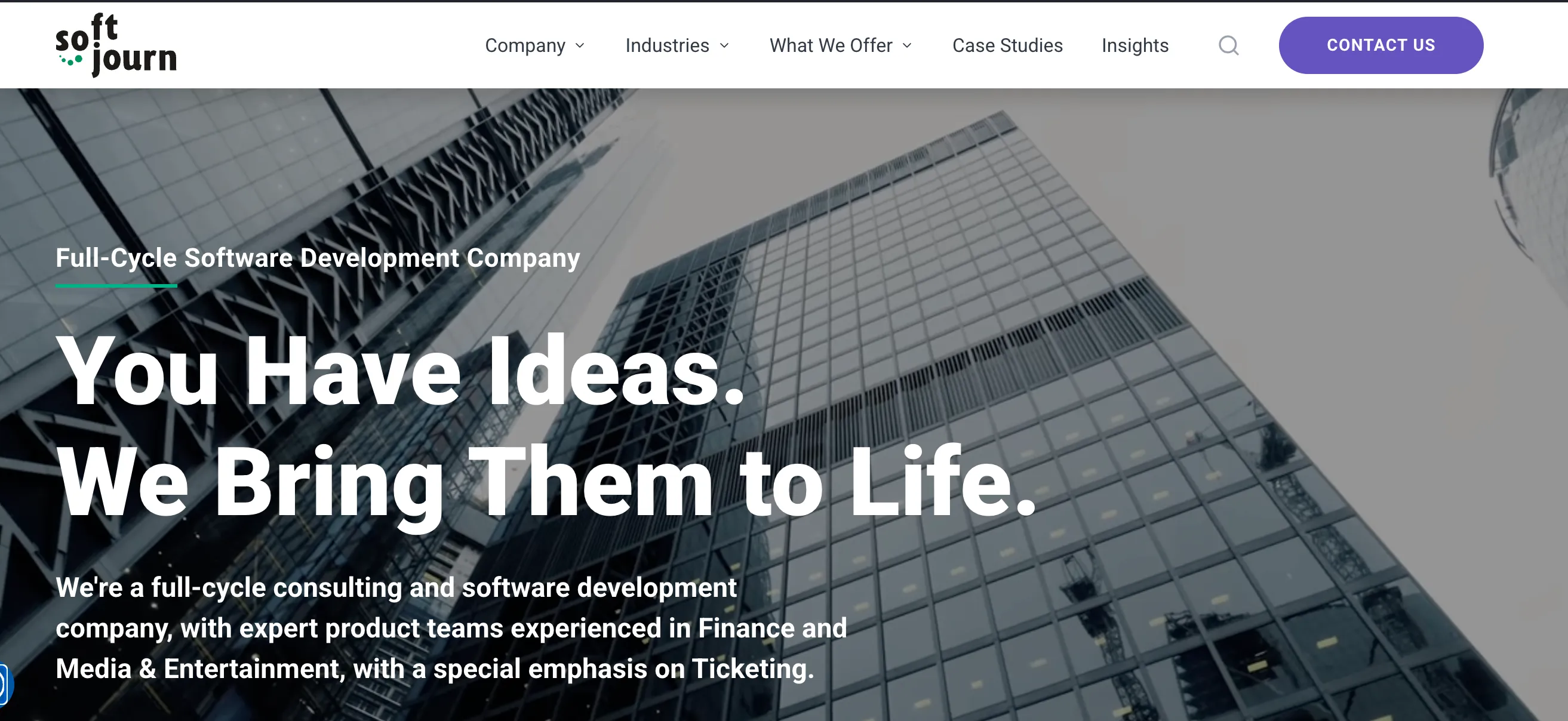
Softjourn is a payments-focused engineering company founded in 2001. It specializes in cards, money transfer, and transaction processing.
Key capabilities: card issuing and processing, prepaid and payout systems, money transfer, blockchain smart contracts, ticketing payments
Verifiable credentials: its About page states 200+ engineers and consultants serving clients in 30+ countries
Public numbers: 25 years operating and 20+ years in outsourcing, per its own pages
Fintech evidence:
Names the Ukrainian Processing Centre (UPC) as a client
The case study itself is confidential
Security posture: not detailed on the pages reviewed, so confirm directly
Best for: card programs and payment infrastructure
5. Yalantis
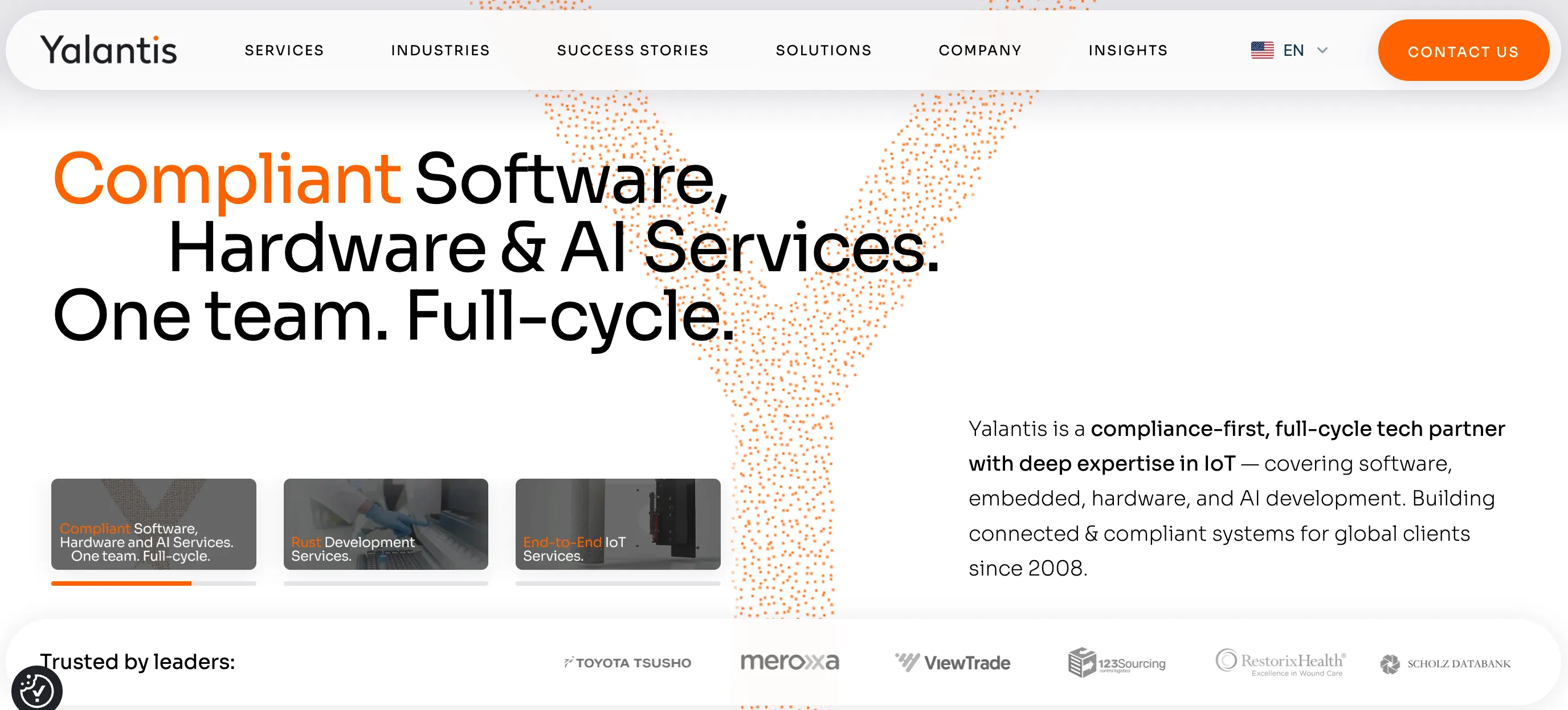
Yalantis is a product development company with published fintech and banking work.
Key capabilities: mobile banking apps, financial dashboards, cloud architecture, UX research
Verifiable credentials:
Its services page states ISO and IEC compliance for its delivery process
LinkedIn lists it as Warsaw-based with roughly 200 employees
Public numbers: about 200 employees on LinkedIn. Fintech project counts are not published.
Fintech evidence:
Runs a fintech insights section
No named client case study surfaced in this review
Security posture: only the ISO/IEC claim above, so confirm directly
Best for: mid-market companies that want design and engineering from one vendor
6. ScienceSoft
ScienceSoft is a large, diversified vendor with a banking and financial services practice.
Key capabilities: enterprise financial systems, data analytics, QA and security testing, legacy modernization, identity verification
Verifiable credentials:
Its homepage states 37 years in IT and 4,300+ delivered projects
Dedicated banking IT services page
Public numbers: 37 years operating (company-stated). Banking and finance project counts are not broken out.
Fintech evidence:
Lists banking, financial services, and insurance as a focus area
No named public fintech case study surfaced in this review
Security posture:
States it has done facial-recognition and identity-proofing work since 2013
Broader encryption and access-control practice is not detailed publicly
Best for: institutions modernizing existing financial systems
7. Intellectsoft
Intellectsoft is an enterprise-focused firm with listed fintech service lines.
Key capabilities: enterprise mobile apps, blockchain, systems integration, lending and payment software, data visualization
Verifiable credentials:
Its homepage states 19 years of experience
Its finance page lists lending, payment, and data visualization services
Public numbers: 19 years operating (company-stated). Team size and project counts are not published.
Fintech evidence:
Service lines are documented
No named client case study surfaced in this review
Security posture: not detailed on the pages reviewed, so confirm directly
Best for: larger organizations that need integration-heavy delivery
8. Andersen
Andersen is a large European services vendor with a fintech division.
Key capabilities: banking software modernization, dedicated teams, fintech builds aligned to GDPR, PSD2, AML, KYC, and PCI DSS
Verifiable credentials: FinTech industry page and financial services hub. The site states 18+ years operating.
Public numbers: 18+ years operating (company-stated). Team size is not confirmed here.
Fintech evidence:
States that its fintech builds are compliant with major frameworks
This is a self-reported claim about client products, not a certification Andersen holds
Security posture:
Only the compliance-alignment claims above
No independent audit or engineering detail surfaced in this review
Best for: long-running programs that need scalable dedicated teams
9. Binariks
Binariks is a mid-size engineering partner that has operated since 2016.
Key capabilities: cloud-native architecture, banking software, payment solutions, data platforms, blockchain
Verifiable credentials:
Financial and banking software pages
Clutch and GoodFirms badges on its homepage
HQ listed in Torrance, CA
Public numbers: operating since 2016. Team size is not disclosed.
Fintech evidence: names two projects without naming the clients:
A Swedish Bank ID verification integration
An investment web app
Security posture:
States the Bank ID project met GDPR requirements
Broader practice is not detailed publicly
Best for: teams that want senior engineers without enterprise overhead
10. Netguru
Netguru is a product design and development company founded in 2008, headquartered in Poznań, Poland.
Key capabilities: product design, mobile and web engineering, AI features, design systems, fintech app development
Verifiable credentials: fintech services page and public company data
Public numbers: founded in 2008. Its "several hundred" team size is company-stated.
Fintech evidence: names two pieces of fintech work on its own site, the most concrete on this list after Mind Stack Labs:
The "Swap" peer-to-peer payment app redesign for a Mexican fintech
A 5-week MVP for a New York fintech
Security posture: not detailed on the pages reviewed, so confirm directly
Best for: design-led fintech products where UX is the differentiator
Pro tip: Shortlist three vendors from different tiers: one boutique, one mid-size, and one enterprise. Then compare the scoping questions each one asks you, not just their proposals.
Comparison Table: Top 10 Fintech App Development Companies
Company | Headquarters | Team size (public) | Best for | Website |
|---|---|---|---|---|
Mind Stack Labs | India | 50+ | Cross-platform speed, checkable credentials | |
DashDevs | Poland | Not disclosed | Banking-core, white-label platforms | |
Itexus | USA / Belarus | Mid-size | Investment and insurtech UX | |
Softjourn | Ukraine / USA | 200+ | Payments infrastructure | |
Yalantis | Poland | ~200 | Design plus engineering | |
ScienceSoft | USA | Large | Enterprise modernization | |
Intellectsoft | USA | Mid to large | Integration-heavy delivery | |
Andersen | Poland / Belarus | Large | Scalable dedicated teams | |
Binariks | USA | Mid-size | Senior engineers, lean overhead | |
Netguru | Poland | Large | Design-led fintech products |
Headquarters and team-size figures come from public company pages and profiles. They are not independently audited.
What I Evaluate On
I use this rubric before any shortlist call:
Verifiable credentials: partnerships, certifications, or platform status you can check independently
Financial-domain evidence: shipped work that touches payments, KYC flows, ledgers, or banking APIs
Security as engineering practice: encryption, RBAC, and audit logging described at the implementation level
Delivery transparency: a named team, a set sprint cadence, and written timelines
Post-launch commitment: the support window and handover terms, stated before signing
Every section below, including the vendor list, follows this rubric.
What Does a Fintech App Development Company Actually Do?
A fintech app development company builds the regulated, money-moving parts of a product. Generic app shops often subcontract or skip those parts.
Core services you should expect
Custom fintech app development across iOS, Android, and web
Payment gateway and banking API integration
KYC and identity verification flows
Ledger, reconciliation, and transaction-history architecture
Security engineering: encryption, role-based access control, and audit logging
Ongoing fintech application development services after launch
How this differs from a generic app development company
Capability | Fintech-focused partner | Generic app shop |
|---|---|---|
Payment and banking API work | Core competency | Often outsourced |
KYC and identity flows | Built before, patterns reused | Learning on your budget |
Audit logging and traceability | Designed in from sprint one | Added after a security review |
Reconciliation logic | Expected scope | Frequently descoped |
Regulatory conversations | Comfortable at engineering level | Deflected to your legal team |
Most fintech builds slip for one reason: nobody scoped the integration.
In-House vs Outsourced Fintech Development: Which Fits Your Situation?
The short answer:
Outsource when speed to market matters more than permanent capability
Hire in-house when the app is the company's long-term engineering core
Most funded startups I've worked with end up doing both, in that order. I go deeper in agency vs in-house team.
When in-house makes sense
You have a technical founder who can own architecture decisions
The roadmap spans multiple years, not one launch
You can absorb 3 to 5 months of hiring lag
When an outsourced fintech app development company makes more sense
An investor or board deadline is already on the calendar
You need senior specialists for 4 months, not permanently
You want a shipped MVP before committing to payroll
Offshore vs onshore trade-offs
Model | Realistic strength | Realistic risk |
|---|---|---|
Offshore | Best cost efficiency, deep talent pools | Timezone overlap must be contracted |
Nearshore | Workable overlap hours | Mid-range cost, smaller vendor pool |
Onshore | Easiest coordination and contracting | Highest blended rate |
How Much Does Fintech App Development Cost?
Cost follows compliance surface area, not screen count. Two apps with identical UIs can differ 3x in price.
Ask what regulated surfaces exist before you ask for a number.
What drives the cost
Number of payment and banking integrations
Depth of KYC, AML, and identity verification
Custom ledger and reconciliation requirements
Platform count: a single app, or app plus admin plus web
Team location and seniority mix
Directional ranges I have seen
These ranges come from projects I've scoped. They are not published benchmarks.
Project type | Typical scope | Range I tend to see |
|---|---|---|
Fintech MVP | One platform, one payment rail, basic KYC | Lower five figures USD |
Full product | Apps plus admin, multiple integrations | Mid to upper five figures USD |
Enterprise platform | Multi-entity, custom ledger, deep compliance | Six figures USD |
These ranges are vague on purpose. A vendor who quotes a precise figure before scoping your compliance surface is guessing, and you pay for the guess.
Hidden costs almost nobody budgets
Third-party penetration testing and remediation cycles
Per-check fees from KYC and verification providers
Longer app store review cycles for financial categories
Post-launch support beyond the included window
Admin and operations tooling, which teams often forget to scope (see internal tools)
How to Evaluate a Fintech App Development Company: A Vendor Checklist
Score vendors on evidence, not enthusiasm. When I run a shortlist through these four filters, it usually shrinks by half.
Portfolio green flags
Named, verifiable projects with architecture detail
At least one build that touches payments, ledgers, or identity
Portfolio red flags
An NDA covering every single project
Screens shown, but systems never explained
A fintech logo with no description of what they built
Technical expertise
Which stack, and why it fits your product
Custom build versus low-code, argued on merit rather than habit
Who architects the system, and whether that person stays on the project
Communication, process, and support
Named team members: accountability
A fixed sprint cadence: visible progress
A written support window: a real handover
Vague "dedicated team" language: a warning sign
Questions to ask before signing
Who owns the code and IP on day one?
What is the exact post-launch support window?
What happens to timeline and cost if scope changes mid-build?
Can I speak to the engineers, not just the account manager?
What does handover include: documentation, credentials, an architecture walkthrough?
The same evidence-first approach works in other regulated verticals. See our guide to choosing a HIPAA compliant app development company.
Which Fintech App Development Company Fits Your Priority?
Match the vendor tier to your actual constraint, not to the biggest logo you can afford.
If your priority is | Go with | Example |
|---|---|---|
Speed to MVP | Cross-platform boutique | Mind Stack Labs |
Banking-core depth | Fintech-only specialist | DashDevs |
Payments infrastructure | Payments specialist | Softjourn |
Enterprise modernization | Large diversified vendor | ScienceSoft |
Design differentiation | Design-led firm | Netguru |
Custom Build vs Platform or No-Code: What Is Right for a Fintech Product?
Build custom for anything that touches your ledger. Use platforms for everything around it.
That split has held on every build I've scoped.
Where custom fintech app development wins
Transaction logic, ledgers, and reconciliation
Differentiated UX you expect to iterate on for years
Data residency or architecture constraints set by a regulator or partner
Where a platform approach is enough
Internal admin panels and operations tooling (see admin panel templates)
Early validation before funding
KYC, notifications, and analytics, which are better bought than built
In my experience, FlutterFlow plus custom code is a reasonable middle path for a fintech MVP. Two conditions apply:
You own the exported code
You treat the ledger as custom work
Fintech App Development Timeline: What to Expect
Plan 6 to 12 weeks for a fintech MVP and 12 to 20 weeks for a full platform. Then add review buffer.
The buffer is not padding. Financial-category app store reviews take longer.
Stage | Typical duration I see |
|---|---|
Discovery and compliance scoping | 1 to 2 weeks |
Design and architecture | 2 to 3 weeks |
Core build | 4 to 12 weeks |
Security review and QA | 1 to 3 weeks |
Store review and launch | 1 to 3 weeks |
FAQs
1. How do I choose a fintech app development company?
Score each vendor on four things: verifiable credentials, shipped financial-product work, security engineering practice, and a written support window. Shortlist three, then compare the questions each one asks you during scoping.
2. Is outsourcing fintech development safe?
Yes, if data scope and access are set in the contract. Keep regulated data inside your processor or your own infrastructure, and require audit logging and least-privilege access from day one.
3. How much does it cost to build a fintech app?
Cost scales with compliance surface and integration count, not screen count. In my experience, MVPs land in the lower five figures USD and enterprise platforms reach six figures.
4. Fintech app development company vs in-house team: which is better?
A development company is better for speed and specialist access on a first launch. An in-house team is better for multi-year ownership. Most funded teams outsource v1, then hire around the shipped product.
5. What is the difference between fintech app development and fintech application development services?
App development usually means the build itself. Application development services cover the ongoing engagement: maintenance, security updates, and iteration. Products that buy only the build tend to stall about three months after launch.
Final Verdict: Start Here
If you're shipping a fintech MVP in 2026, start with a boutique cross-platform partner. Move to a fintech-only specialist once core banking integration becomes your bottleneck.
Run your three shortlisted vendors through the five criteria at the top of this article. Give extra weight to whoever asks about your compliance surface before quoting a number.
If a vendor won't put support terms in writing, you already have your answer.
Want more engineering depth first? Browse the Mind Stack Labs blog or the TEPS Tabadul fintech case study.