

Multi-Lane Parallel Processing
Segregate network requests into isolated prioritization channels (high, default, background) to eliminate single-thread bottlenecks.
 React package on npmjs.com
Discover how to orchestrate multi-channel API workflows and concurrent network streams inside your applications using the fetchlane package, featuring priority scheduling and intelligent throttling.
Need this integrated or customized for your app?
Get a free quoteMIT License
Free & open source forever
TypeScript
Full type definitions included
Universal
Works in any JS environment
Community
Actively maintained
Key points
Built to remove the busywork of hand-rolling toggles, tabs, and animated switches for every new screen.
Segregate network requests into isolated prioritization channels (high, default, background) to eliminate single-thread bottlenecks.
Enforce strict operational boundaries mapped directly to client-side API quotas and specialized back-off windows.
Hook natively into request lifecycles to dynamically inject authentications, trace tokens, and custom operational headers across the pipeline.
About
Managing high-frequency API pooling, heavy data fetching, and microservice communications is a structural necessity for modern web applications. However, handling request throttling, parallel lane streaming, and complex network retry logic entirely in raw code can lead to race conditions and performance degradation. Moving pipeline management into an isolated, multi-channel execution engine simplifies asynchronous logic, allowing development teams to govern concurrent streams with prioritize execution and queue management directly inside the app.
The network routing engine provides an isolated lane-based scheduling panel that integrates cleanly into generic state setups. It offers complete structural authority across multiple pipeline options:
The fetchlane framework goes beyond basic promise execution by tracking real-time data states across execution lanes. It handles automated duplicate request deduplication, memory caching windows, and intelligent retry strategies using exponential back-off constraints. It also includes global interception hooks, making it simple to track data transitions, manage stale-while-revalidate configurations, and cancel active transfers programmatically when switching view structures.
Managing active networking tasks and response layers can be handled through two distinct state approaches:
Integrating a high-performance request manager gives developers a reliable framework for building complex data interfaces. By connecting intelligent task lanes to scalable timeout limits, separating stream behaviors, and keeping operations light with zero external dependencies, you build a resilient, production-ready fetching architecture that scales effortlessly with modern web platforms.
Native JavaScript. Pure JavaScript/TypeScript with no heavy dependencies.
Cross platform. Runs identically on iOS, Android, web, and desktop.
MIT licensed. Free and open source, forever.
Community backed. Actively maintained by the Mind Stack Labs team.
Quick start
Add the package to your project and you're ready to use it.
Add it to your package.json with npm or yarn.
Run npm install to resolve dependency tree.
Import the component in your React file and start building.
Integrate Fetchlane into your project today, or let our team customize it for you.
 React · npm
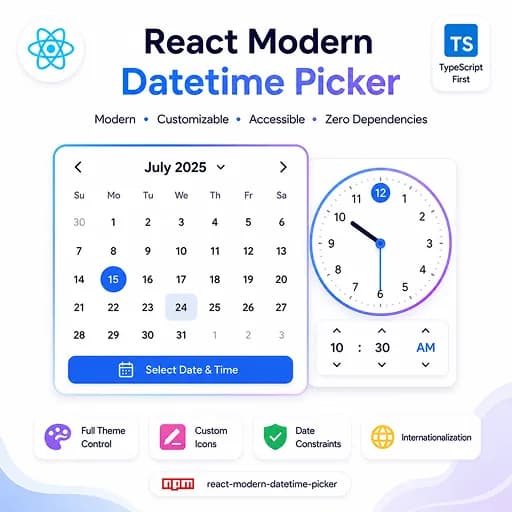
react-modern-datetime-picker is a powerful, highly customizable calendar and datetime picker component for React applications. Designed with a modern material UI, it supports multiple picker variants from simple date selection to full datetime picking with time controls, date ranges, and multi-date selection all in a single, lightweight package. Whether you’re building a booking system, a scheduling dashboard, […]
 React · npm
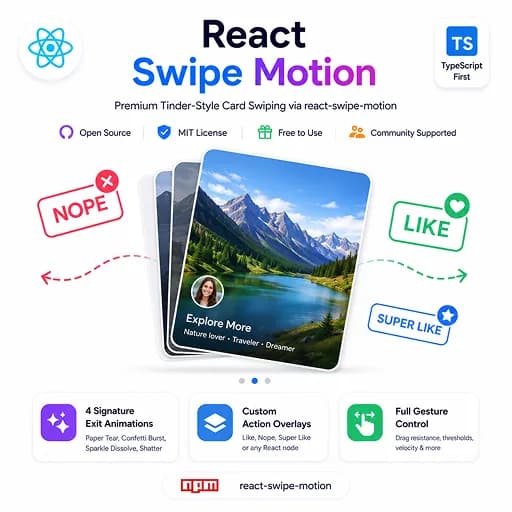
Discover how to embed an interactive, high-performance Tinder-style card swiping layout inside your React app using the react-swipe-motion package, featuring 60fps animations and custom gesture controls.