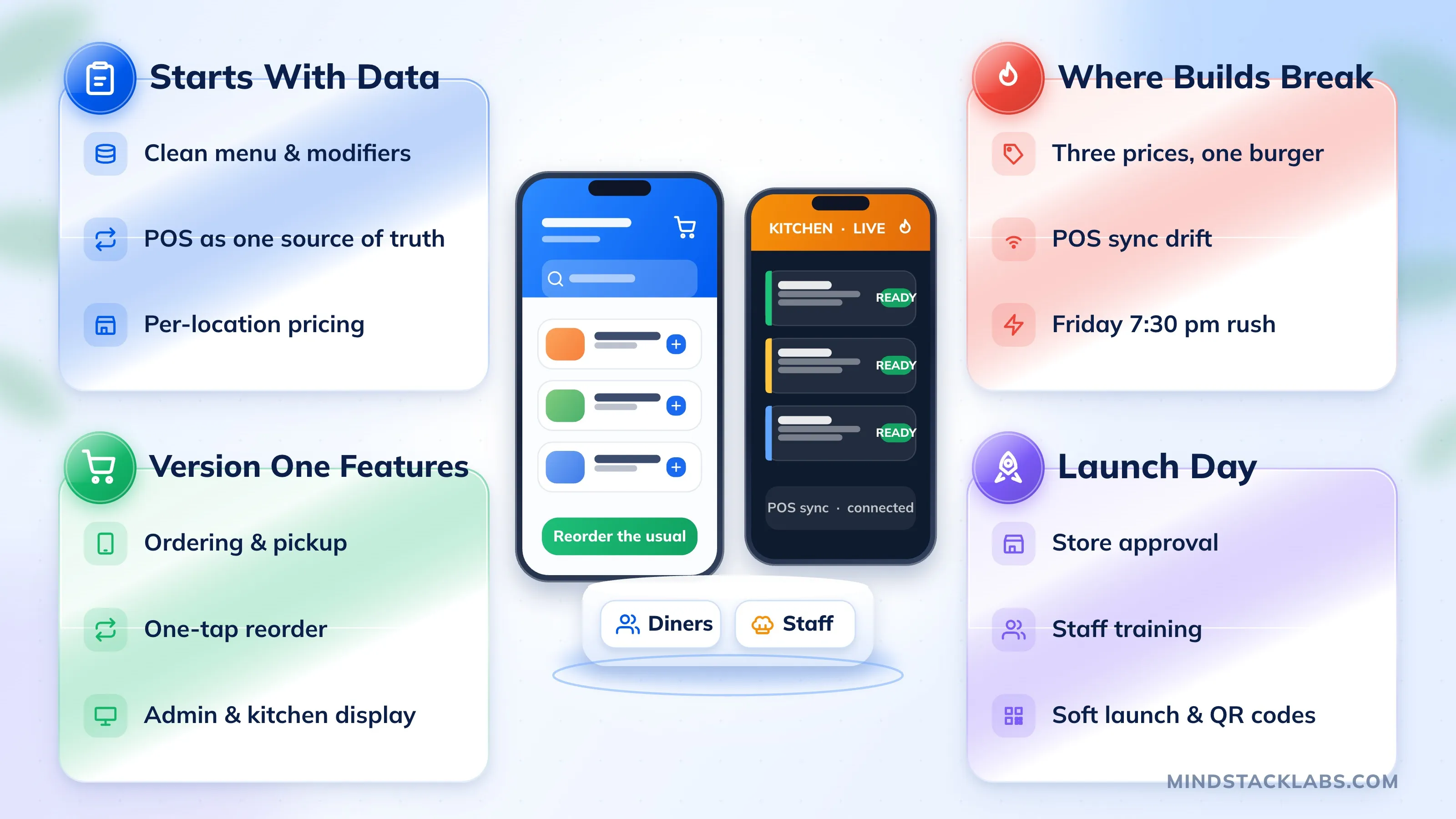
If you need a custom restaurant platform rather than a repackaged template, shortlist MindStack Labs, DineEngine, Onosys, Chop Dawg and RaftLabs first.
Add a platform or white-label specialist like EZ-Chow or DeliverLogic if launching fast on someone else's stack is still on the table.
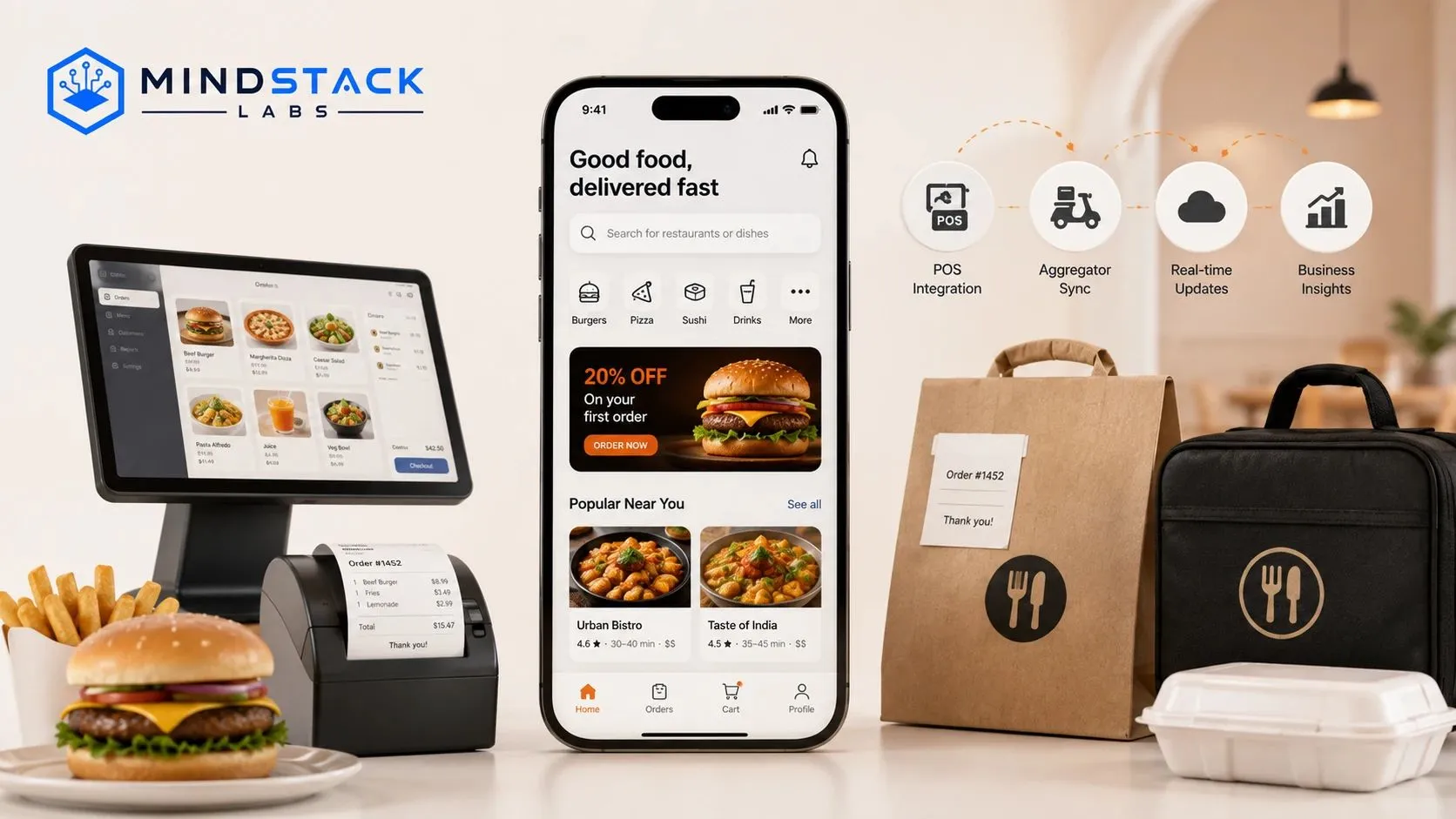
The right pick comes down to one question: are you buying engineering depth, or are you buying a configured ordering flow?
TL;DR
→ Custom build with POS and aggregator integration depth = MindStack Labs, RaftLabs, Techtris
→ Restaurant-only digital agency for a multi-unit brand = DineEngine, Onosys, Crave
→ Enterprise scale and household-name delivery apps = Appinventiv
→ Fast launch on a configured platform = EZ-Chow, DeliverLogic
→ In my experience, POS access and menu data quality kill more restaurant app projects than budget does, so weight those two criteria above everything on a vendor's homepage
Why I am the one writing this list
I have sat in more than a dozen restaurant software scoping calls over the last few years.
I have also audited restaurant app quotes. They range from serious integration plans to a feature list with a number stapled on the end.
Ever read a vendor roundup where every company was the best at everything? Me neither, and that is exactly the problem with most of them.
So here is my honest bias up front: I work with the team at MindStack Labs, a restaurant app development company that builds custom ordering and operations platforms. I have listed us at number one and I have written a real limitation into our entry, same as every other company here.
What I evaluated these companies on
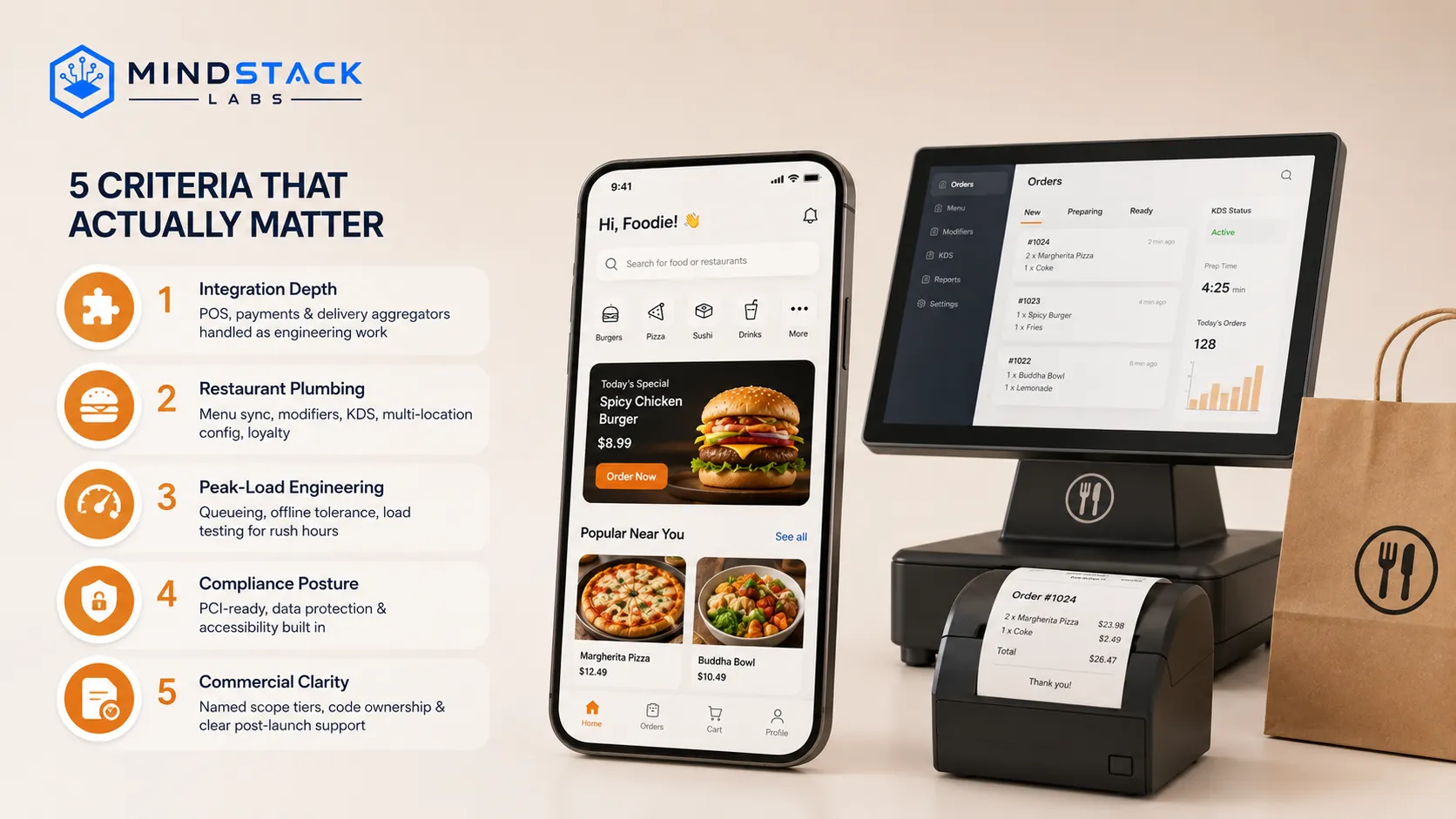
I scored every company on five plain criteria, because a ranked list without a rubric is just an advert with numbers.
Integration depth: POS, payments and delivery aggregators handled as engineering work, not a checkbox
Restaurant plumbing: menu sync, modifier trees, kitchen display, multi-location config, loyalty
Peak-load engineering: queueing, offline tolerance, load testing before a Friday 7pm rush
Compliance posture: card data kept out of scope, customer data and accessibility handled at build time
Commercial clarity: named scope tiers, code ownership, and what post-launch support actually covers
Everything below is judged on those five, in that order.
Top 10 Restaurant App Development Companies in the USA (2026)
1. MindStack Labs - Custom AI-Base Restaurant App Development Company
A custom software company that builds restaurant products around kitchen and operator workflows rather than feature checklists.
Key capabilities
Custom restaurant apps, ordering platforms, admin consoles and restaurant management software
POS, payment, delivery aggregator, loyalty and CRM integration scoped in discovery, not deferred
AI features built inside real transactional flows, not bolted on as a homepage chatbot
Cross-platform mobile delivery in Flutter with Node.js and Firebase backends
Numbers and proof
Shipped restaurant products include What's 4 Dinner for restaurant deals and partner admin, DineAssist AI for AI inside the dining flow, Forktastic for nested recipe and unit-sensitive data, and SnapDish for food discovery, feed performance and media pipelines
PrintBill POS covers billing and POS workflow work (verification flag: confirm the public case study URL before this line goes live)
Compliance is handled as engineering practice, meaning tokenized payments, access control and audit trails built into the architecture, not a certification claim
Reviews and badges are published on the live site rather than paraphrased here
Honest limitation: we are a custom engineering partner, not a templated ordering platform, so if you need one location live in three weeks at the lowest possible cost, a white-label product will serve you better and cost less.
Best for: teams where POS integration, multi-location config and order state logic are the hard part.
2. DineEngine
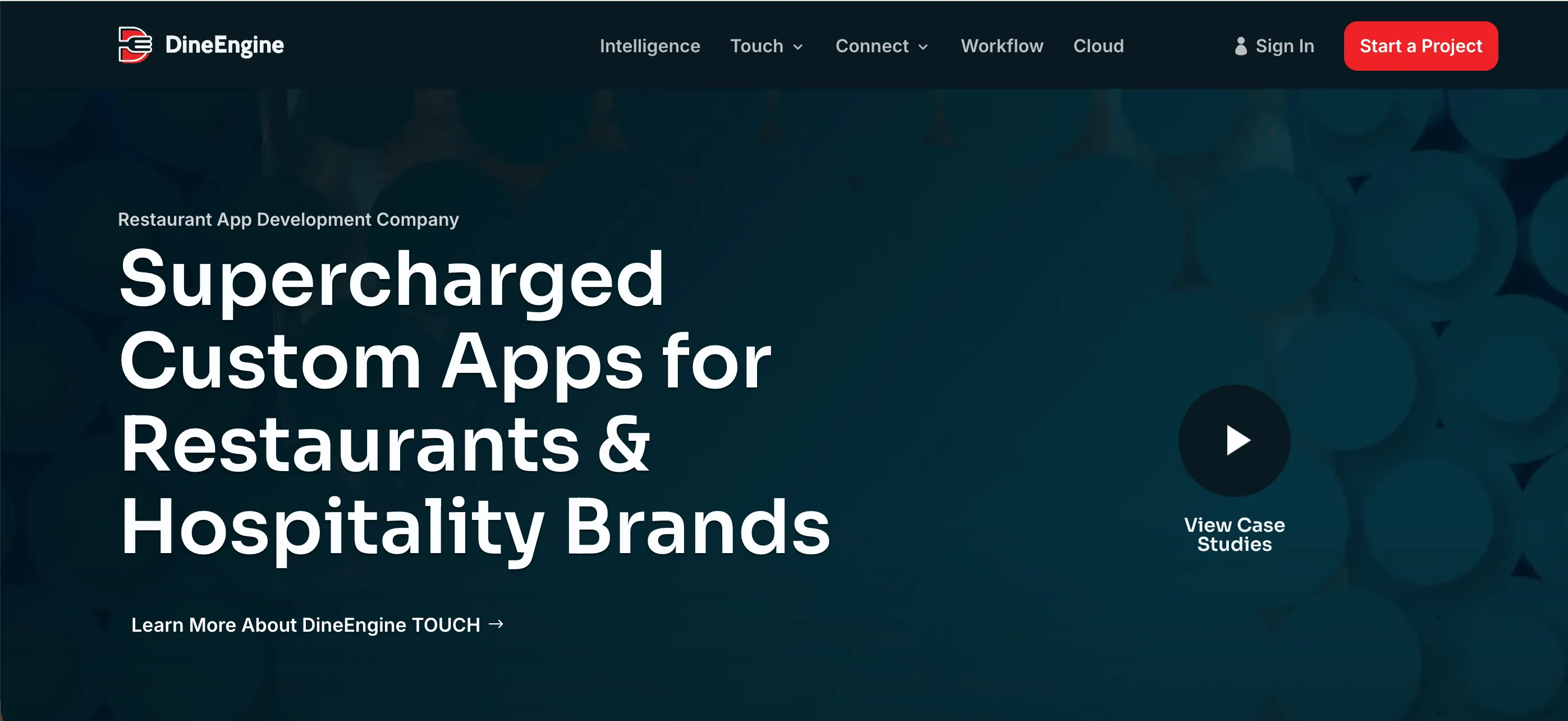
A restaurant-only digital agency building apps, websites and kiosks for multi-unit hospitality brands.
Key capabilities
Restaurant mobile app development for iOS and Android
Integrated restaurant websites, custom ordering flows and checkout
Kiosk apps, scan-to-order and restaurant CMS or digital asset management
Numbers
Published brand work includes Punch Pizza, BurgerFi and Wings and Rings, with case studies on their own site.
Honest limitation: the multi-unit brand focus is a strength until you are a single independent with a small budget.
Best for: franchise and multi-unit brands that want ordering, app and kiosk on one roadmap.
3. Onosys
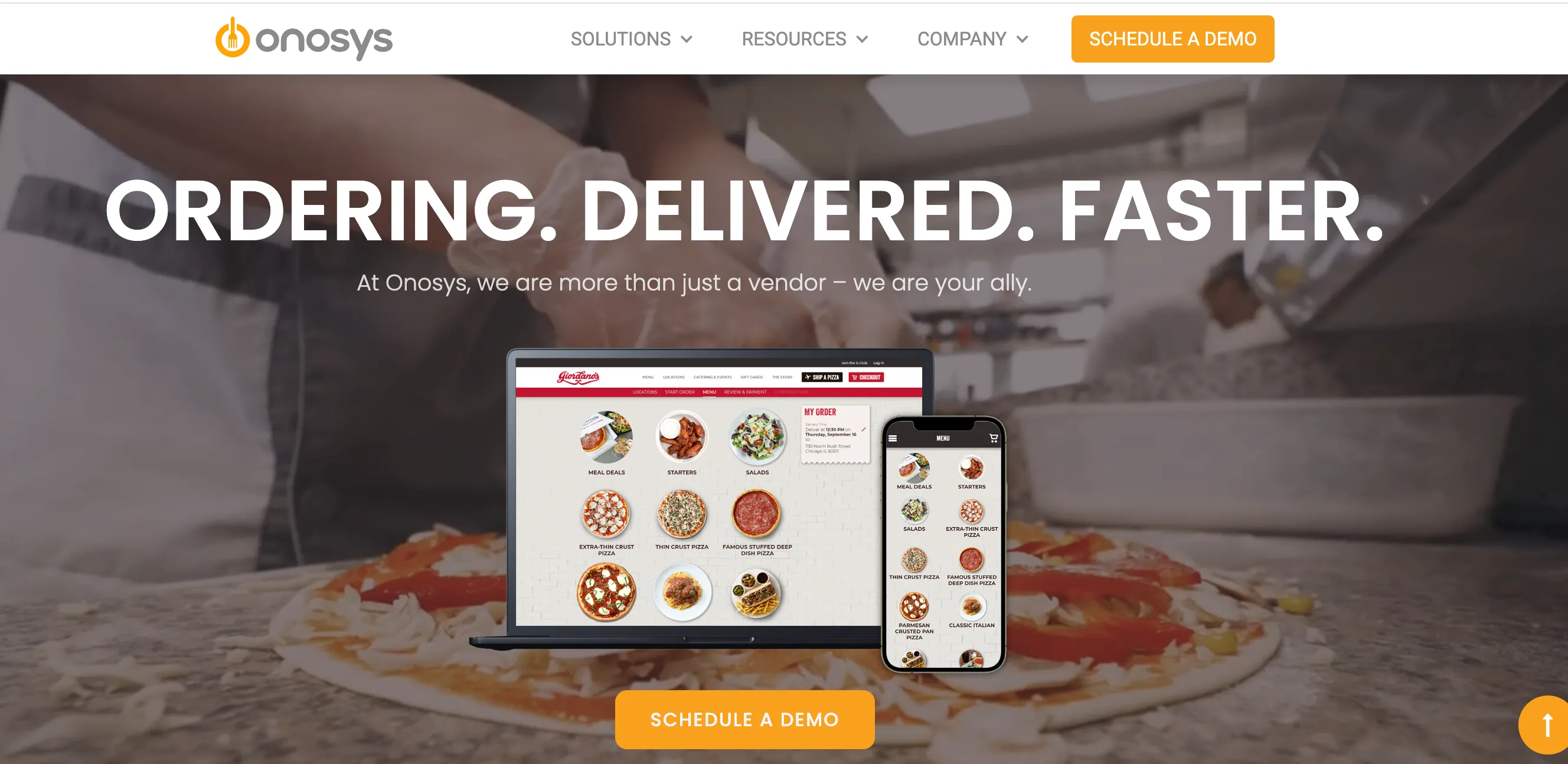
An online ordering platform for multi-unit restaurants, with web, mobile and call centre channels.
Key capabilities
Custom web-based ordering and mobile ordering
Marketplace order injection from delivery aggregators
Delivery dispatch and a call centre ordering application
Numbers
Founded in 2003, headquartered in Independence, Ohio, with more than 17 years of restaurant ordering experience per their own materials.
Honest limitation: this is a platform-led engagement, so requirements outside the platform roadmap take longer than a custom build would.
Best for: chains that want ordering across web, app and phone under one system.
4. Chop Dawg
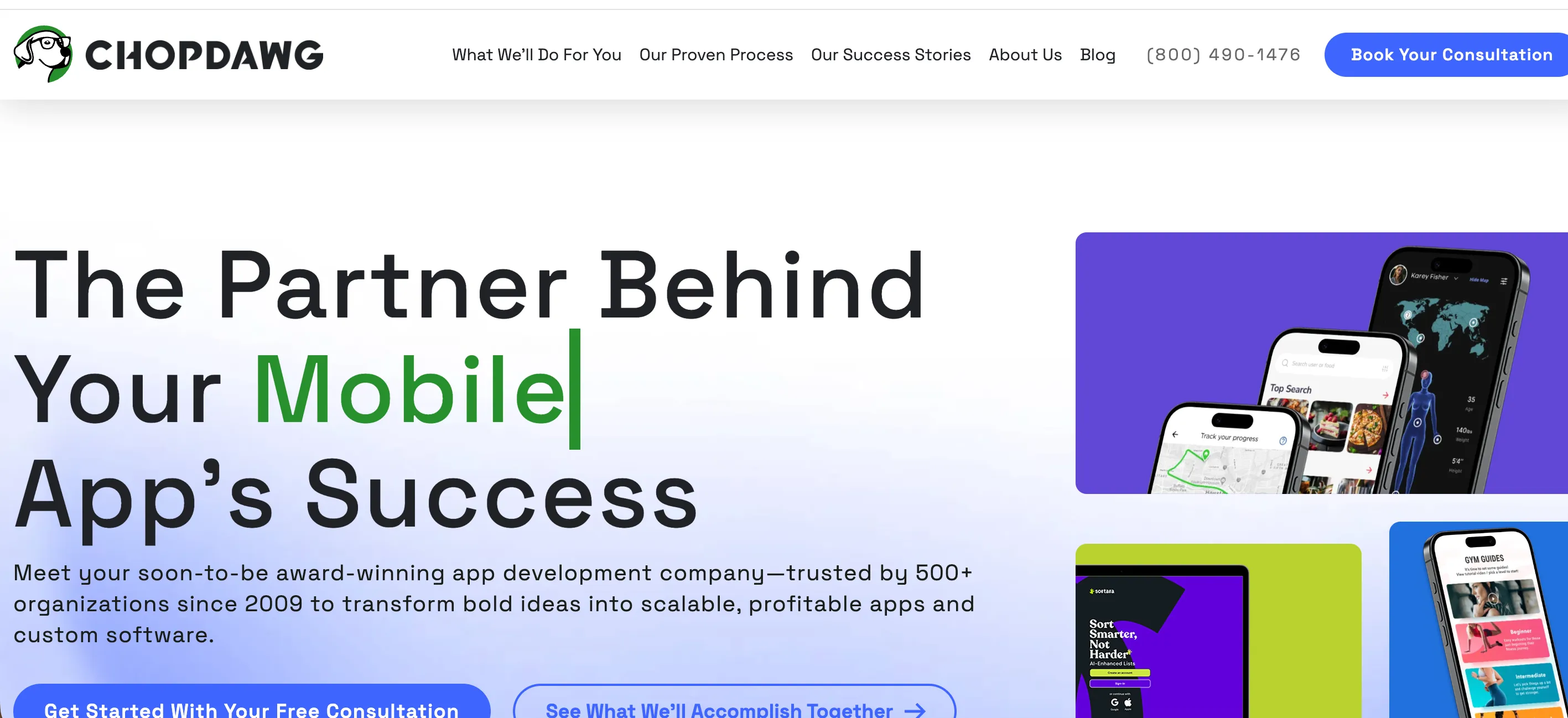
A full-service app studio with a named restaurant and hospitality practice.
Key capabilities
Custom online ordering, food delivery and reservation apps for iOS, Android and web
POS-integrated restaurant software, menu management, loyalty and rewards
Table reservation and management tooling
Numbers
Operating since 2009 with more than 500 apps and digital products delivered, including Unome, a members-only VIP app for Zuma under the Azumi Restaurant Group.
Honest limitation: restaurants are one vertical inside a broad product studio, so ask which team you actually get.
Best for: hospitality brands that need a premium guest-facing app, not just an ordering screen.
5. Appinventiv
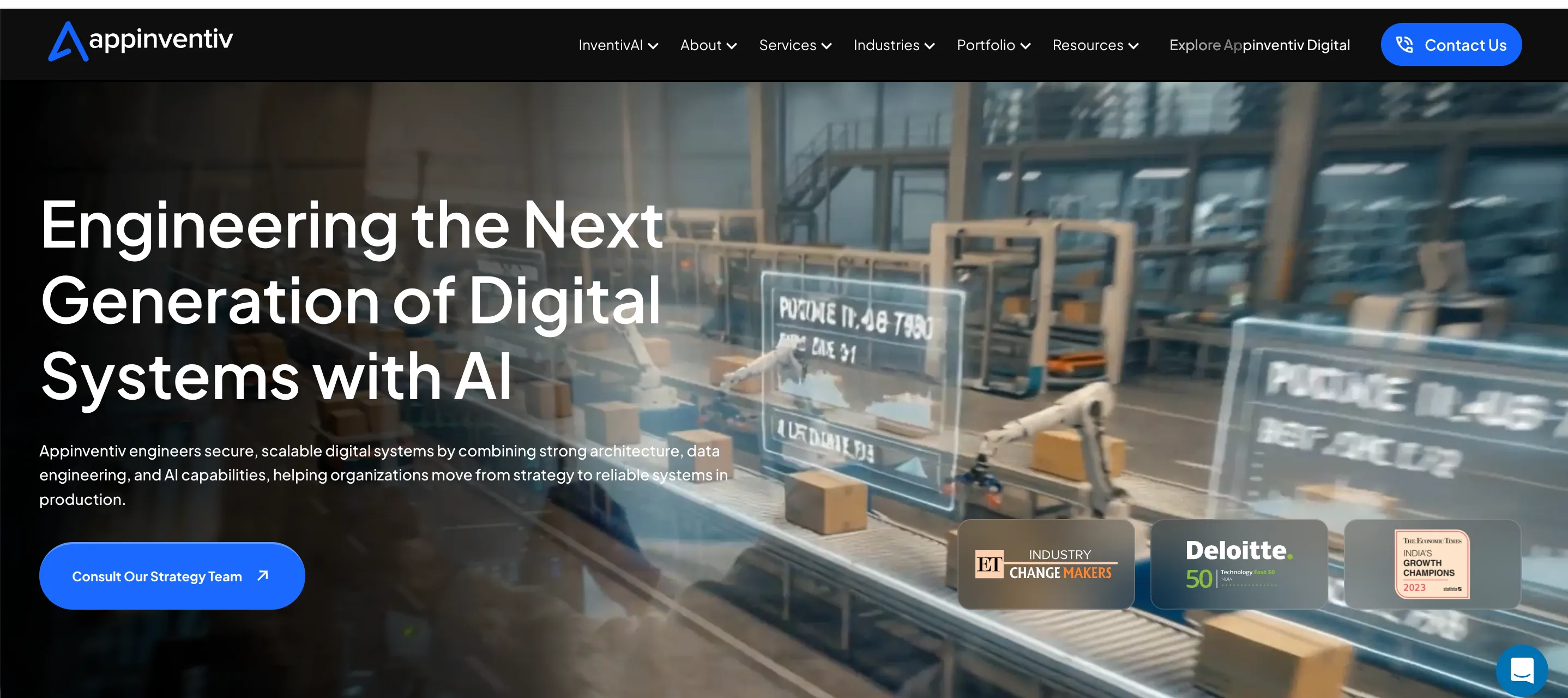
A large enterprise app development firm with the most recognisable food-brand portfolio on this list.
Key capabilities
Enterprise food delivery and restaurant app development
Multi-market rollouts and platform scalability work
Design overhauls and conversion optimisation on existing apps
Numbers
Published restaurant work includes Pizza Hut, KFC and Domino's, with KFC cited at more than 30,000 orders processed daily and a 22 percent conversion lift, per Appinventiv's own case studies.
Honest limitation: enterprise process and pricing, which is exactly wrong for a lean single-location MVP.
Best for: large chains rolling one app out across multiple markets.
6. RaftLabs
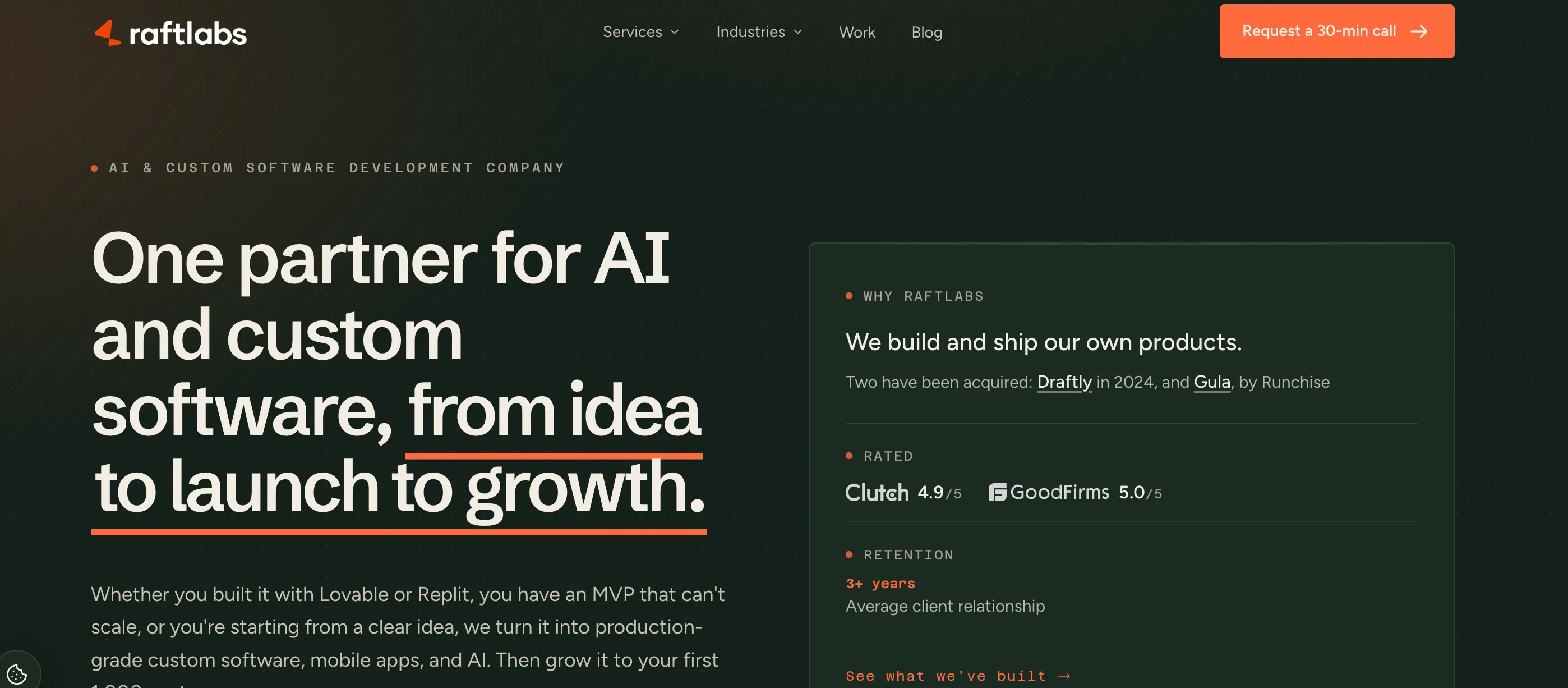
A product studio with a restaurant app service line and named POS integration experience.
Key capabilities
Mobile ordering and payment integrated with Square, Toast, Lightspeed, Tevalis and custom POS
Loyalty mechanics from day one, including visit tracking, digital stamps and tier rewards
Kitchen display integration so orders flow from app to kitchen without a tablet army
Numbers
Published restaurant case studies include Grubly and Gula, with a stated working prototype within three weeks of kickoff, milestone-based payment and a 60-day post-launch warranty.
Honest limitation: distributed delivery out of Dublin and Ahmedabad, so confirm overlap hours before you compare rates.
Best for: operators who want their existing POS named and integrated in phase one.
7. Techtris
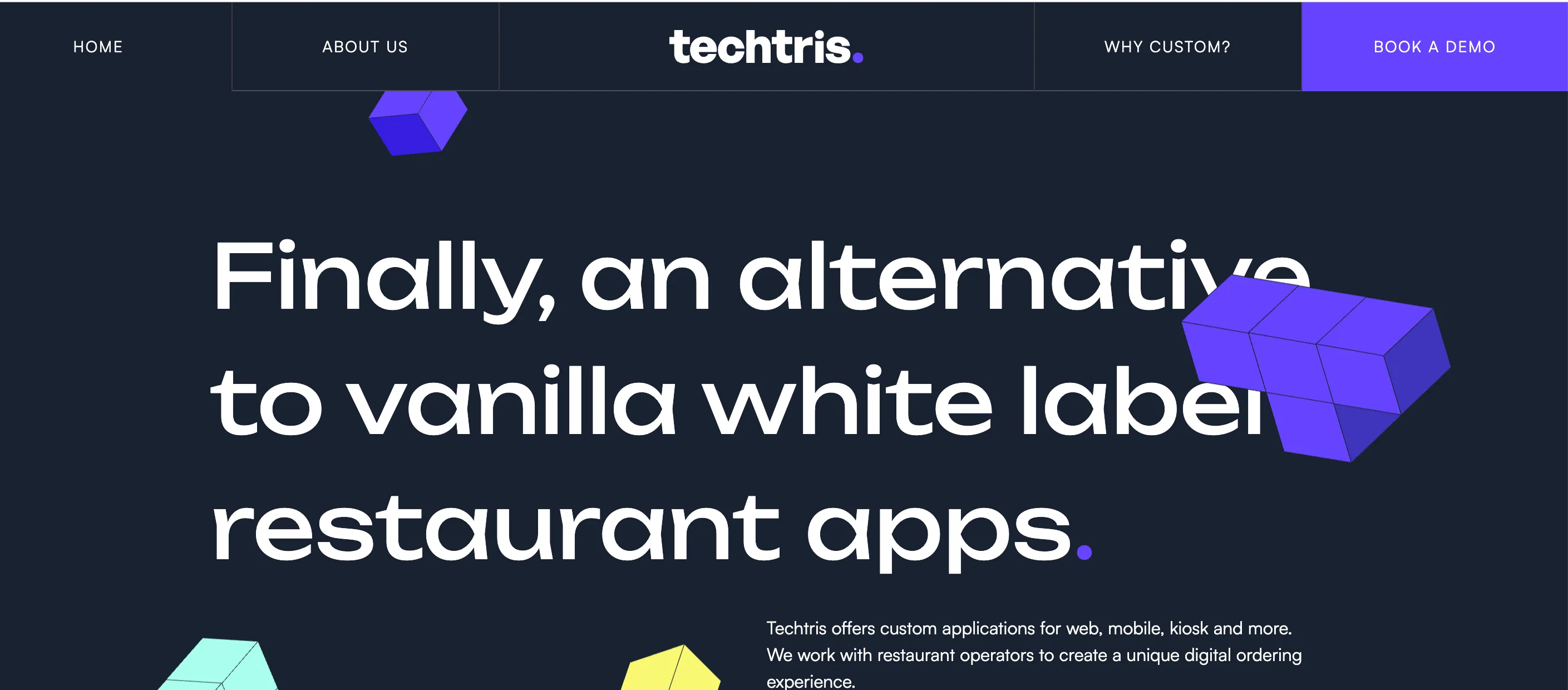
A small hospitality-focused studio building ordering across app, web and kiosk.
Key capabilities
Custom applications for web, mobile and kiosk in hospitality
Integrations with Olo, Otter and Spendgo
Ordering for hotels, on-site restaurants, bars and room service
Numbers
Founded in 2020, headquartered in Miami, operating as a small specialist team per their own listing.
Honest limitation: a very small bench, so capacity is the risk on a large multi-workstream build.
Best for: hotel and on-site food operations already using Olo or Otter.
8. Crave
A studio building custom ordering infrastructure for franchise and multi-unit operators.
Key capabilities
Bespoke storefronts rather than templated ordering pages
Enterprise integrations and first-party guest data systems
QR and at-table ordering experience
Numbers
Founded in 2019 in Pasadena, California, with earlier QR at-table ordering work for brands including Holiday Inn, Staybridge Suites and the Hollywood Roosevelt.
Honest limitation: a lean team by headcount, so validate delivery capacity against your timeline.
Best for: franchise groups that want guest data ownership, not a shared platform.
9. EZ-Chow
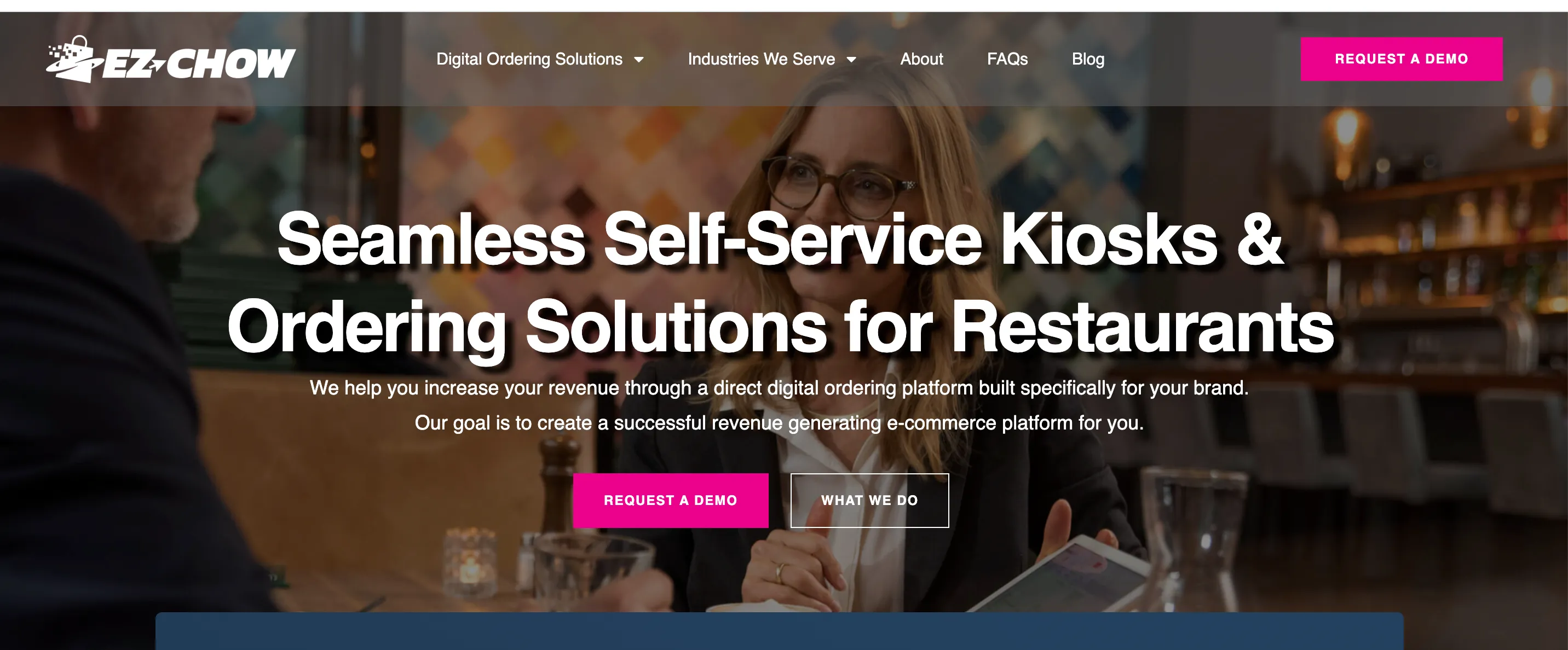
An omni-channel digital ordering provider covering online ordering and self-service kiosks.
Key capabilities
Online ordering plus self-ordering kiosks for quick service and fast casual
Rewards and loyalty modules
Non-traditional venues including event centres, hospitals and amusement parks
Numbers
Founded in 2015 in New Albany, Indiana, with published brand partners including Copeland's of New Orleans, Logan's Roadhouse, Keke's Breakfast Cafe and Peach Cobbler Factory.
Honest limitation: a product engagement, so deep custom workflow changes are not the model.
Best for: counter-service operators who want ordering and kiosks live this quarter.
10. DeliverLogic
A delivery and logistics platform for third-party and multi-restaurant delivery services.
Key capabilities
Consumer, restaurant and driver apps plus a customisable website
Delivery management, dispatch automation and last-mile tooling
Integrations and APIs across ordering and payments
Numbers
Operating in third-party delivery since 2009, headquartered in Tampa, Florida, and stating more than 45,000 businesses served.
Honest limitation: you inherit their platform's data model and roadmap, which is the trade for launching fast.
Best for: delivery marketplaces and courier services rather than single-brand ordering apps.
Side by side comparison
Company | Model | Integration depth | Best fit | Watch out for |
|---|---|---|---|---|
MindStack Labs | Custom build | POS, payments, aggregators, loyalty, AI in-flow | Integration and workflow-heavy platforms | Not a templated ordering product |
DineEngine | Restaurant-only agency | Ordering, kiosk, CMS for multi-unit brands | Franchise and multi-unit brands | Less suited to single independents |
Onosys | Ordering platform | Marketplace order injection, dispatch | Web, app and call centre ordering | Platform roadmap boundaries |
Chop Dawg | Product studio | POS-integrated ordering and reservations | Premium guest-facing apps | Restaurants are one vertical |
Appinventiv | Enterprise firm | Multi-market delivery at scale | Large chains, multiple markets | Enterprise pricing and process |
RaftLabs | Product studio | Square, Toast, Lightspeed, KDS | Named POS integration in phase one | Distributed delivery, check overlap |
Techtris | Boutique studio | Olo, Otter, Spendgo | Hotel and on-site F&B | Small bench, capacity risk |
Crave | Custom studio | Enterprise integrations, first-party data | Franchise groups wanting data ownership | Lean team by headcount |
EZ-Chow | Ordering product | Ordering plus kiosk hardware flows | Counter-service quick launch | Limited custom workflow scope |
DeliverLogic | Delivery platform | Dispatch, driver, multi-restaurant | Delivery marketplaces | Platform lock-in |
Pro tip: ask every shortlisted vendor to show you a staging environment before launch, because the ones who cannot are the ones who test in production.
What a restaurant app development company should actually ship
A restaurant app is four products wearing one name, and the three nobody demos are where projects fail.
Use this as your scope checklist on every vendor call.
Layer | What it does | Why it gets cut, and why that hurts |
|---|---|---|
Guest app | Menu, modifiers, cart, payment, order status, reorder | Rarely cut, it is the demo |
Web ordering | Same order engine on mobile web for first-time guests | Cut as "phase two", then it turns out most first orders start on web |
Staff or ops app | Accept, delay, refund, mark ready, close the day | Cut to save budget, so staff run the app from the POS terminal and stop using it |
Kitchen display | Order routing, prep timing, course firing | Cut because a tablet "works", until 30 orders land in six minutes |
Admin console | Menu, pricing, hours, tax, per-location config | Underscoped as a CRUD screen, then head office cannot change a price without a developer |
Loyalty and CRM | Identity, points, segments, lifecycle messaging | Deferred, so nobody comes back and the app looks like it failed |
Analytics | Order mix, repeat rate, channel margin | Replaced by POS reports that cannot see app-only behaviour |
If a quote for restaurant app development services covers only the guest app, it is not a platform quote. It is a storefront quote.
How much does restaurant app development cost in 2026?
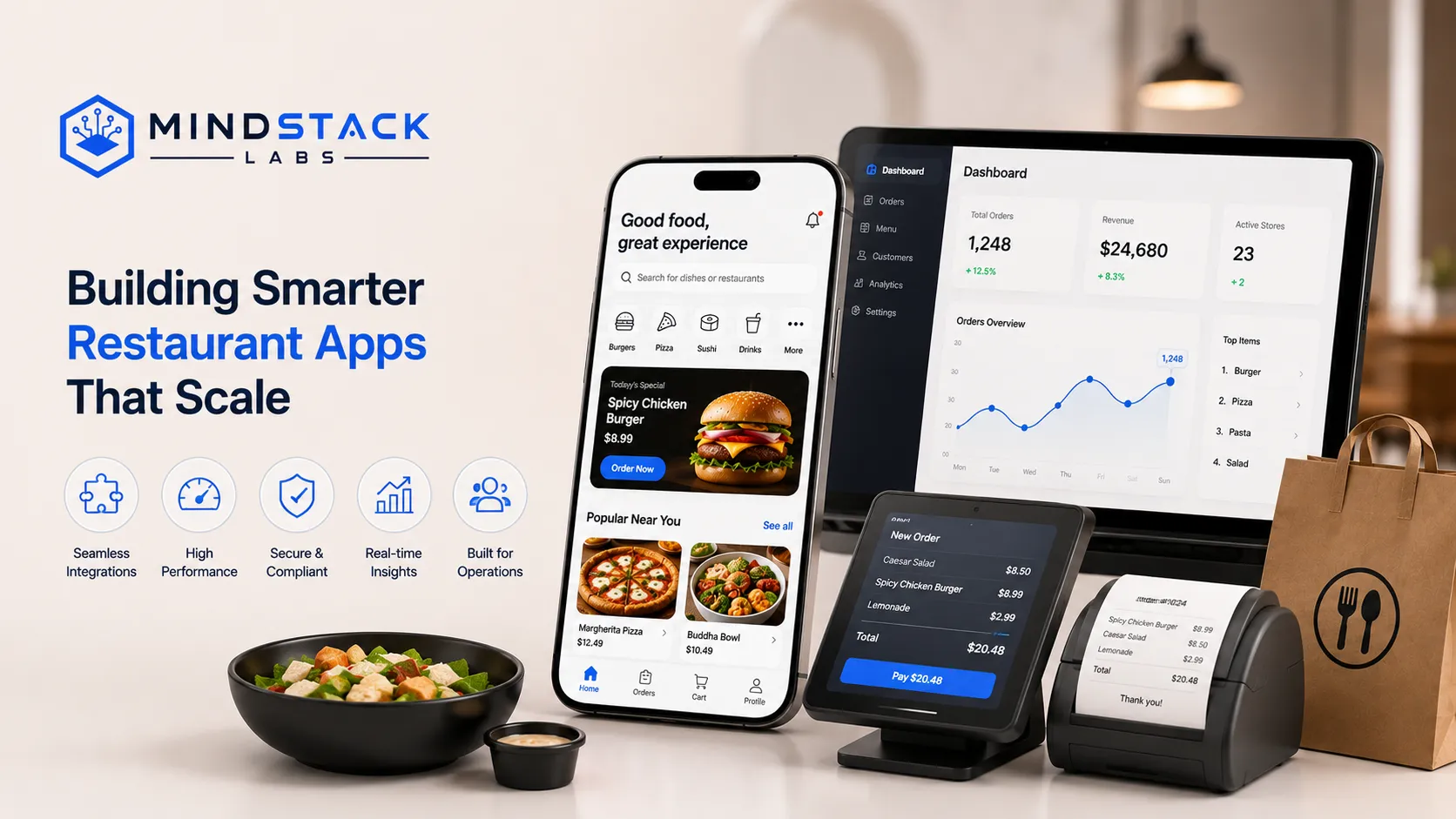
Expect a credible custom build to start in the mid five figures, with a full multi-location platform landing in six. Commission savings arrive later, not immediately.
Any number quoted before someone has read your POS documentation is a guess.
Scope tier | What it usually includes | Main cost driver |
|---|---|---|
MVP ordering app | One platform, menu, cart, payment, basic admin | Payment plus one POS integration |
Multi-feature customer app | iOS and Android, loyalty, reservations, push, analytics | Loyalty logic and notification infrastructure |
Multi-location ops platform | Customer app, staff app, KDS, admin, per-outlet config | Multi-tenant data model |
AI-enabled product | Any tier plus AI ordering, recommendations or assistant | Model integration, evaluation, guardrails |
Verification flag: dollar ranges are intentionally not stated. Populate from MindStack Labs delivered project data or a citable industry source before publishing.
What actually moves the number
→ Integration count = the single biggest swing factor in my experience
→ Number of user-facing apps = customer, staff, driver, admin each carry their own QA cost
→ Multi-location config = tax, hours, pricing and menu variance per outlet
→ Peak concurrency = infrastructure and load testing, not more screens
The cost nobody scopes is menu data cleanup. Modifier trees and pricing rules are a data project, not a copy paste.
Budget an ongoing support retainer plus third-party API fees for payments, maps, notifications and any AI models.
Does a restaurant app actually pay for itself?
The payback case is almost never "more orders". It is the same orders on a cheaper channel that you own.
Channel | Typical take on the order | Who owns the guest data |
|---|---|---|
Third-party marketplace | Commonly quoted at 15 to 30 percent, plus delivery fees | The marketplace |
Your own app or web ordering | Payment processing only | You |
Phone or counter | Staff time | You |
Verification flag: confirm current marketplace commission bands from a citable 2026 source before publishing these figures.
The only number that decides it
Commission avoided per month, not downloads.
Monthly sales shifted to your own app | Commission avoided at 20 percent |
|---|---|
20,000 dollars | 4,000 dollars per month |
50,000 dollars | 10,000 dollars per month |
100,000 dollars | 20,000 dollars per month |
Run it against your build cost and you get a payback month, which is a far better argument for a custom restaurant app than any feature list.
What kills the payback case
No reorder flow, so every order costs you acquisition again
No loyalty, so guests default back to the marketplace habit
Menu and pricing drift between channels, so guests learn not to trust your app
No push consent captured at signup, so you own the data and cannot use it
How long does a restaurant app take to build?
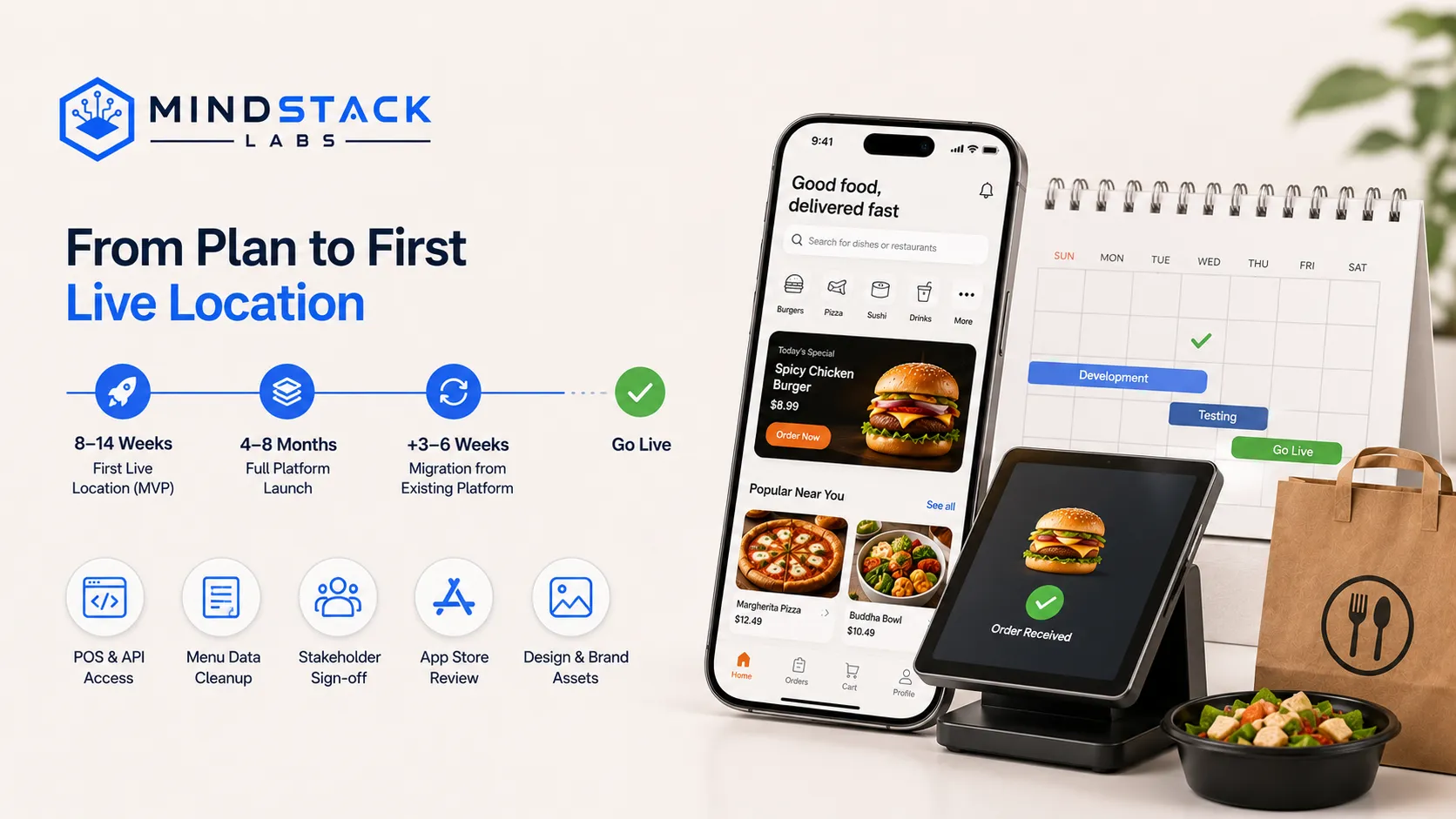
Measure time to first live location, not time to full launch, because that is the date your stakeholders actually care about.
First live location on a focused MVP: roughly 8 to 14 weeks in my experience
Full platform with staff app, KDS and aggregator sync: 4 to 8 months
Migration from an existing ordering platform: add 3 to 6 weeks, more if loyalty history matters
One constraint the generic roundups always miss: your own peak season. Launching an untested ordering flow the week before a holiday rush is a decision you make once.
What actually causes delays
POS API access, documentation and sandbox provisioning
Menu data cleanup, which is almost always worse than the client expects
Sign-off across franchise owners
App store review cycles, including payment policy rejections
Late brand and design assets
The stack behind a food ordering app that survives a Friday rush
Architecture is where restaurant app development stops resembling generic app development.
Ask any vendor to walk you through these seven decisions. Vague answers here predict outages.
Decision | What a good answer sounds like | Red flag |
|---|---|---|
Client framework | One cross-platform codebase, native only where hardware demands it | "We will build both natively" with no reason given |
Order intake | Queue in front of the POS, so a slow POS never drops an order | Direct synchronous write to the POS |
Menu model | Modifier tree with pricing rules, versioned per location | Flat item list with options as text |
Order state | Explicit state machine with a rollback path per state | Status stored as a string field |
Offline behaviour | Local queue on staff devices, replay on reconnect | "Kitchen needs stable wifi" |
Webhooks | Idempotent handlers with retry and dead-letter handling | "We trust the callback" |
Release control | Feature flags so one location can pilot before the estate | All locations updated at once |
At MindStack Labs we default to Flutter on the client with Node.js and Firebase behind it, because a single ordering codebase across iOS, Android and web keeps menu and pricing logic in one place instead of three.
Types of restaurant apps, and which one you are actually buying
Most briefs say "restaurant app" and mean one of six different products.
Type | Core job | Buy custom when |
|---|---|---|
Direct ordering app | Pickup and delivery from your own brand | Commission savings compound across locations |
Table and QR ordering | Dine-in ordering and payment at the table | Service model or tipping flow is unusual |
Reservation and waitlist | Cover management and guest comms | You run capacity rules no platform supports |
Loyalty and rewards | Repeat visit economics | Rewards logic is a marketing differentiator |
Kitchen and ops tooling | Prep, routing, inventory, shifts | Your kitchen workflow is the operational edge |
Marketplace or delivery platform | Many restaurants, many drivers | The platform is your product, not your channel |
Name which of the six you are buying before you request quotes. It is the single fastest way to make vendor estimates comparable.
Custom build, white-label platform, or POS-bundled app?
Pick custom only when your workflow is the product, otherwise configure what exists. Most operators I talk to need less custom software than they assume, and better integration than they planned.
Factor | Custom build | White-label platform | POS-bundled app |
|---|---|---|---|
Upfront cost | High | Low | Low or bundled |
Monthly cost | Hosting plus support | Per-location subscription | Included or add-on |
Control | Full | Limited | Minimal |
Integration ceiling | None | Vendor roadmap | POS only |
Data ownership | Yours | Shared or vendor | Vendor |
Exit cost | Low, you own the code | High, full rebuild | High, POS lock-in |
When white-label wins
One to three locations, standard menu, no unusual workflow
You need to launch this quarter
→ EZ-Chow or DeliverLogic style platform = live fast, subscription forever
When custom is the only real option
Your ordering, pricing or kitchen workflow is your differentiator
Aggregator commission savings compound across many locations
The app is your product, not just a channel
Clone scripts and templated marketplaces: what you are buying
A clone script buys you a demo, not a product. I have watched teams spend more unpicking someone else's undocumented codebase than a clean phase one would have cost.
If a cheap marketplace clone is on your shortlist because of price, price the second year too.
Wait, you might be thinking: is a custom restaurant app overkill for us?
Often, yes. If your requirements fit inside a standard ordering platform, custom is an expensive way to get the same outcome six months later.
My test is simple. Write down the three workflows that make your operation different. If a standard platform handles all three, stay where you are.
Compliance, payments and data risk you cannot delegate
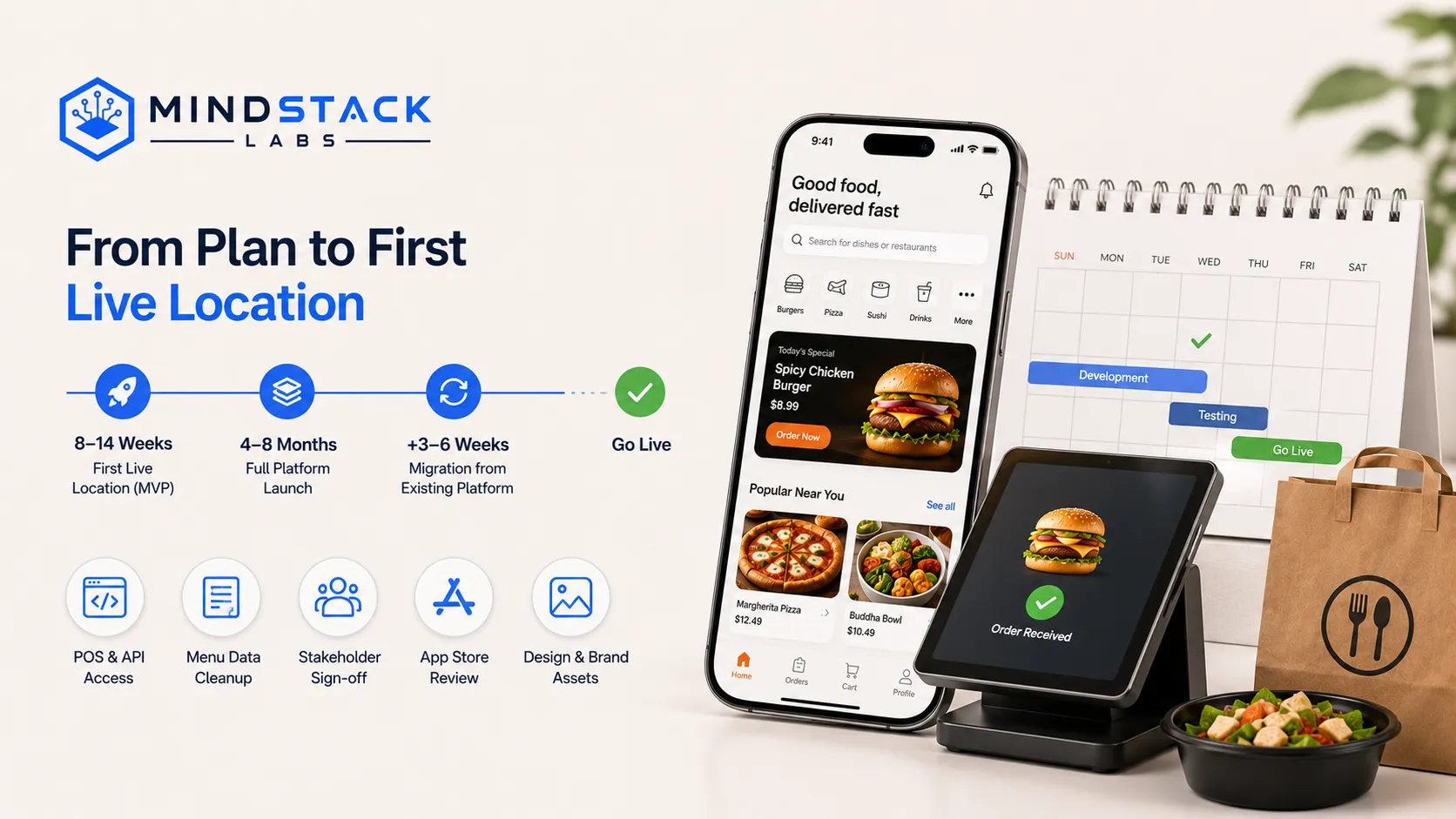
You can outsource the build. You cannot outsource accountability for card data and customer data.
Payments
Use a tokenizing provider so no primary account number touches your infrastructure
Get written confirmation that card data is never stored or logged
Customer and loyalty data
Loyalty turns a menu app into a personal data system
Handle GDPR and CCPA style access and deletion as a feature, not an afterthought
Decide data residency before architecture, not after
Accessibility
Consumer ordering apps face real accessibility expectations
Build to WCAG-aligned patterns from the first screen, because retrofitting costs more every time
Verification flag: do not state any security certification for MindStack Labs unless leadership confirms it in writing.
The USA-specific items offshore quotes usually miss
These are the requirements that turn a working app into a compliant one, and they are exactly what a generic quote leaves out.
State privacy law: CCPA and CPRA in California plus a growing set of state statutes, each with access and deletion duties
Accessibility: WCAG-aligned patterns, which matter more once you serve public venues or institutional locations
Tax and tip: rates and tipping rules vary by state and city, so tax has to be configuration, not code
Marketing consent: push and SMS re-engagement needs documented opt-in, captured at signup
App store payment policy: physical goods and delivery flows have their own review rules, and rejections cost weeks
Allergen and menu accuracy: your app becomes a published source of truth, so menu governance is a real requirement
Ask which of these six a vendor has handled before. It is a sharper test of USA restaurant experience than an office address.
The 2026 question every operator is asking: where does AI fit?
AI belongs in ordering support and operations first, not in a chatbot bolted onto the homepage.
Upsell and recommendation logic driven by order history, not guesswork
Voice or chat ordering that hands off cleanly to a real order object
Demand forecasting for prep and staffing
Review and feedback summarisation across locations
The rule I hold to: AI drafts, humans approve. An AI that can place an order but not explain a refund is a support ticket generator.
What usually goes wrong in restaurant app projects
Four failure modes cover almost everything I have seen, and none of them are about code quality.
Integrations deferred to phase two. Know why projects stall at go live? The POS integration was never scoped.
Menu modelling built for marketing. Modifier trees and pricing rules get treated as content, then rebuilt as engineering.
Peak load discovered in production. Flat all afternoon, vertical at 7pm, no load test in the plan.
Adoption collapse. The app works, guests order once. Nobody scoped loyalty, push or reorder flows.
Why choose MindStack Labs over the other companies on this list
Choose us when the hard part of your build is integration and workflow rather than a configured storefront. That is the narrow claim I am willing to defend.
Integrations scoped in week one. POS, payments and aggregators get named during discovery, not deferred.
Workflow mapped before scoping. We map how staff and kitchen actually work before anyone prices modules.
AI inside real flows. DineAssist AI exists because model output inside a transactional order is a different problem to a demo chat window.
Multi-vertical discipline. We build in regulated verticals like healthcare, which is where access control and audit trails stop being theory. The engineering side shows in our own technical writing, including Flutter and Twilio voice call integration and Dart developer tooling.
Clear commercials. Phased scope, module level pricing, and you own the code and the guest data.
Where we are the wrong call: a single location that needs a templated ordering page live in three weeks. Hire a platform and keep your budget.
What working with us actually looks like
Four phases, each with an output you can approve or walk away from.
Phase | Duration | What you get |
|---|---|---|
Discovery and integration audit | 1 to 2 weeks | POS and aggregator feasibility, named integration list, risk log |
Architecture and module scope | 1 week | Module level scope, phased plan, cost band per phase |
Phase one build | 8 to 14 weeks | First live location, guest ordering, payment, one POS integration |
Scale and hand-off | Ongoing | Staff app, KDS, loyalty, per-location rollout, documented hand-off |
Two commitments that sit in the contract, not the pitch deck:
Repository access from day one, with IP assigned at each paid milestone
A written change-order process, so scope moves are priced before they are built
If you are X, go with Y
If POS integration and custom workflow are the hard part, go with MindStack Labs or RaftLabs
If you run a multi-unit brand and want app, web and kiosk together, go with DineEngine
If you need ordering across web, app and phone, go with Onosys
If you are a large chain rolling out across markets, go with Appinventiv
If you want a premium guest-facing hospitality app, go with Chop Dawg
If you are a hotel or on-site F&B operation on Olo, go with Techtris
If you are a franchise group that wants first-party guest data, go with Crave
If you are counter service and need ordering plus kiosks fast, go with EZ-Chow
If you are building a delivery marketplace, go with DeliverLogic
Six questions to ask before you sign
Which restaurant products have you shipped that I can open today?
Have you integrated my POS, and what broke?
How will this behave at eight times normal order volume, and what is your load-test plan?
When do I get repository access and IP assignment, and is it milestone based?
What does post-launch support cover, and what does it cost per month?
Show me one project where the POS or kitchen workflow was the hard part.
Pro tip: ask question six first, because it separates engineering partners from configuration shops in about ninety seconds.
How to run the whole shortlist in 30 days
Four weeks with a fixed sequence, or it drifts into a quarter.
Week | Focus | Output |
|---|---|---|
1 | Requirements and longlist | One-page brief, 8 to 12 candidates, app type named |
2 | Desk scoring against the five criteria | Shortlist of four, one per archetype |
3 | Discovery calls and POS feasibility questions | Rescored shortlist, comparable estimates |
4 | References and decision | Signed scope with phase one defined |
The brief in week one is the whole game. Same brief to every vendor, or your estimates are not comparable.
FAQs
1. Can a restaurant app integrate with my existing POS?
Usually yes, but feasibility depends on whether your POS exposes a documented API and grants partner access. Confirm API availability and sandbox credentials before signing any build contract.
2. How much does a restaurant app cost to build?
Cost tracks scope tier, not vendor logo. Integration count, number of user-facing apps and multi-location config move the number more than design does.
3. Who owns the code after the project ends?
You should, with IP assigned at each paid milestone. Ask for repository access from day one rather than at final delivery.
4. Do I need separate iOS and Android builds?
Not usually. A cross-platform framework covers most restaurant ordering apps efficiently, and native only becomes necessary for heavy hardware or device-specific requirements.
5. What is a realistic MVP scope for a first restaurant app?
One platform, menu browsing, cart, payment, order status and a simple admin panel, integrated with one POS. Loyalty and aggregator sync belong in phase two.
6. Which POS systems can be integrated with a custom restaurant app?
Toast, Square, Clover and Lightspeed are the common ones, usually through partner API access. Feasibility depends on your merchant-level permissions, so confirm credentials during discovery rather than after signing.
7. Can our own app really reduce DoorDash and Uber Eats commission?
Only for orders you actually shift. The saving is real on direct orders, so the build case rests on reorder flow, loyalty and menu parity, not on downloads.
8. How do multi-location menus and pricing work?
As configuration, per location, with tax and hours attached. If pricing changes need a developer or a code release, the admin layer was underscoped.
9. Is offshore restaurant app development cheaper in practice?
Hourly rates are lower, but the total often is not once integration ownership, overlap hours and USA compliance work are priced in. Insist on named engineers and four hours of working overlap.
10. Do we need a kitchen display system in phase one?
Not always, but you need a plan for order intake at peak. If your kitchen accepts orders on a shared tablet, budget the KDS before volume arrives rather than after.
My recommendation
Start with a paid discovery and scoping engagement before you commit to any build.
Choose a platform or white-label vendor over a custom partner if your three differentiating workflows already fit inside a standard product.
If they do not fit, get the POS integration and the menu data model scoped in phase one. Everything else can wait.