Your code might be secure, but the open-source software, CI/CD pipelines, and third-party tools you rely on could leave you wide open to attack.
Most developers spend a lot of time asking whether their own code is secure. They review authentication, validate inputs, patch vulnerabilities, and scan pull requests. But modern software is rarely made solely from code that a single internal team wrote.
A typical application might depend on hundreds of open-source packages, GitHub Actions, Docker images, CI/CD plugins, cloud services, SDKs, and third-party APIs. Some of those dependencies themselves depend on dozens of others. That creates an uncomfortable reality:
“Your application can be secure while the software you depend on isn’t.”
And attackers increasingly understand this shift.
The dependency you trusted can become the attack surface
Imagine a developer installs a popular package to handle something mundane: parsing a file, formatting dates, processing images, or making HTTP requests. Nothing unusual happens — the package works, tests pass, and the application ships. Six months later, someone gains access to the package maintainer’s account and publishes a malicious version.
The next time your team runs a command like npm install, or when a CI pipeline automatically installs the latest compatible version, malicious code is silently introduced into your build environment.
Nobody necessarily changed your application code, nor did anyone break into your production server directly. Instead, the trusted dependency became the ultimate entry point. This is the core vector behind a modern software supply-chain attack.
We’ve already seen this happen
This threat model is far from theoretical — we’ve seen it play out repeatedly in recent history:
SolarWinds: Showed how attackers could compromise software before it reached customers by inserting malicious code directly into the build process, sending stealthy updates downstream.
event-stream: Demonstrated the vulnerability of open-source governance when a widely used package changed hands and a new maintainer introduced malicious code targeted at crypto wallets.
Log4Shell: Exposed the depth of dependency trees, showing that a vulnerability in a deeply nested logging library could instantly impact millions of Enterprise applications worldwide.
The key takeaway from these incidents wasn’t simply to patch faster; it was a fundamental security rule: you can’t secure what you don’t know you’re running.
The dependency tree is bigger than it looks
When developers add a package, they typically only think about that single library. However, the application interacts with an entire dependency graph. You might directly depend on just four SDKs, but underneath them lies a web of secondary dependencies:
You might directly depend on:
Your App
 ├── Authentication SDK
 ├── Database SDK
 ├── Image Library
 └── Analytics SDK
But underneath those packages:
Authentication SDK
 ├── Package A
 ├── Package B
 │    └── Package C
 └── Package D
      └── Package E
When multiplied across hundreds of top-level dependencies, the attack surface expands dramatically far beyond the code your engineering team actually reviews and writes.
It’s not just open-source packages
When developers hear “supply chain,” package registries like npm, PyPI, or Maven come to mind. While vital, the attack vectors extend much deeper across your entire software delivery workflow:
Attackers can target:
Package maintainers
GitHub accounts
CI/CD pipelines
Build servers
Docker images
GitHub Actions
Dependency repositories
Developer machines
Code-signing credentials
Artifact repositories
Third-party SaaS integrations
A compromised CI/CD pipeline is particularly dangerous because it holds access to sensitive secrets developers don’t interact with daily: production credentials, cloud infrastructure tokens, code-signing keys, and deployment permissions. By compromising the pipeline, attackers don’t need to break into the app — they let your delivery pipeline install the attack for them.
The weakest link may be your build system
Traditionally, the application security boundary was perceived linearly:
Internet → Application → Database
Today, the real delivery pipeline looks like this:
Developer → Git → Dependencies → CI/CD → Artifacts → Cloud → Production
Every single node in this chain is a viable target. For instance, consider a GitHub Actions workflow referencing an external action: — uses: some-org/some-action@main. If that repository is compromised, or the maintainer’s credentials are stolen, your automated build system will blindly execute unreviewed external code.
Convenience is part of the problem
Modern engineering stacks excel at removing friction. Need auth, payments, image processing, or deployment? You simply install a package, integrate an SDK, pull a Docker image, or attach a GitHub Action. While this speed is great for productivity, every shortcut introduces another trust relationship. The goal isn’t to stop using third-party tools, but to become deliberate about what we trust and how much access we give it.
What developers can actually do
The first step toward securing your software supply chain is maintaining visibility over your dependencies using Software Bills of Materials (SBOMs) and automated scanning tools. However, scanning alone is insufficient since clean packages can become compromised overnight.
Pin important dependencies: Avoid consuming unverified major/minor versions directly from package registries.
Review dependency updates: Treat version bumps with scrutiny, particularly when ownership, permissions, or build scripts change.
Protect CI/CD credentials & apply least privilege: Restrict access so automated build tools and third-party actions only receive the minimum permissions necessary.
Secure build artifacts & monitor behavior: Verify provenance for build outputs and flag dependencies making unexpected external network calls.
AI is making this even more interesting
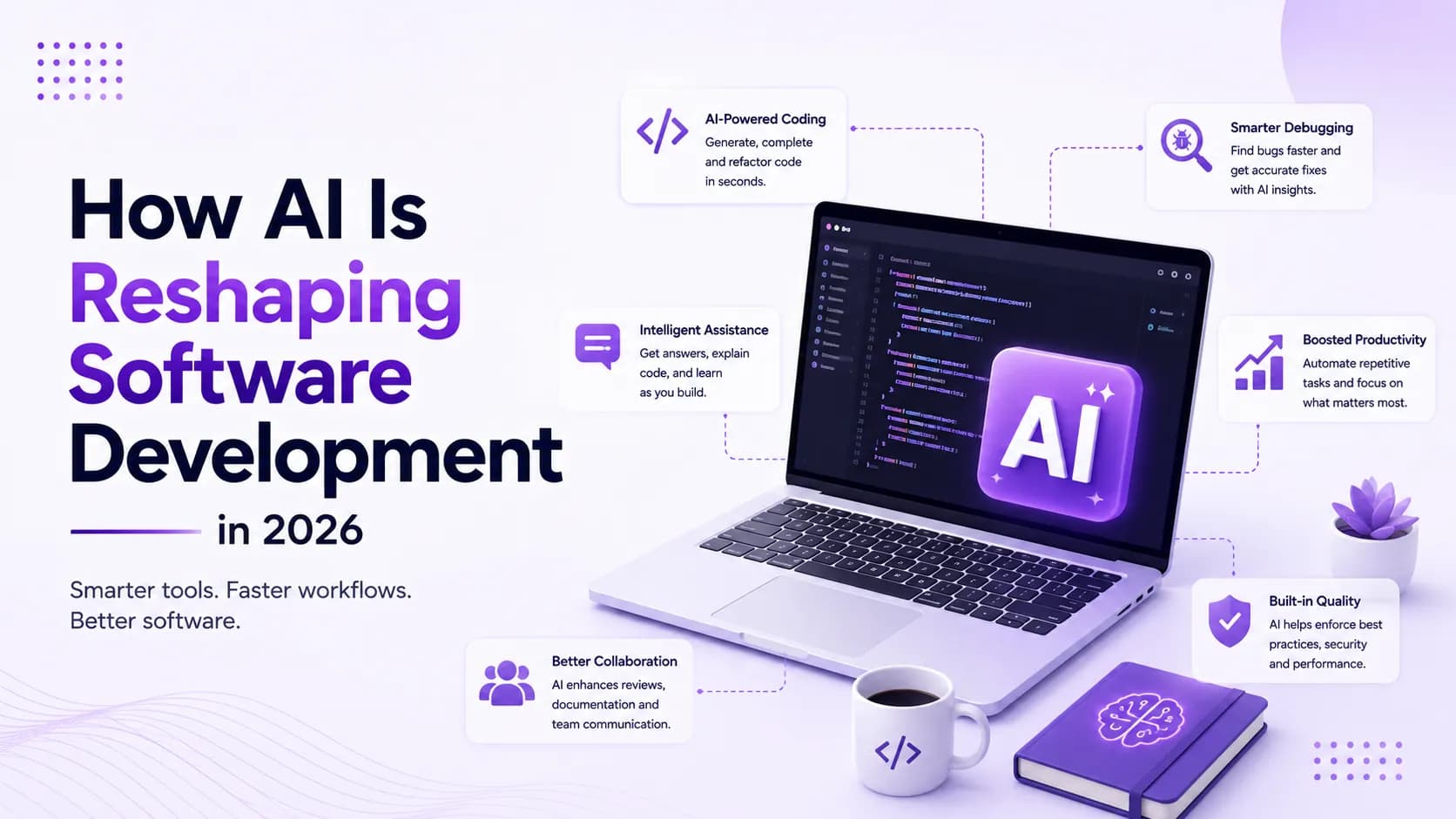
AI assistants accelerate feature implementation by generating code that often recommends brand-new packages. While the code might compile and run cleanly, developers must evaluate whether those dependencies are maintained, secure, and truly necessary before introducing them into the codebase.
The uncomfortable truth
Software security is no longer just about protecting the code we write directly. Applications today are assembled from an interconnected ecosystem of third-party libraries, pipelines, build servers, and services. Attackers don’t need to break into your application when they can simply compromise something you already trust.
Instead of only asking “Is our code secure?”, software teams must start asking: “Can we trust everything involved in producing this code?”
Because in modern software engineering, your application is only as secure as the chain that builds it.