

Hire fitness app developers who can show live fitness apps, real wearable integrations and a retention plan before they show you a quote.
On public evidence, Pixelforce and Riseapps lead this list, and the right pick for you depends on your budget band and app type.
TL;DR
I scored 10 fitness app development companies on 5 criteria, using only what each one publishes.
Pixelforce leads on proof, Riseapps on pricing transparency, and Stormotion on connected-equipment work.
Only 6 of the 10 publish any price signal. Published MVP floors start between $15,000 and $50,000.
Health data rules shifted in 2024, so ask every team about Health Connect, not only Google Fit.
Mind Stack Labs, my company, is on this list. It scored 18/25 and placed fifth.
Can you name a fitness app agency's Day-30 retention rate from its website?
Me neither. Here is why: almost none publish it.
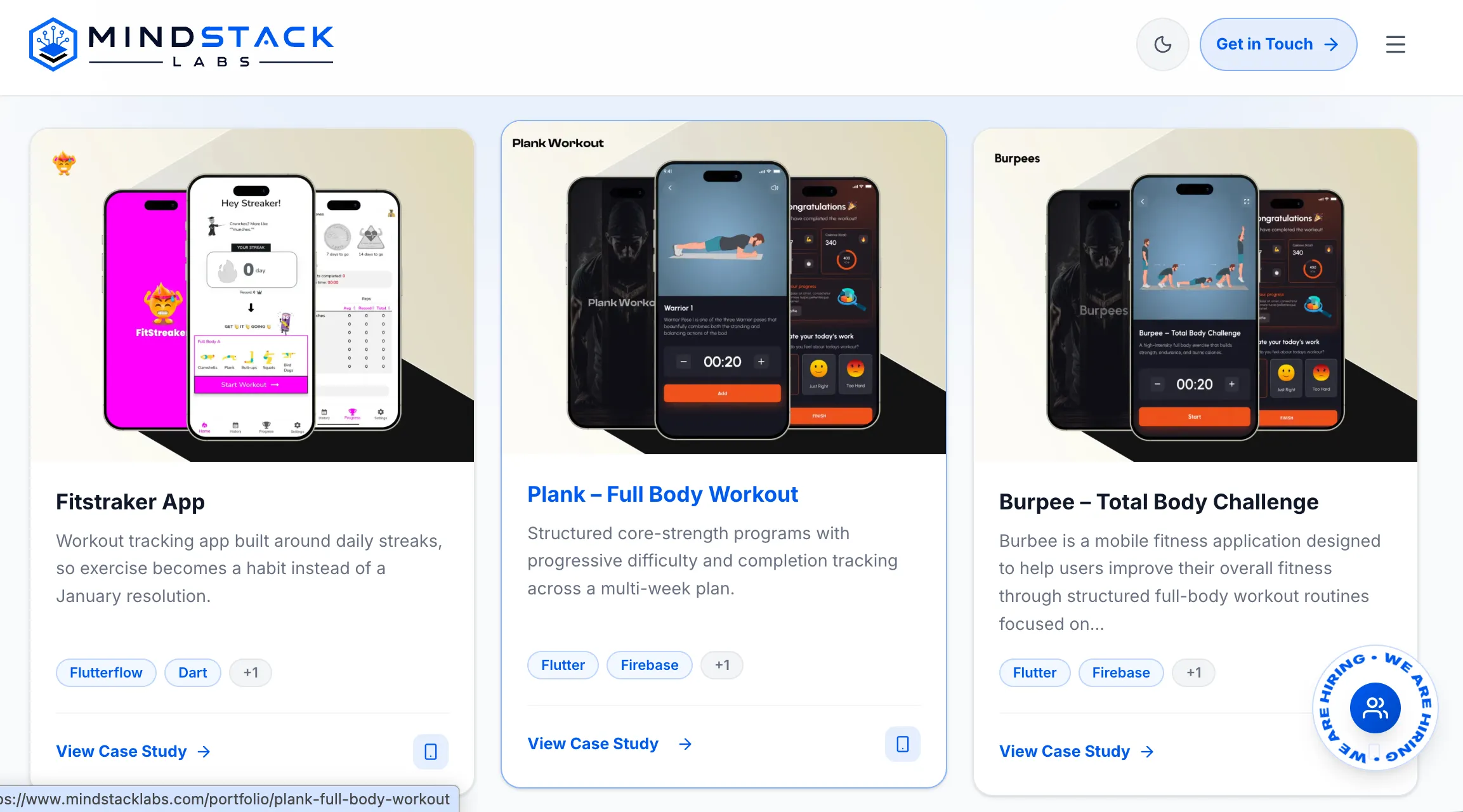
At Mind Stack Labs, our fitness page lists 10+ fitness and wellness builds since 2019. In my experience, scoping calls rarely stall on features. They stall on wearable sync and subscription logic, the two parts founders tend to assume are "standard."
So I set out to evaluate 10 teams the way I'd want a buyer to evaluate us.
What I'm evaluating on:
Fitness proof you can verify
Health data and wearable depth
Retention and monetization know-how
Pricing and timeline transparency
Engagement flexibility, from MVP to scale
First, Decide What Kind of Fitness App Developer You Need
Pick the type of team before you pick the team. A gym that needs a member app and a founder building a new coaching product need different partners.

Custom agency vs white-label fitness app builder
Option | Best for | Trade-off |
|---|---|---|
White-label builder | Gyms and studios that need booking and a branded member app fast | Limited control over features, data and user experience |
Custom development agency | Founders building a new product, coaching model or wearable-first app | Higher upfront cost, full ownership |
Wait, you might be thinking: "Can't I just start with a white-label app?"
Yes, if your product is your gym. No, if your product is the app.
Once users pay you for the app itself, a template's limits become your limits.
Match the developer to your app type
App type | The skill that matters most |
|---|---|
Workout and training | Program logic, progression, offline mode |
Nutrition and calorie tracking | Food databases, barcode scanning, AI food logging |
Wearable-first tracking | HealthKit, Health Connect, BLE device sync |
Gym and studio booking | Scheduling, payments, member management |
Live and on-demand classes | Video streaming at scale |
AI coaching | Personalization models with human-reviewed guardrails |
How I Scored These Fitness App Development Companies
I scored each team from 1 to 5 on each criterion, for a total out of 25. I used only public evidence from each company's own site, checked in October 2026.
Criterion | What scores a 5 | What scores a 1 |
|---|---|---|
Fitness proof | Named, live fitness apps with outcomes | Generic claims, no named apps |
Wearables and health data | Named platforms and devices (HealthKit, Health Connect, Garmin, BLE) | "Wearable integration" with no detail |
Retention and monetization | Retention method plus subscription experience | Feature lists only |
Pricing and timelines | Published ranges and phase timelines | "Contact us" only |
Engagement flexibility | Clear MVP, full-build and team options | One rigid model |
Ground rules:
No paid placements.
Ties go to the team with stronger verifiable proof.
Every number below is the company's own claim, not my test result.
Best Fitness App Developers in 2026: 10 Teams Compared
# | Team | Best for | Published price signal | Score |
|---|---|---|---|---|
1 | Pixelforce | Creator and coach subscription apps at scale | Quoted after scoping | 22/25 |
2 | Riseapps | Founders who want fixed price bands | MVP from $45,000 | 21/25 |
3 | TechAhead | AI coaching and consumer scale | MVP $50,000 to $100,000 | 18/25 |
4 | Stormotion | Connected fitness equipment | Not published | 18/25 |
5 | Mind Stack Labs | Retention-first MVPs with subscriptions | Timelines published, no dollar figures | 18/25 |
6 | Orangesoft | Cost planning by app type | $40,000 to $150,000+ | 18/25 |
7 | Trembit | Live video classes | Not published | 17/25 |
8 | Appinventiv | Broad wearable ecosystems | $30,000 to $300,000+ | 17/25 |
9 | Interexy | Native iOS rebuilds and team augmentation | $50,000 minimum budget | 16/25 |
10 | Zfort Group | Smaller budgets and studio booking apps | $15,000 to $75,000 | 13/25 |
1. Pixelforce
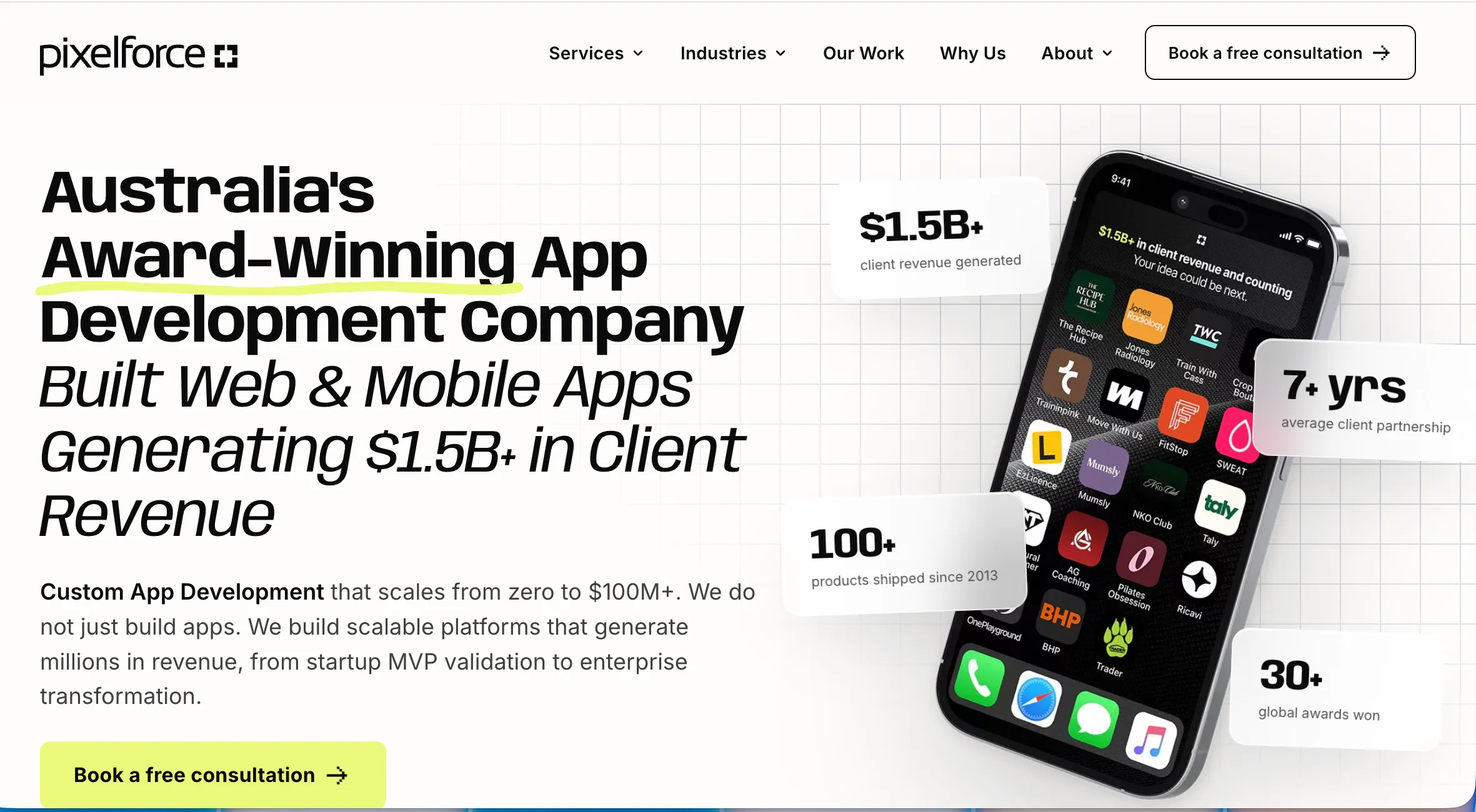
Pixelforce is an Australian team, headquartered in Adelaide with a Sydney office, and it has the strongest named fitness portfolio on this list. Its site says all development happens in-house.
Named fitness work:
SWEAT, Kayla Itsines' training app, which its site says sold for $400M
Move With Us, Fitstop, NKO Club, Pilates By Bryony and Traininpink
Fitstop, which its site describes as serving 100+ gyms
Key capabilities:
HealthKit, Google Fit, Wear OS, Samsung Health, Garmin, Polar, Whoop and Oura integrations
Native Apple Watch apps with complications
Adaptive bitrate video streaming and offline-first architecture
Tech stack: Flutter, native iOS and native Android
Published numbers:
13+ years in app development
MVP in 3 to 4 months, standard app in 6 to 9 months
Development pricing quoted only after scoping
What to check: the site lists both "100+" and "200+" shipped products. Ask which figure is current, and request a budget range early.
Best for: creators and coaches building a subscription app they expect to scale.
2. Riseapps
Riseapps is a US and Estonia team, with offices in Lake Mary, Florida and Tallinn. It publishes more pricing detail than anyone else here.
Named fitness work:
Ruggengraat, a Dutch workout startup that its site says grew revenue 400%
Probuddy, a personal training marketplace
Fit20, an IoT fitness platform its site ties to 150 franchise studios
Key capabilities:
Fitbit, Apple Watch, Garmin and WHOOP integrations
AI workout plans, form correction from images and voice-guided workouts
IoT integrations for connected sports equipment
Tech stack: React Native, Swift, Kotlin and Flutter
Published numbers:
Product workshop at $3,000
MVP from $45,000 in 60 days
Full app from $80,000 in about 4 months
58+ verified Clutch reviews, per its site
What to check: some results on the page come from non-fitness clients. Ask which AI features they shipped in a live fitness app.
Best for: founders who want a fixed budget band before the first call.
3. TechAhead
TechAhead positions itself as an AI and app development company in the USA, with award listings in Los Angeles and India. Its fitness work leans toward AI and consumer scale.
Named fitness work:
Healthy Mummy, an app it rebuilt before the company's acquisition
Unchecked Fitness, an AI fitness platform built on GPT APIs
Plunge, an IoT app for controlling a sauna and cold plunge
Key capabilities:
AI coaching, adaptive recommendations and voice-activated rep counting
Smartwatch, fitness tracker and heart rate monitor connectivity
AR and VR workouts plus live streaming
Tech stack: React Native, Flutter, Swift, Kotlin, Node.js and GPT APIs
Published numbers:
MVP at $50,000 to $100,000 in 3 to 5 months
Medium-scale builds at $100,000 to $250,000
16+ years in business, per its site
What to check: the fitness page doesn't name HealthKit or Health Connect. Ask exactly which health platforms they've shipped with.
Best for: AI coaching products that need to scale fast.
4. Stormotion
Stormotion has operated since 2017, and its site doesn't state a headquarters. It stands out for Bluetooth and fitness hardware work.
Named fitness work:
Companion apps for Force USA and SportPlus fitness equipment
A custom Android console app for STEPR stair climbers
FitTracks, a voice-guided fitness app, and Mindance, a mental wellness platform
Key capabilities:
Custom BLE protocols with reconnection logic and multi-device support
Apple Health, Google Fit, Garmin, Fitbit and Strava integrations
Kiosk-mode consoles, OTA updates and adaptive video for live streaming
Tech stack: React Native, Swift, Kotlin, TypeScript and Firebase
Published numbers:
9+ years of fitness app experience, per its site
No published prices or project timelines
Three engagement models: product-based, talent-based and standalone team
What to check: with no published pricing, ask for a budget range after the first call so you can compare it.
Best for: brands connecting apps to treadmills, bikes or strength equipment.
5. Mind Stack Labs
My company. We have been delivering since 2019, and our fitness app development work builds retention and subscriptions into the MVP from the first sprint.
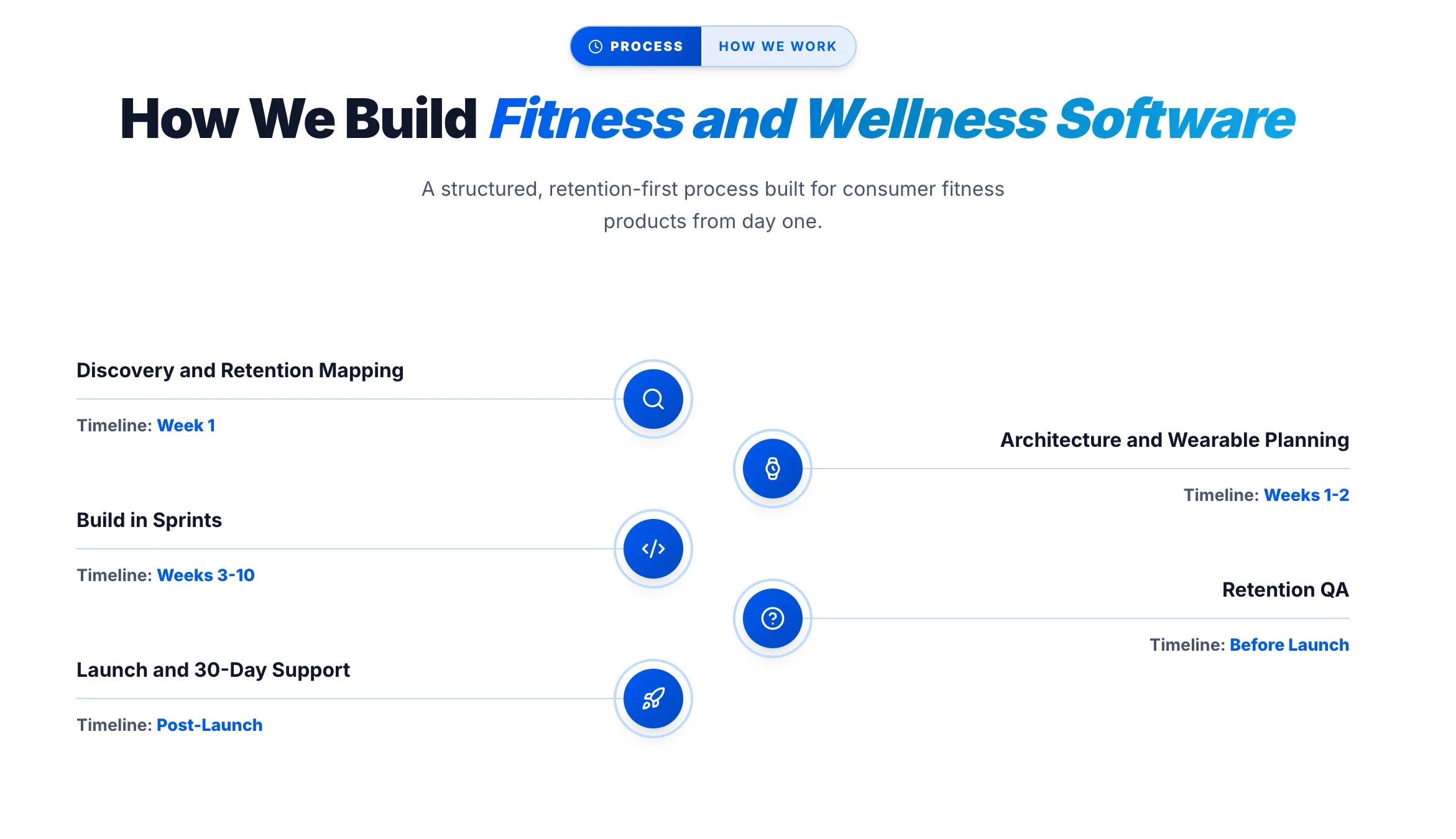
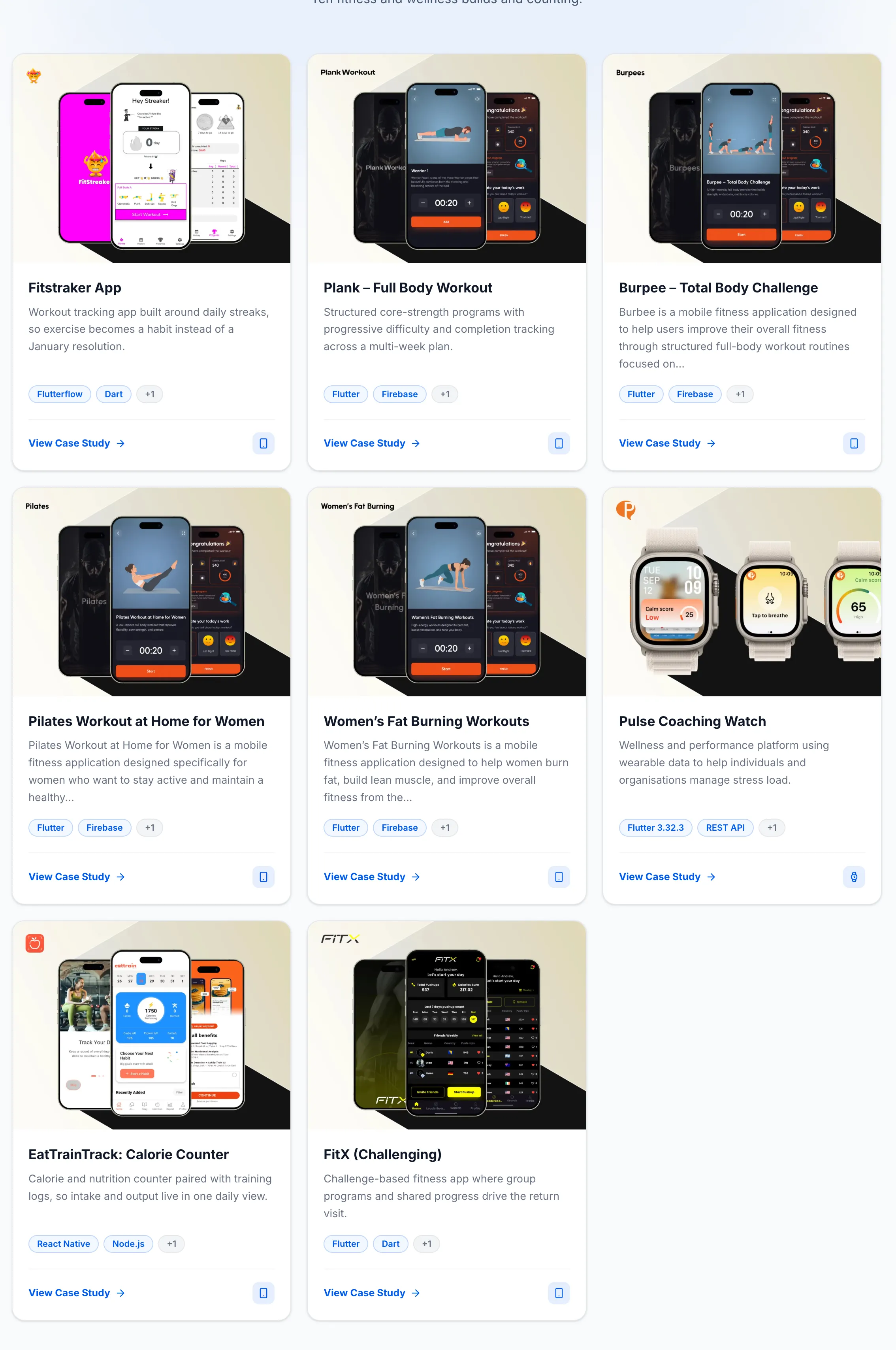
Named fitness work:
Plank, a 30-day progressive core program
Burpee, skill-tier HIIT plans with auto-scaling difficulty
Fitstraker, a streak-based workout tracker
Key capabilities:
Apple HealthKit, Google Fit, Health Connect, Fitbit, Garmin and Bluetooth LE devices
Subscription and paywall builds as a RevenueCat technology partner
12 published retention practices, including Day-1, Day-7 and Day-30 cohort tracking
Tech stack: Flutter, FlutterFlow, React Native, Node.js and Firebase

Published numbers:
Fitness MVP in 6 to 10 weeks, full platform in 12 to 16 weeks
30 days of post-launch support
5.0 on Clutch across 5 reviews
What to check: we don't publish retention outcomes for these apps yet, and our review count is small next to Riseapps or Orangesoft.

Best for: founders who want a retention-first MVP with subscriptions built in.
6. Orangesoft
Orangesoft was founded in 2011 and lists US and Poland contact numbers. It publishes cost ranges for each type of fitness app.
Named fitness work:
Coachnow, a coaching platform client reviewed on Clutch
A heart rate app for iOS and Android in the US market
A sleep sound app for iOS and Android
Key capabilities:
Wearable integrations, heart rate monitoring and calorie tracking
Pose estimation for virtual coaching with real-time feedback
AR and VR workouts, plus barcode scanning for nutrition apps
Tech stack: Swift, Kotlin, React Native, Flutter, Node.js and Python
Published numbers:
Fitness projects at $40,000 to $150,000+
Workout apps at $50,000 to $150,000+, yoga apps at $40,000 to $110,000+
42 Clutch reviews and 300+ portfolio projects, per its site
What to check: the MVP timeline reads 2 to 5 months in one section and 3 to 6 months in another. Confirm which applies to your scope.
Best for: founders who need a budget estimate tied to their exact app type.
7. Trembit
Trembit doesn't state a headquarters on its fitness page. It has built real-time video since 2010, which shapes its fitness work.
Named fitness work:
Pain Cave Live, an indoor cycling app with live video streaming
50+ health and fitness projects, per its site
Key capabilities:
Live and on-demand workout streaming with automatic replay recording
Group sessions of 2 to 200+ participants with heart rate overlays
HealthKit, Garmin, Whoop, ANT+, Strava and smart gym equipment integrations
Tech stack: Swift, Kotlin, React Native, Flutter, Node.js, Python and Go
Published numbers:
15+ years in real-time video and health tech
Full platforms in 6 to 12 months with 2 to 5 engineers
No published prices
What to check: the page gives MVP timing as both "about one month" and "3 to 5 months." Get a dated plan in writing.
Best for: live class and instructor-led streaming platforms.
8. Appinventiv
Appinventiv doesn't state a headquarters on its fitness page. It has the longest named list of health APIs among these teams.
Named fitness work:
Soniphi, a voice-based wellness platform
Health and wellness client logos including BetterME and Luna Diabetes
Key capabilities:
HealthKit, Health Connect, Samsung Health, Garmin, Polar, WHOOP and Oura APIs
BLE, ANT+ and connected treadmill and bike integrations
Live streaming through WebRTC, Agora, Twilio Video and Mux
Tech stack: Swift, Kotlin, Flutter, React Native, Node.js and AWS
Published numbers:
Fitness apps at $30,000 to $300,000+
Custom builds in 3 to 9 months
150+ connected fitness devices and APIs, per its site
What to check: most health names on the page are logos, not case studies. Ask for two fitness projects you can download.
Best for: wellness brands that need many device integrations at once.
9. Interexy
Interexy describes itself as Miami-headquartered, with offices in Warsaw and Dubai.
Named fitness work:
Crumb, a German health rewards app it rebuilt in native iOS to support HealthKit
Key capabilities:
Native iOS development with HealthKit integration
Calorie counting, geolocation tracking and progress features
Team augmentation within 10 business days
Tech stack: native iOS (Swift) for Crumb, after an earlier React Native MVP
Published numbers:
$50,000 minimum budget on its contact form
Crumb's MVP in 1.5 months, per its site
Moderate fitness apps in 6 to 12 months
What to check: the site lists one named fitness app. If your budget is under $50,000, this team may not take the project.
Best for: teams that need a native iOS rebuild or extra engineers fast.
10. Zfort Group

Zfort Group lists a New York address and offices in Ukraine, and it claims 25+ years in business. It has the lowest published price range on this list.
Named fitness work:
RYDE, an indoor cycling studio app with bike booking, instructor profiles and progress tracking
Key capabilities:
Apple Health and Google Fit integrations
BLE and ANT+ device support, plus GPS tracking
ML-powered posture assessment
Tech stack: Swift and Firebase on the RYDE project
Published numbers:
Fitness apps at $15,000 to $75,000
250+ developers, per its site
No published timelines
What to check: the site names one fitness client. Ask for more fitness references before you commit.
Best for: studios with a smaller budget and a booking-first app.
Which Fitness App Developer Fits Your Situation?
Your top priority should decide your shortlist.
If you're a creator with an audience, go with Pixelforce.
If you need a fixed budget before any call, go with Riseapps or Orangesoft.
If your app talks to gym equipment, go with Stormotion.
If live classes are the core product, go with Trembit.
If you want a retention-first MVP in under three months, go with Mind Stack Labs.
Wearables and Health Data in 2026: What Changed
Wearable integration got harder to fake. Two changes since 2024 separate current teams from outdated ones.
Google Fit gave way to Health Connect
Google stopped new sign-ups to the Google Fit APIs in May 2024 and points Android developers to Health Connect.
Some vendor pages still list "Google Fit API experience" as a selling point.
Team mentions only Google Fit: ask when they last shipped Android health sync.
Team mentions Health Connect and Apple HealthKit: they're current.
Health data rules reached fitness apps
The FTC's updated Health Breach Notification Rule took effect in July 2024. It covers many health and fitness apps that fall outside HIPAA.
That means a calorie tracker can face breach notification duties without ever touching a hospital.
Pro tip: ask every team which data each feature collects, and why, before design starts.
How we handle this at Mind Stack Labs
We keep health claims to wellness framing, not medical claims.
Data is encrypted at rest and in transit.
Non-production environments use synthetic data.
Features that diagnose or treat get a separate regulatory assessment before we build.
OneHealth, one of our health builds, reads Apple Health and Health Connect data live on the device, with no cloud backend.
10 Questions to Ask Fitness App Developers on the First Call
A good team answers these with examples, not adjectives.
# | Question | A good answer sounds like |
|---|---|---|
1 | Which live fitness apps can I download today? | Store links you can check |
2 | What was Day-7 and Day-30 retention on a past app? | Real numbers, or an honest reason they can't share them |
3 | Which health platforms have you shipped with? | HealthKit, Health Connect and named devices |
4 | How do you handle background wearable sync? | A clear answer on battery and sync conflicts |
5 | How do you build subscriptions and free trials? | StoreKit, Google Play Billing or RevenueCat experience |
6 | How does the app work offline? | Local storage and sync rules |
7 | What does the first sprint deliver? | A working build, not only designs |
8 | Who owns the code and the store accounts? | You do, from day one |
9 | What happens after launch? | A defined support window and maintenance plan |
10 | Which health data does each feature collect? | A data map, tied to the FTC rule and store policies |
Red Flags That Should End the Conversation
This is hard to spot on a sales call. Not impossible.
No live apps: Dribbble shots instead of store links.
A fixed quote before discovery: they priced a guess.
No retention method: every answer is a feature.
"HIPAA certified" claims: no official HIPAA certification exists.
Code in their accounts only: lock-in by design.
An undisclosed handoff: the team on the call isn't the team that builds.
Know why most of these slip through? Buyers judge the deck, not the build.
What Fitness App Developers Charge in 2026
Published fitness app budgets across these 10 teams run from $15,000 to $300,000+. MVP floors cluster between $15,000 and $50,000.
Team | Published budget signal | Published timeline |
|---|---|---|
Zfort Group | $15,000 to $75,000 | Not published |
Appinventiv | $30,000 to $300,000+ | 3 to 9 months |
Orangesoft | $40,000 to $150,000+ | MVP 2 to 5 months |
Riseapps | MVP from $45,000 | MVP 45 to 60 days |
TechAhead | MVP $50,000 to $100,000 | MVP 3 to 5 months |
Interexy | $50,000 minimum | 6 to 12 months (moderate app) |
Mind Stack Labs | Scoped per build | MVP 6 to 10 weeks |
Costs that show up after launch
App store commissions on subscriptions
Video hosting and CDN bills
Third-party API fees for food databases or AI models
Ongoing updates for new iOS and Android versions
Pro tip: ask each team to price the first year after launch, not only the build.
Lower quotes aren't automatically cheaper. A $20,000 app that loses users by week two costs more than a $60,000 app people keep opening, and that's before the rebuild invoice arrives.
How Mind Stack Labs Builds Fitness Apps (Scored on the Same Checklist)
I held my own team to the same rubric. Here is the honest breakdown.
Criterion | Score | Why |
|---|---|---|
Fitness proof | 3/5 | 10+ fitness builds with store listings, but no published outcome metrics yet |
Wearables and health data | 4/5 | HealthKit in Plank and Burpee, plus listed Health Connect, Garmin, Fitbit and BLE support |
Retention and monetization | 4/5 | 12 published retention practices, Day-1/7/30 cohort tracking, RevenueCat partner |
Pricing and timelines | 3/5 | Timelines published, dollar figures scoped per build |
Engagement flexibility | 4/5 | MVP and full-platform tracks, 30-day post-launch support |
Total | 18/25 |
Fitness builds on our portfolio
Build | What it shows |
|---|---|
30-day progressive program, HealthKit, RevenueCat subscriptions with ads for free users | |
Skill-tier plans, auto-scaling difficulty, freemium model | |
Streaks, challenges and badges built in FlutterFlow | |
AI food logging from photos, adaptive calorie targets | |
HRV-based stress tracking with coach-led guidance |
We build most fitness apps in Flutter, and we also ship in React Native and FlutterFlow.
What we can't claim yet: published retention numbers from these apps. Ask us for them on a call, and judge the answer.
My Recommendation
Start with three teams from the decision section that match your priority. Then run the 10 first-call questions on all three.
Use Pixelforce if you have an audience and a budget to match it.
Use Riseapps or Orangesoft if you need a number before you commit.
Use Mind Stack Labs if you want a retention-first MVP shipped in under three months.
If you'd like a second opinion on your scope, book a free 30-minute call. We'll tell you honestly if another team on this list fits better.
FAQs About Hiring Fitness App Developers
1. How much does it cost to hire fitness app developers?
Published ranges across the teams I reviewed run from $15,000 to $300,000+. Most MVP floors sit between $15,000 and $50,000, and wearables, video and AI coaching push the budget higher.
2. How long does it take to build a fitness app MVP?
Published MVP timelines range from about 6 weeks to 5 months. Wearable integrations and subscription billing usually add the most time.
3. Custom fitness app vs white-label: which is better?
White-label suits gyms that need a branded booking app fast. Custom suits founders whose product is the app, since they need full control over features, data and retention.
4. Do fitness apps need to be HIPAA compliant?
Most consumer fitness apps fall outside HIPAA. Many still fall under the FTC Health Breach Notification Rule, so plan health data privacy from the first sprint.
5. Who owns the code when an agency builds my fitness app?
You should, through an IP assignment clause in the contract. Ask for repository and store account access from day one, not at handover.